Publicada en octubre 2024
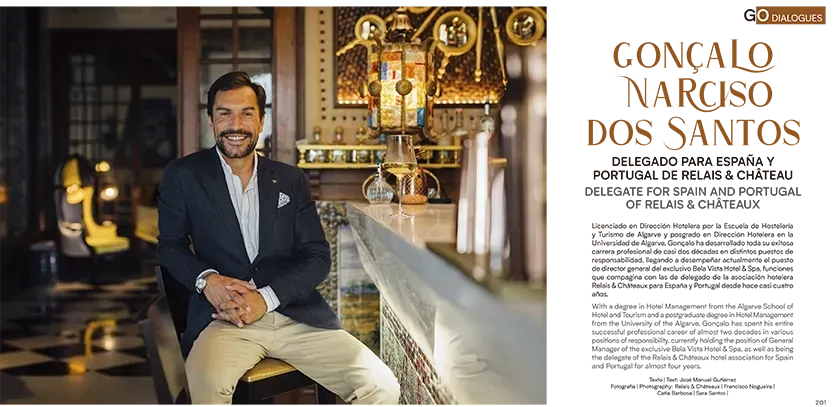
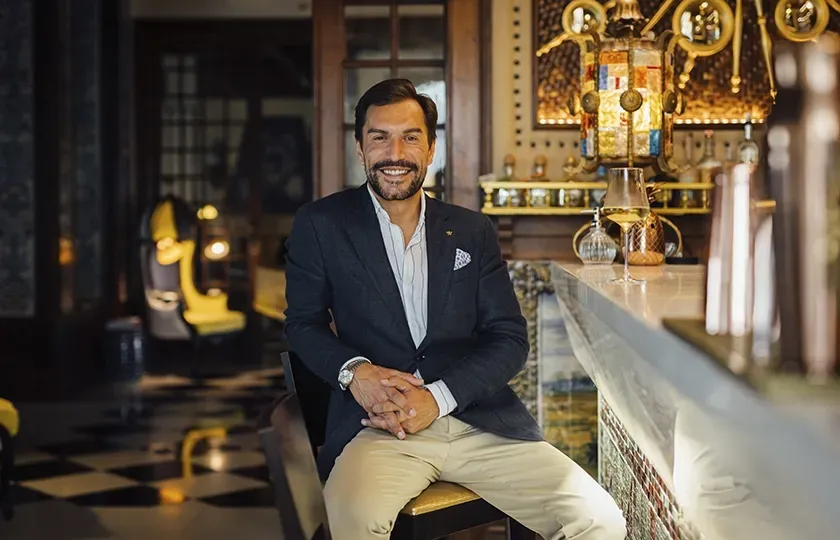
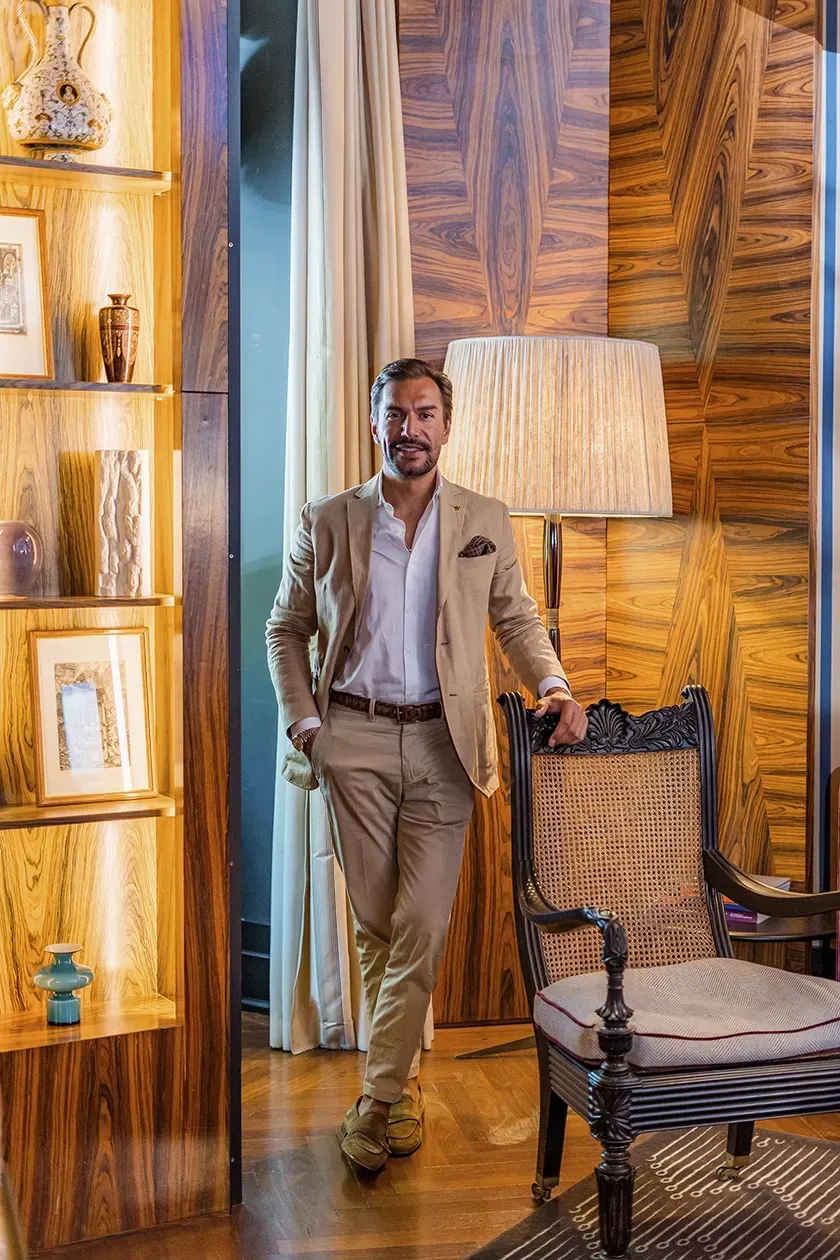
With a degree in Hotel Management from the Algarve School of Hotel and Tourism and a postgraduate degree in Hotel Management from the University of the Algarve, Gonçalo has spent his entire successful professional career of almost two decades in various positions of responsibility, currently holding the position of General Manager of the exclusive Bela Vista Hotel & Spa, as well as being the delegate of the Relais & Châteaux hotel association for Spain and Portugal for almost four years.
His profile, committed to excellence, sustainability and the promotion of the transversal economic development of the territory, defines his firm commitment to the implementation of the association’s common strategic lines and to making a concept that he describes as follows a reality: “luxury is no longer just something that can be shown, but something that can be felt and experienced”.
Q.- You once said that "Portugal and Spain are two very rich countries in terms of heritage and cultural heritage". To what extent does Relais & Châteaux contribute to the enhancement of heritage and the promotion of cultural tourism?
A.- Relais & Châteaux contributes to cultural tourism in Spain and Portugal through the preservation of historic buildings such as palaces, castles, convents and mansions with history, helping to conserve the architectural heritage. It also strongly promotes local gastronomy by highlighting traditional producers, products and recipes, and encourages sustainable and responsible tourism, respecting traditions and the natural environment. It also offers unique cultural experiences, connecting travellers with the cultural and natural heritage of these countries.
Q.- Within what we call luxury tourism, what role does Relais & Châteaux play as far as the peninsula is concerned?
A.- In luxury tourism on the Iberian Peninsula, Relais & Châteaux plays a key role by offering an exclusive network of hotels and restaurants that stand out for their authenticity, cultural heritage and haute cuisine. Its implementation in Spain and Portugal includes properties located in historic buildings, promoting cultural and sustainable tourism, and increasingly highlighting local gastronomy. With a commitment to quality and unique experiences, the brand contributes significantly to positioning both countries as luxury destinations, attracting travellers seeking immersion in culture and heritage.
Q.- Tell me a little about the Manifesto that you will present to UNESCO next November.
A.- The Relais & Châteaux Manifesto to be presented to UNESCO in November focuses on the protection and promotion of culinary heritage and biodiversity. The document highlights the association’s commitment to sustainability, respect for local traditions, and the preservation of the environment, thus promoting more responsible tourism. It also seeks to promote gastronomy as intangible cultural heritage, highlighting the role of cuisine in cultural identity. The manifesto represents a call to care for biodiversity and culinary heritage for the benefit of future generations.
Q.- What are the necessary conditions that a hotel must fulfil to be part of Relais & Châteaux?
A.- The standards we set for our members are subtle, sophisticated and based on emotion, which, as you can imagine, is not easy to measure. At Relais & Châteaux, we look for the best ambassadors of hospitality and gastronomy in each region, but that doesn’t necessarily mean we only aim for Michelin stars, as that is definitely not us.
Before being voted on by other hotels and restaurants that are part of the Relais & Châteaux governance, as well as by local delegates, potential candidates are thoroughly inspected to ensure that they are aligned with our Quality Charter. It is a long process as we have to make sure that potential candidates are in tune with what we stand for.
Q.- After seven decades of existence, Relais & Châteaux remains faithful to the principles and values that were the driving force behind its birth, but somehow it must have had to adapt to the new times. To what extent have they been changing?
A.- Throughout its seven decades, Relais & Châteaux has maintained its values of authenticity, hospitality and preservation of cultural heritage, but has been able to adapt to the new times in various aspects such as sustainability, innovation and gastronomic creativity, while continuing to promote local gastronomy, personalised and unique experiences. In order to improve customer experiences, R&C has also adapted its technology services. This balance between modernity and tradition has allowed us to remain relevant in the luxury market.
Q.- What does Relais & Châteaux do to put the experiential before the material?
A.- At Relais & Châteaux, the experiential takes precedence over the material through several key approaches such as immersive experiences where we offer authentic and cultural activities, such as cooking classes, vineyard visits, etc. Gastronomy as an experience, where the menus highlight the local products, history and culture of the region. Another very important key is personalisation, where customers’ wishes and tastes are anticipated, ensuring memories that last forever. Finally, connecting with local culture by fostering interaction with local communities and their stories.
These key approaches transform luxury into something more sensory and emotional.
Q.- Please elaborate on this statement of yours: at Relais & Châteaux, both physical and emotional barriers have been removed: hotels are conceived as homes.
A.- I believe that the removal of physical and emotional barriers means to me that our hotels are designed to offer close and personalised hospitality, where guests feel at home. This is achieved through welcoming environments with warm and intimate spaces, in which the staff establishes a close relationship, making the experience more emotional and personalised, and the services available in each hotel are adapted, generically speaking, to the preferences of each client.
By conceiving hotels as homes, Relais & Châteaux aims to make travellers feel at home in a relaxed and familiar environment, enhancing emotional well-being.
Q.- Portugal and Spain boast a rich biodiversity that is reflected in the enormous culinary variety. What role does gastronomy play in Relais & Châteaux's offerings?
A.- Gastronomy plays a central role in Relais & Châteaux’s offerings in Portugal and Spain, reflecting the richness of their biodiversity, through local products and producers who offer the best and most varied fresh and seasonal ingredients in each region. Nowadays it is very common for our chefs to adapt traditional recipes and transform them into something new and innovative, enhancing culinary diversity. Gastronomy is an essential part of each hotel’s experience, offering exclusive, seasonal menus that connect with guests. This makes gastronomy a vehicle for cultural immersion, promoting sustainable tourism and the connection with nature.
Q.- Can you reveal some of the keys to Relais & Châteaux remaining the Route de la Happiness?
A.- The keys to Relais & Châteaux remaining the “Route de la Happiness” are based on several pillars that guarantee memorable experiences for its clients: as unique and authentic experiences in any part of the world and in each of its 580 members, where hospitality is personalised and attention to detail and a close relationship with clients create an atmosphere of comfort and care. Where the gastronomy is exceptional, the surroundings are unique and also where there is a commitment to wellbeing.
These elements generate an enriching and emotional experience, aligned with the idea of happiness.
Q.- What is your medium-term forecast for the evolution of luxury tourism in Spain and Portugal?
A.- In the medium term, luxury tourism in Spain and Portugal will continue to grow, driven by several factors. There will be an increased demand for venues that offer sustainability, respect for the environment, privacy and cultural heritage. I believe there will be a boom in experiential tourism, as today’s travellers increasingly seek unique and authentic experiences, emphasising the focus on connecting with physical and emotional wellbeing, thus increasing the offer of luxury tourism in spas, retreats and disconnecting experiences.
This growth will be driven by the ability of both countries to offer a balance between authenticity, exclusivity and sustainability.