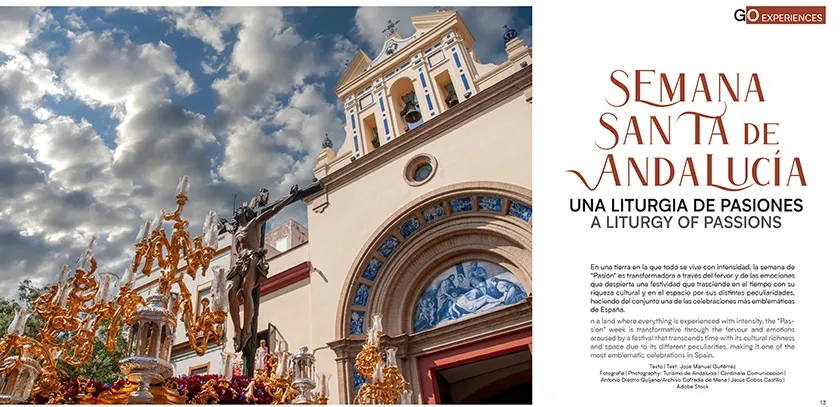
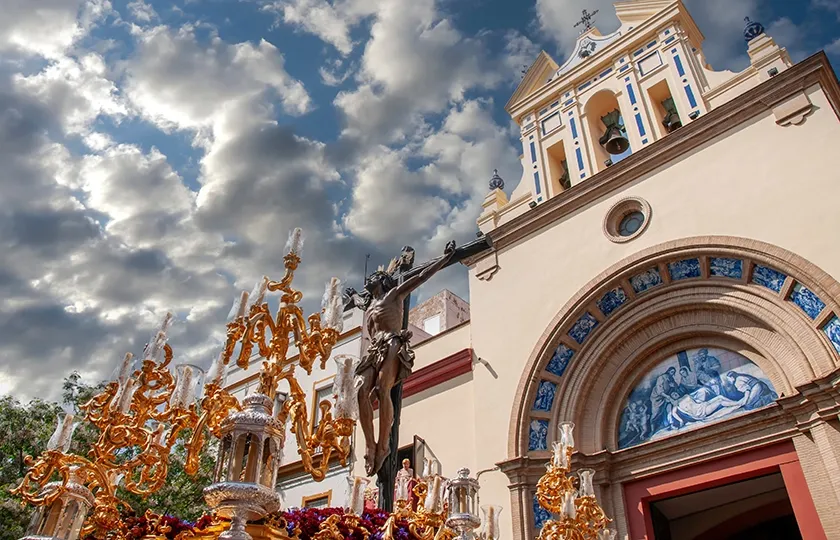
In a land where everything is experienced with intensity, the “Passion” week is transformative through the fervour and emotions aroused by a festival that transcends time with its cultural richness and space due to its different peculiarities, making it one of the most emblematic celebrations in Spain.
Oh, the “saeta” the singing of the Christ of the gypsies, always with blood on their hands, always trying to break free!
Singing of the Andalusian people, who every spring are asking for ladders to climb the cross! Singing of my land, which throws flowers to the Jesus of agony, and is the faith of my elders! Oh, you are not my song! I cannot and will not sing of the Jesus of the cross, but of the one who walked on the sea!
Surely this poem by the brilliant Antonio Machado, to whom the Andalusian Centre of Letters is paying tribute this year with a full programme of events to mark the 150th anniversary of his birth, encapsulates that deep feeling from which emanates the respectful joy that is permeating the Andalusian streets these days, because, above all, this now universal hymn highlights the emotion of a people before a “Jesus man”.
Holy Week in Andalusia seduces through the senses, breathing the subtle aroma that pervades the cities and towns in a mixture of incense and orange blossom, creating a unique atmosphere that stirs the emotions, allowing oneself to be carried away by the heartfelt chanting of a “saeta” or listening to the silence of a respectful crowd.
The first light of spring transforms the Andalusian streets into a genuine setting for reviving a ritual that takes place every year with the same fervour and with the identifying signs of each place, highlighting the multicultural richness of a region that dresses up again on Palm Sunday, shivers in the silence of Good Friday and rises again on Sunday covering the distance that goes from death to life.
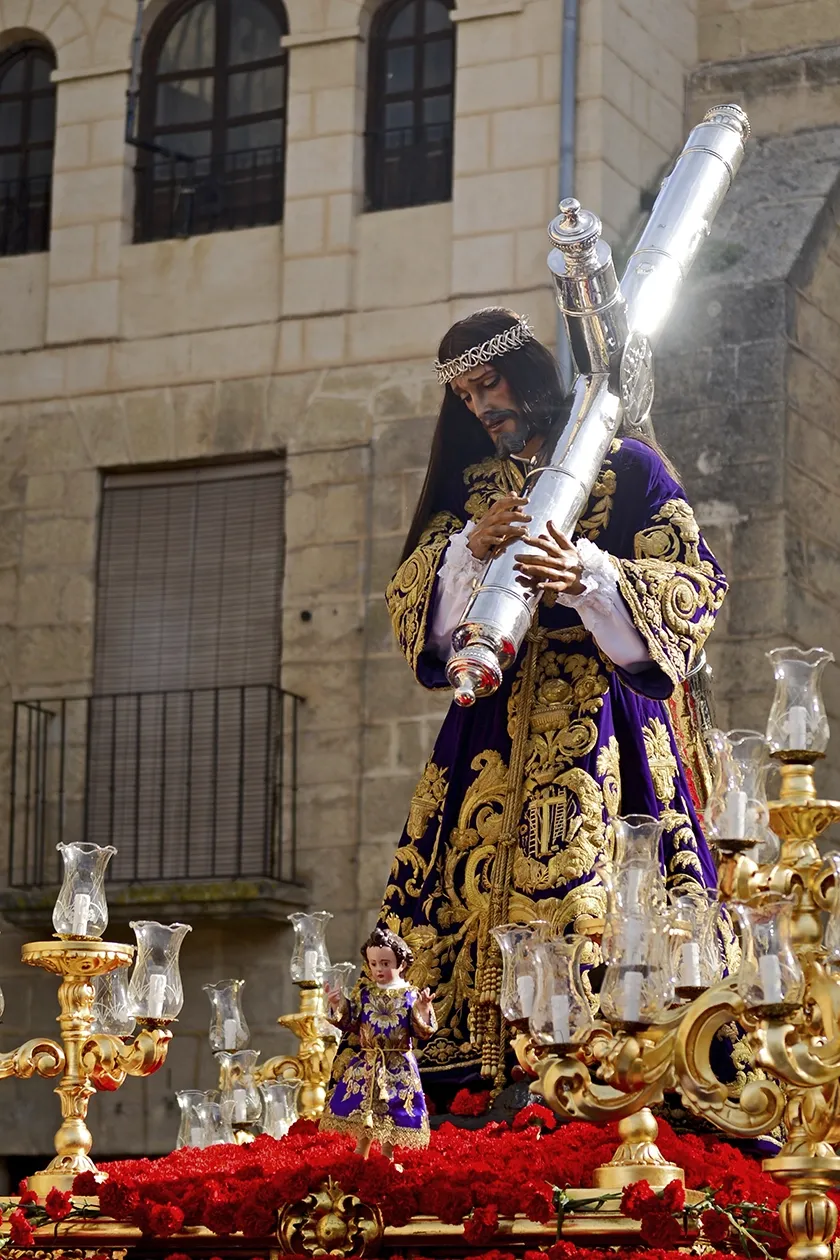
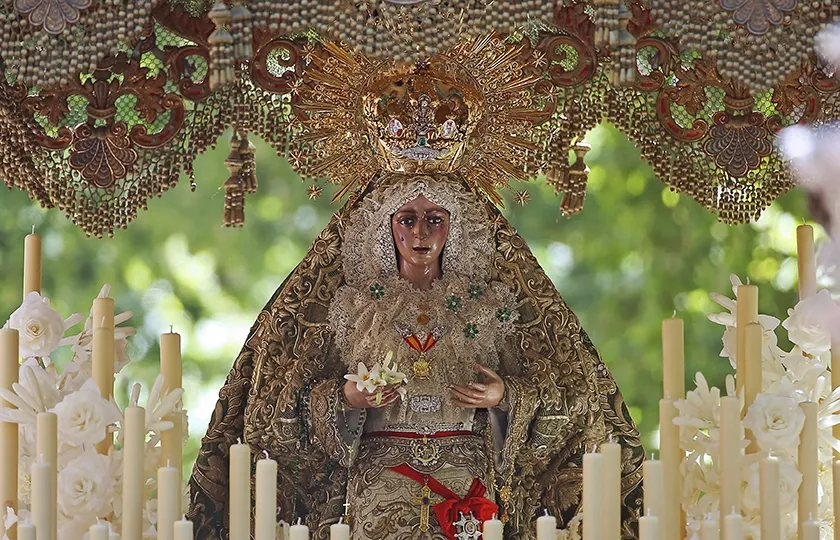
Images of incalculable artistic value stroll through the streets among the warm candlelight, the colourful robes of the Nazarenes, the music of the drum and bugle bands and the dreamlike quality of the architectural setting through which the processions pass.
It is a unique experience to feel the emotion of the traditional and multitudinous “madrugá” (dawn) of Seville; to live the passion with El Cautivo of Málaga; to go after the paso of Cristo de los Gitanos in the hills of Sacromonte in Granada; to witness the solemnity of Good Friday with the “Santo Entierro” (Holy Burial) in Huelva; to witness the departure of “El Abuelo” in Jaén from the Camarín de Jesús; feel the passion and devotion of the brotherhoods and sisterhoods of Cádiz; walk the streets of Córdoba amidst its silence, the singing of a “saeta” or the ringing of the bell of the capataz; or be exceptional witnesses to the meetings of the brotherhoods of Almería.
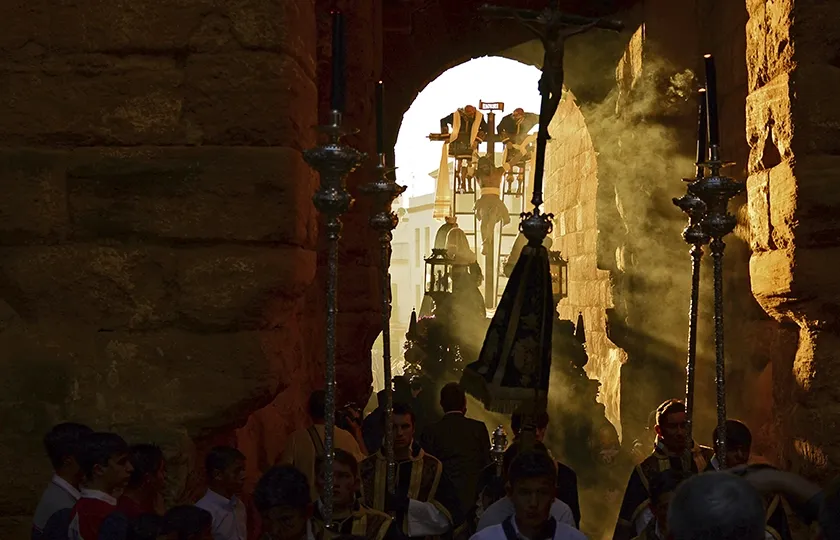
Almería
During the days of Holy Week, the Brotherhoods of Almería parade through the city’s streets while thousands of men and women take part in this processional rite dressed in the Nazarene habit as acolytes, bearers of the float, “mantillas”, promises or as mere spectators. In this case, the images and the feeling are much closer to those of eastern Spain than to those of Andalusia, which gives more value to the cultural richness of the passionate Andalusian ensemble.
The origins of Holy Week in Almeria, now declared of National Tourist Interest, do not go back to the brotherhoods of the 13th and 14th centuries, as it was then under Muslim rule, and it was not until the 16th century that the first Christian manifestations emerged in this land.
The most noteworthy aspects of Holy Week in Almeria are the gatherings of the brotherhoods or on Easter Sunday, with auctions or local cuisine. The musical aspect takes centre stage and sometimes becomes even more important than the Procession, the Gregorian Chants, Good Friday and the rivalry between the Brotherhoods.
Among the brotherhoods, the oldest is La Soledad, founded in the 16th century and which holds its procession on Good Friday. It is especially moving as it passes through José Ángel Valente Street, where the house that the famous poet lived is located, and through the door of the convent of Las Puras.
Among the brotherhoods created in the 20th century, La Macarena stands out, parading on Easter Monday and reaching its climax as it passes by the Church of San Ildefonso.
Also particularly popular are the Good Thursday gathering, which centres on the three religious brotherhoods’ procession through the Plaza Emilio Pérez, and the Cristo de la Escucha (Christ of Listening) procession, in the early hours of the morning, beginning and ending at the Cathedral. It is also advisable to be an early riser and observe the appearance of the Cathedral square at the end of the Stations of the Cross, allowing yourself to be filled with all the emotions.
In the province, Holy Week in the municipalities of Cuevas de Almanzora and Huercal-Overa is particularly important, both being listed as Festivals of National Tourist Interest in Andalusia, which gives an idea of their merit and beauty.
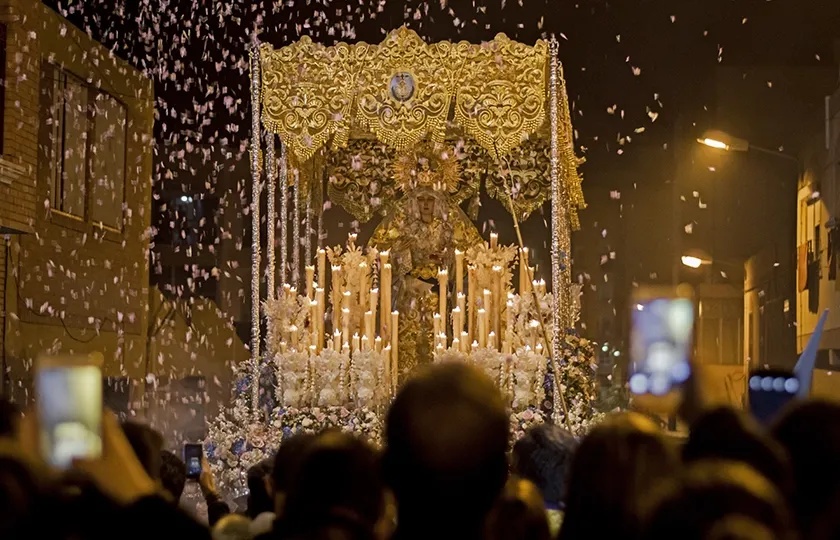
Cádiz
The three thousand year old city, also known as the “Tacita de Plata” (Silver Cup), prepares every year to commemorate the Passion and Death of Jesus in the setting of a city lovingly surrounded by the sea, which has embraced and venerated it since the beginning of time.
Holy Week in Cádiz, declared to be of National Tourist Interest, is characterised by the passion and devotion of its brotherhoods and the devotion of the spectators. This, together with the decoration of the streets, makes this celebration one of the most attractive in the country.
The city shelters each and every one of its brotherhoods, guilds and congregations and the hundreds of penitents who carry their crosses and follow the Nazarene or the Virgin of Sorrows. The official route includes the Plaza de Candelaria, Calle Montañés, the Plaza del Palillero, Calle Novena and Calle Ancha, although Calle Compañía is another point through which all the brotherhoods also pass.
The meeting of the images with the devotees symbolises the moments of silent prayer, of the saeta sung from a balcony, of the noise of the chains on the ankles and of the drums, trumpets and cornets marking the pace.
In this explosion of fervour we find ancient processions such as the Veracruz, which dates from 1566 and is celebrated on Easter Monday, standing out for its sobriety and elegance. La Palma is one of the most popular in Cádiz and is also celebrated on a Monday, with departure and collection in the La Viña neighbourhood and a walk through the Campo del Sur as one of its most exciting moments.
El Nazareno and Cristo de la Buena Muerte are also not to be missed. The first takes place on Maundy Thursday in Santa María, with the descent down Jabonaría Street as the culminating moment. The procession of the Cristo de la Buena Muerte takes place on Good Friday, travelling almost its entire route in the dark, which makes the whole event a magical moment.
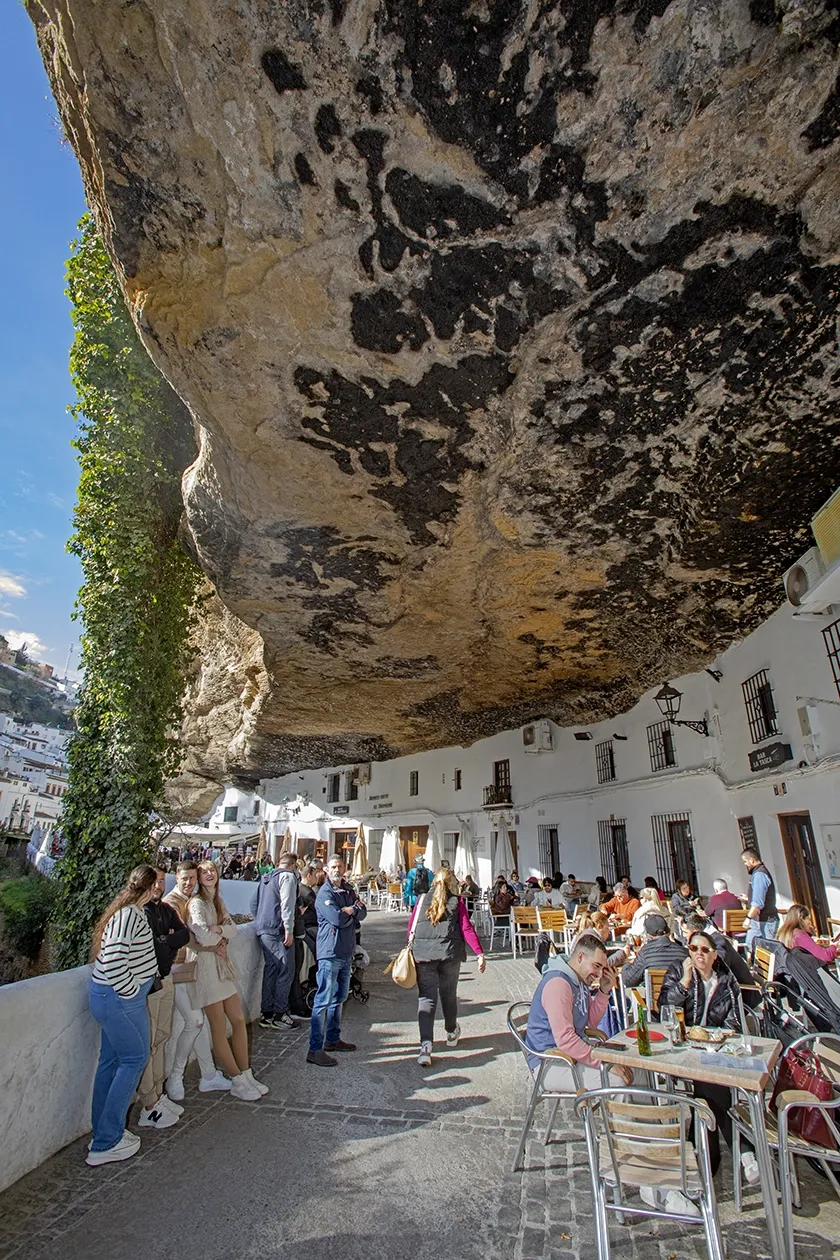
Within the province of Cádiz, Holy Week celebrations in the municipalities of Alcalá del Valle, Arcos de la Frontera, Jerez de la Frontera, San Fernando, Sanlúcar de Barrameda, San Roque and Setenil de las Bodegas are listed as Festivals of National Tourist Interest in Andalusia.
The celebrations that take place in the Pueblos Blancos (white villages) of the Sierra de Cádiz are also a good reflection of the roots and traditions preserved in the region for centuries.
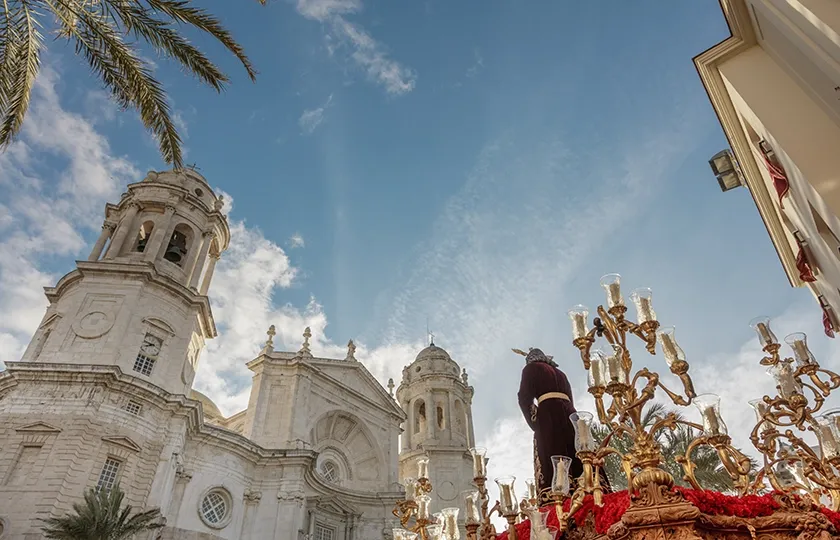
Córdoba
Holy Week in Cordoba, declared of National Tourist Interest, dates back to the 16th century with the creation of the brotherhoods, which make a penitential procession from Palm Sunday to Easter Sunday amidst the din of the bands of cornets and drums, the scent of burning wax mixed with incense, orange blossom, the calls with the tinkling sound of the bell of the foreman, the sharp blow and the shout of ‘Arriba con ella!’ (Up with it!) that breaks the silence of the respectful recollection of the believers.
Only the route of the brotherhoods is predefined, but the silences, the music, the “saeta” and the walking of the pasos seem to follow an unwritten and unrehearsed rhythm that accompanies the long processional route.
The prowess of the “costaleros” (those carrying the floats) is worthy of praise as, on their knees, crouching or standing, they adjust their pace to the pace of the temple door. And if it is beautiful to witness it on the way out, the entries are indescribable after long hours of carrying the heavy load.
With El Rescatado, Holy Week in Córdoba begins on Palm Sunday, starting its journey in the Cristo de la Concordia square. Las Ánimas is another of the most popular, especially in the Plaza San Lorenzo.
Las Angustias, one of the city’s oldest brotherhoods, is also noteworthy. The route begins and ends in Capitulares, with the passage through the San Agustín neighbourhood being one of the most significant parts of the procession, as the brotherhood was established at that point for centuries.
Also of note in the province of Córdoba are the Easter Week celebrations in the municipalities of Aguilar de la Frontera, Bujalance, Cabra, Castro del Río, Hinojosa del Duque, Lucena, Montoro, Moriles, Pozoblanco, Priego de Córdoba and Puente Genil, all of which are listed as Festivals of National Tourist Interest in Andalusia.
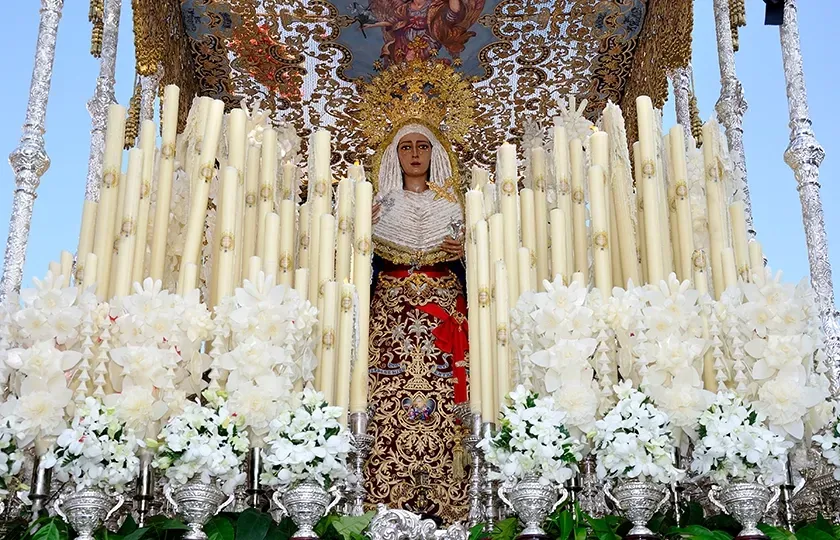
Granada
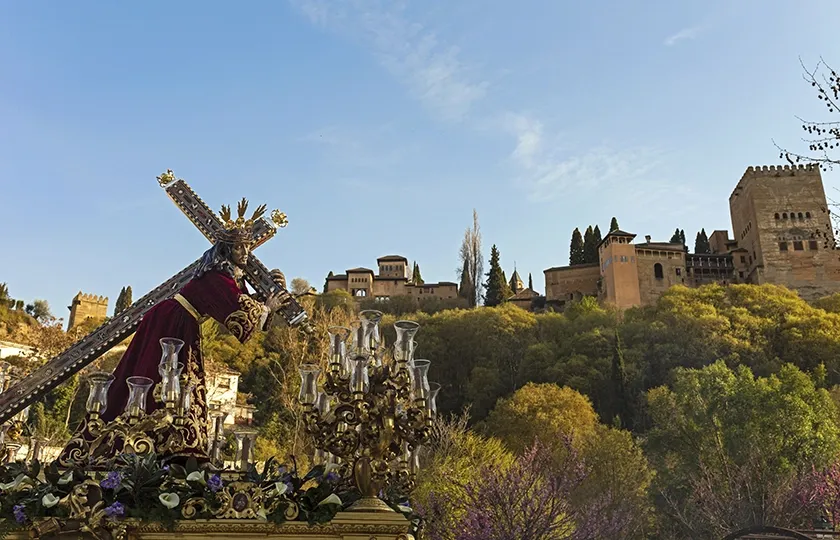
The city of the Alhambra and of enchantment displays the magic of its Holy Week, declared to be of International Tourist Interest, among palm trees and olive trees, making itself beautiful on Palm Sunday to wake up with the first drum roll and to receive the remaining significant days of Passion, Death and Resurrection.
The night of Holy Wednesday in Granada is particularly spectacular, exceptional and exciting as it is painted in shades of purple, red and gold with the two “pasos” that form this procession, El Cristo del Consuelo and María Santísima del Sacromonte.
Furthermore, in the Sacromonte hills, as the Cristo de los Gitanos (Christ of the Gypsies) passes by, huge bonfires are lit among the “caves”, the homes and dwellings of the gypsies, where the “zambras”, full of duende, are performed. The night of Maundy Thursday in the Albaicín is also magical, where, in almost the same space, it is possible to find the popular flavour of the three Virgins of the neighbourhood: the Virgen de la Concha, the Estrella and the Aurora.
The procession of the Cristo del Silencio (Christ of Silence) makes the spectator an absolute accomplice with its drum rolls, keeping a respectful and chilling silence. After midnight, the Albaicín neighbourhood becomes a reliquary of images among the narrow streets that give it colour and a special smell.
On Good Friday, thousands of people from Granada form a cloak that leaves no space at all while they pray and make the three requests that are de rigueur. That same evening, a unique and shocking event takes place in the Convento de los Jerónimos. ‘Las Chías’ are characters who held positions in the old inquisition and who appear dressed in feathers and embroidery, playing fanfares and kettledrums as they lead the parade of the oldest of the brotherhoods, that of the Solitude of Saint Jerome.
This procession is spectacular with pointed hoods of intense yellows, a squad of Roman soldiers standing to attention and stamping the ground with their spears. Living characters also appear, representing the three Marys, the Virgin, Saint Joseph, Joseph of Arimathea, and Joseph Nicodemus, who took charge of moving Jesus to the tomb.
In the province of Granada, Holy Week in the municipalities of Almuñécar and Loja is particularly important, both being catalogued as Festivals of National Tourist Interest in Andalusia.
Huelva
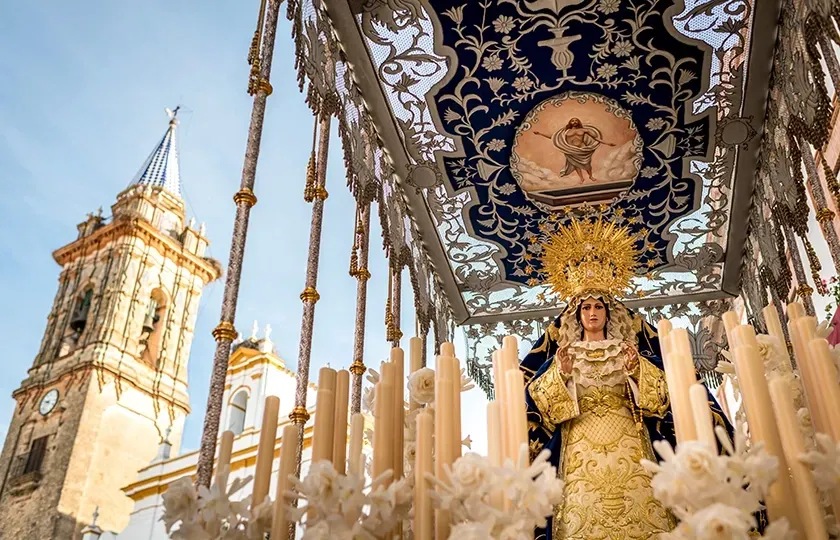
In Huelva, Holy Week is commemorated liturgically and traditionally as a Festival of National Tourist Interest in Andalusia, with professional parades from Palm Sunday to Easter Sunday, when the brotherhoods perform their stations of penance through the streets of the city.
Seven days dedicated to one of the festivals that the citizens of Huelva live with special tradition, days mixed with the smell of incense and the taste of sweets and artisan desserts, the typical brotherhood atmosphere that is never lacking.
Among the highlights of Holy Week in Huelva are the processions of the Cofradías that leave in the early hours of Good Friday, such as ‘El Perdón’, ‘Misericordia’ and ‘El Nazareno’. The latter, which enjoys great popular devotion, is one of the oldest in the city, having been founded at the end of the 16th century.
“El júbilo” of Palm Sunday, ‘La Borriquita’, deserves special attention, as does the Marian fervor of Holy Wednesday with the Virgins of Victory and Hope, to whom the people of Huelva feel great devotion and the solemnity of Good Friday with the ‘Holy Burial’. Among the highlights of Holy Week in Huelva are the processions of the Cofradías that leave in the early hours of Good Friday, such as ‘El Perdón’, ‘Misericordia’ and ‘El Nazareno’. The latter, which enjoys great popular devotion, is one of the oldest in the city, having been founded at the end of the 16th century. In the province of Huelva, Holy Week in the border town of Ayamonte is of special interest. It has been catalogued as a Festival of National Tourist Interest in Andalusia and its origins date back to the 16th century thanks to the Marquises of Ayamonte, who established it by creating the first two brotherhoods in 1550.
Jaén
Holy Week in Jaén, one of the most beautiful in Spain, also enjoys the declaration of National Tourist Interest, characterised by its history, tradition, art, liturgy and popular religiosity. The brotherhoods and sisterhoods of Jaén today constitute a rich and precious legacy, an essential part of the cultural heritage of the provincial capital, maintaining their fidelity to the three fundamental pillars that define them: charity, worship and education.
It has, on the one hand, the sobriety of Castile and, on the other, the splendour of Andalusia. Its grandiose processions, full of solemnity and colour, with dense and tightly packed crowds, turn the streets into an extension of the temples.
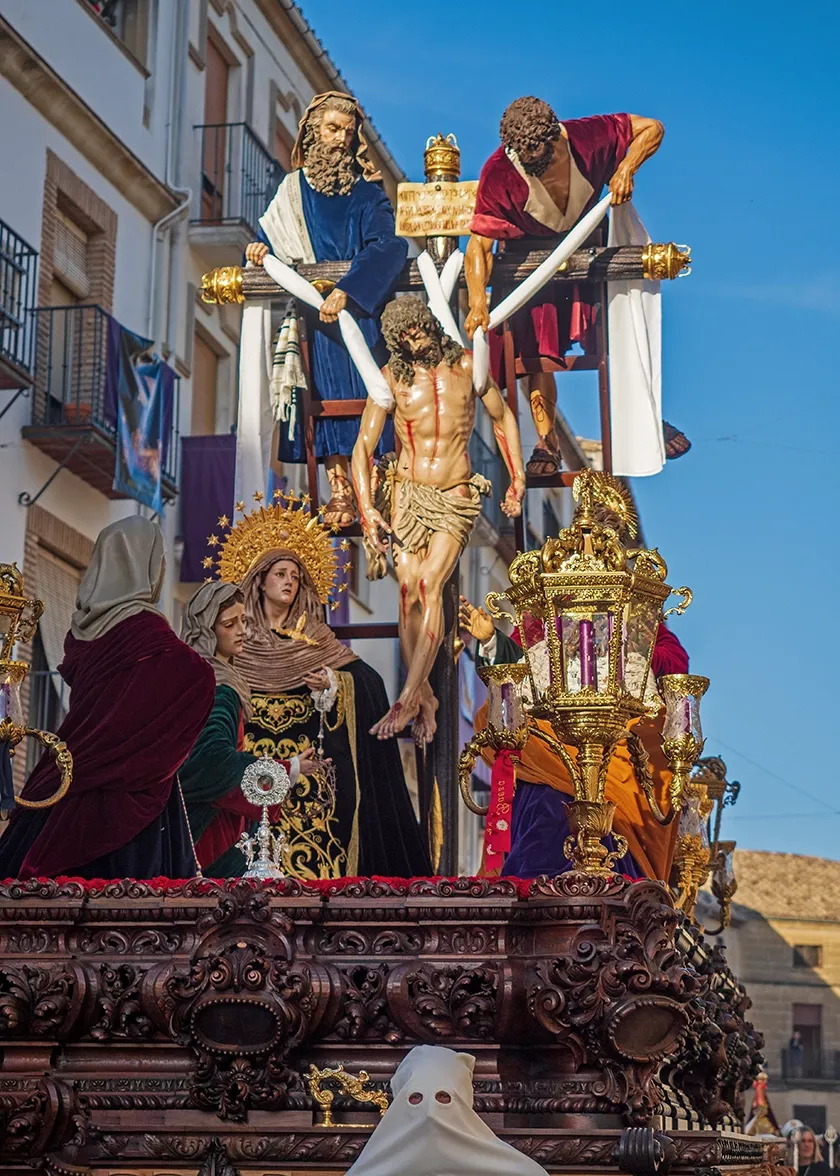
The remarkable majesty and beauty of the sculptural quality of the imagery of Holy Week in Jaén stands out. Among the most interesting moments, the early hours of Good Friday stand out, with the departure from the Cathedral of one of the most eagerly awaited processions, that of Nuestro Padre Jesús Nazareno, affectionately known to the locals as “El Abuelo”.
On Good Friday the city of the “Holy Kingdom” greets the venerated Nazarene accompanied by more than seven thousand penitents and trembles as it contemplates the encounter, in Amargura Street, of Nuestro Padre Jesús with the Virgen de los Dolores, one of the most moving moments of this religious event that has been taking place in the streets of the capital for four centuries.
In the province, the Easter Week processions in the municipalities of Alcalá la Real, Baeza, Linares, Martos and Úbeda are particularly noteworthy, all of which are listed as Festivals of National Tourist Interest in Andalusia.
Málaga
Holy Week in Málaga, declared to be of International Tourist Interest, is experienced in a unique way and the route taken by the Cofradías (religious brotherhoods) is a perfect parade of variety, sobriety and respect that is well worth contemplating.
The popular clamour and fervour of the inhabitants of the neighbourhoods of Málaga is particularly admirable, as they dedicate themselves to their Christs and Virgins in a special way during the processions and the running of the bulls.
Most of the Passion Brotherhoods and Sisterhoods have their own Brotherhood/Sisterhood House, veritable museums where one can admire up close and in detail the luxury and beauty of their thrones, the cloaks of the Virgin Mary, and the liturgical and processional equipment and paraphernalia.
In Málaga, some mornings there are traditional transfers, in which the images are taken from the temple to the thrones, offering a preview of what will be the afternoon procession limited to the neighbourhood.
So, when the dawn of Easter Monday has not yet broken, thousands of Malaga residents gather in and around the parish of San Pablo to participate in the transfer of the images of the Brotherhood of Jesus Cautivo and María Santísima de la Trinidad, from their chapel to their processional thrones. In this case it is not just any transfer of images, but the ‘transfer’ par excellence.
The sight of the number of people taking part in the Easter Monday procession of Jesús Cautivo (Captive Jesus) is also spectacular. Up to thirty thousand people from the Trinidad neighbourhood take part in the procession as a show of faith.
On the night of Easter Monday there is another image of Christ that carries with it the spirit of an entire race, when the Hermandad de Jesús de la Columna y María Santísima de la O, the “Gypsies” brotherhood, sets off with its joyful and unorthodox procession from Calle Frailes.
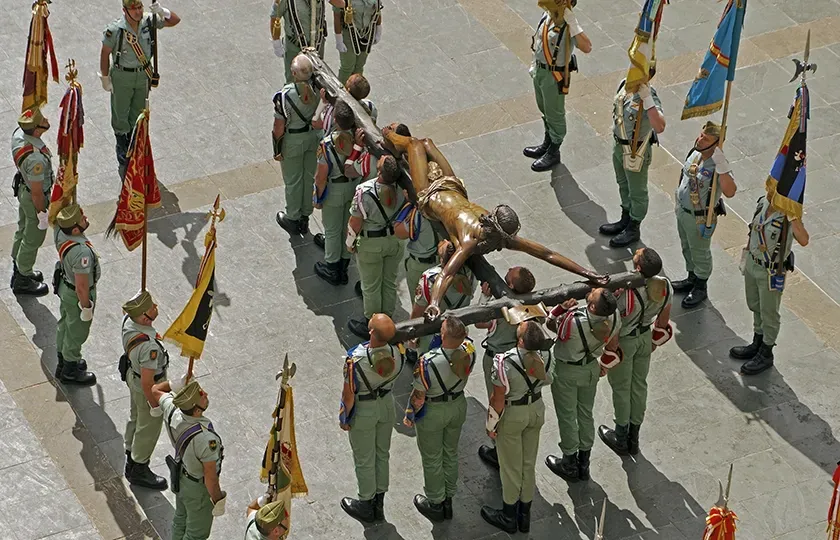
The release of a prisoner without a violent crime by Our Father Jesus the Rich every Holy Wednesday is an emotional event, a privilege granted by Carlos III, when, during a cholera epidemic in Málaga and unable to go out, the prisoners escaped from jail and carried the Christ figure, all returning to their cells at the end without taking the opportunity to escape. It is also worth mentioning the military escorts in the processions of those brotherhoods with which, for different reasons, they are linked. This is the case of Los Regulares with El Cautivo, La Legión with El Cristo de la Buena Muerte or Ánimas de Ciegos with Los Paracaidistas, La Marina with La Soledad or La Caballería with La Zamarrilla.
Special mention should be made of the arrival of the Legion, whose ship disembarks in the port of Málaga on Maundy Thursday, although a representation of legionnaires has been guarding the Cristo de Mena since Holy Wednesday.
Nor should we fail to mention the Cofradía de la Expiración, accompanied by the Civil Guard, for its sobriety; the Virgen de la Esperanza for the popular clamour it arouses in the people of Malaga and the Santo Sepulcro for its seriousness and exemplary parade.
In the province of Málaga, Holy Week is particularly important in the municipalities of Alhaurín de la Torre, Antequera, Archidona, Arriate, Campillos, Riogordo, Ronda and Vélez-Málaga, which have been designated as Festivals of National Tourist Interest in Andalusia.
Sevilla
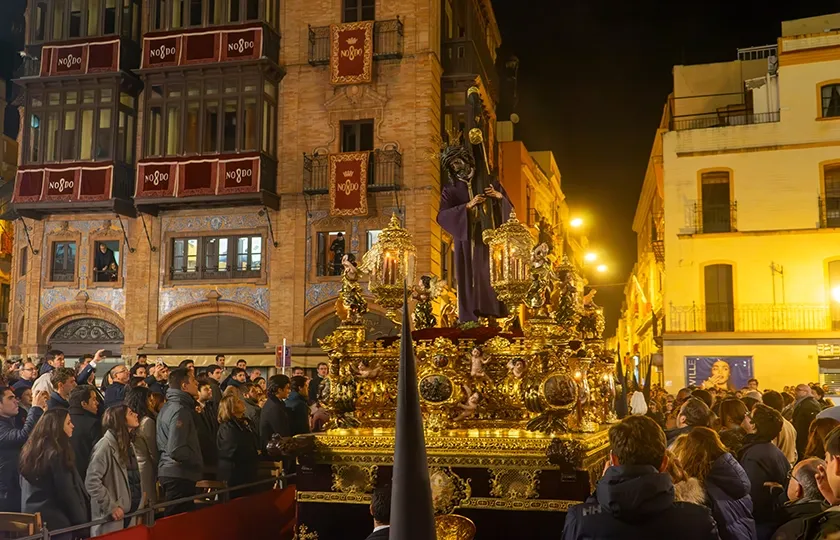
Holy Week is Seville’s most intimate festival, a celebration declared to be of International Tourist Interest that reaches a unique intensity, both aesthetic and spiritual. Between Palm Sunday and Easter Sunday, around sixty religious brotherhoods take to the streets to bring the passion and death of Christ to life.
Seen as a genuine art form and the driving force behind a deep spiritual feeling, Holy Week in Seville is a complex phenomenon, authentically popular in which the whole town takes part, without class distinction, but which is at the same time religious and artistic, serious and joyful, simple and voluptuous.
Therefore, it is not only a Catholic festival with more than four hundred years of tradition, but the synthesis of an entire culture centred on the essence of the human being.
It is very simple to experience and participate in it. All you have to do is let yourself be seduced by your own senses, be moved by the silence of a crowd passing through the streets and that will always lead us to the passing of a particular religious brotherhood, to a procession or its return.
The dim light of the candles emphasises the baroque nature of some of the images, already expressive and convulsive in themselves, such as that of El Cachorro, considered by many to be a masterpiece in the representation of the agony of Christ.
Perhaps Good Friday, together with Saturday, is the best time to enjoy Seville. After the multitudinous “madrugá” (dawn), they are the most relaxed days, but still full of emotional moments.
Highlights of Holy Week in Seville are the processions of La Macarena and La Esperanza de Triana, which, in this case, is the only brotherhood that makes a double station of penance, before the Cathedral and in the parish of Santa María de Triana. Also worth mentioning is La Borriquita, which takes place on Palm Sunday with the magical procession in which children play the leading role.
The Besamanos del Gran Poder, which begins on Palm Sunday and ends on Holy Wednesday, is particularly noteworthy. It is best to visit on the Sunday itself in order to truly understand what devotion to the ‘Gran Poder’ means to Seville, to realise the depth of all these beliefs and how far they are from the usual clichés.
Likewise, Holy Week in the municipalities of Alcalá de Guadaíra, Alcalá del Río, Carmona, Morón de la Frontera, Coria del Río, Utrera, Écija, Marchena, Estepa, Osuna, Guadalcanal and Las Cabezas de San Juan is also important, having been declared Festivals of National Tourist Interest in Andalusia.
That Andalusian “something else”
The fact that Holy Week in Andalusia stirs up passions is already a universal identifying feature, but no less so are the passions aroused by the region as a whole and this is an ideal time to enjoy Andalusia in all its splendour, because in addition to its natural charms, the hospitality of its people and its cultural values, it has a serene climate, ideal for experiencing unforgettable moments.
Its more than eight hundred kilometers of coastline are a universe of contrasts that treasure wide beaches of fine in the provinces of Cádiz and Huelva, as well as coves hidden among the cliffs of the Granada coast, the Costa del Sol and the mythical and somewhat cinematic beaches of Almería.
On a more cultural level, the rich heritage of Andalusia transports us to the earliest antiquity with important archaeological sites, a legacy of the different cultures and civilisations that settled in this beautiful and rich land in the south of Spain, as attested, for example, by the prehistoric paintings classified as Rock Art of the Mediterranean Basin of the Iberian Peninsula, declared a World Heritage Site.
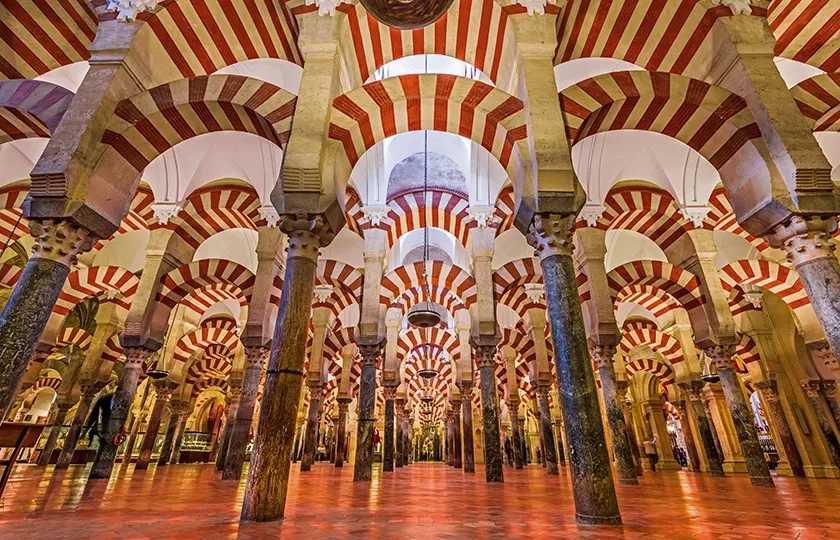
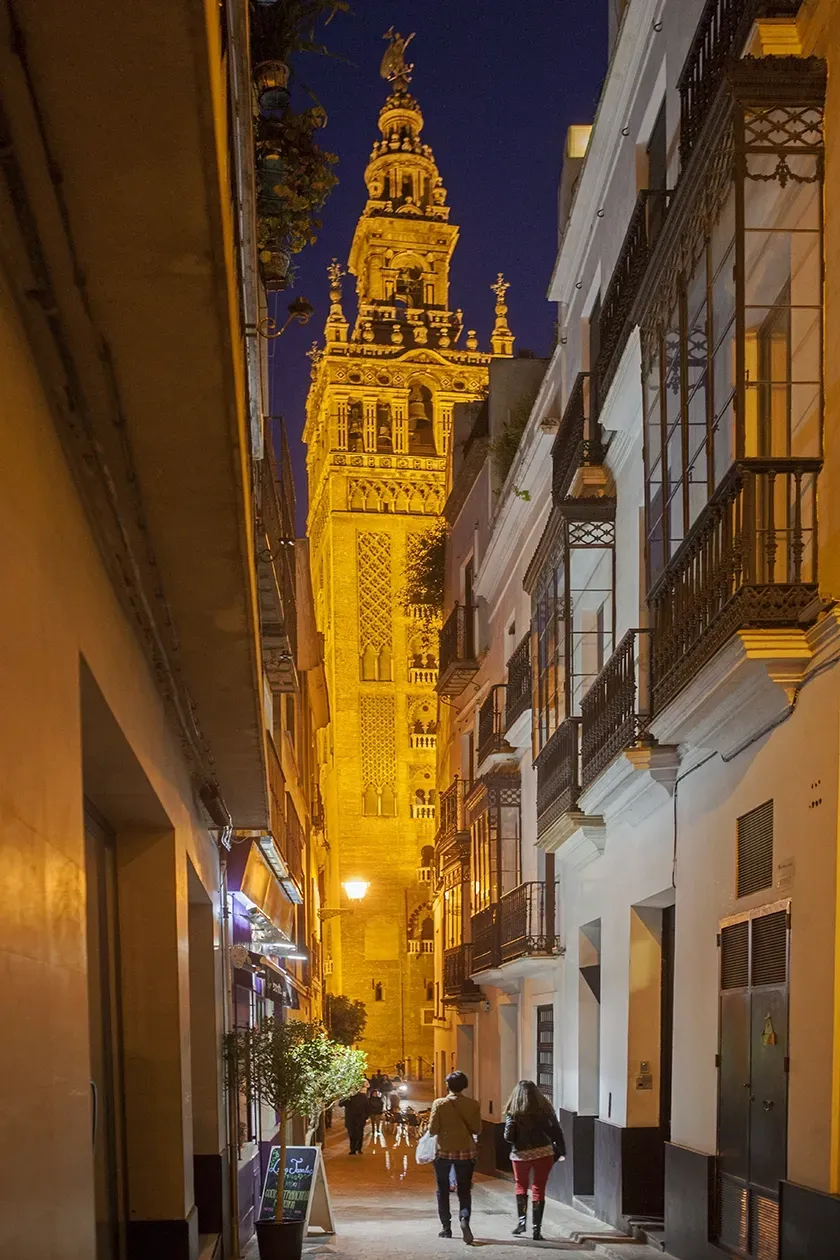
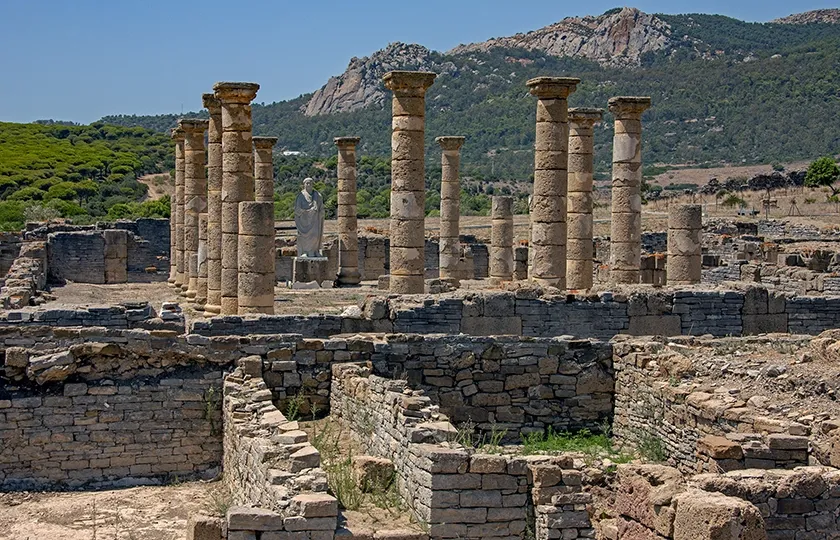
From then until the present day, practically all the civilisations of the Mediterranean basin have left their mark on this land. Thanks to this, it is impossible not to abandon ourselves to daydreaming and to the wonder of marvels such as the Roman Baelo Claudia or Italica, not forgetting the Alhambra in Granada, the Great Mosque of Córdoba, Medina Azahara or the Giralda in Seville, universal landmarks and an immense cultural legacy inherited from a thousand-year-old history.
It is also a magnificent time to enjoy cities such as Úbeda and Baeza in Jaén, both World Heritage Sites, or towns such as Arcos de la Frontera in Cádiz, Ronda in Málaga, Moguer in Huelva, Laujar de Andarax in Almería, the Pueblos Blancos (white villages) of the Sierra de Grazalema Natural Park, Guadix in Granada and its troglodyte heritage and so many other magical corners scattered throughout Andalusia.
Andalusia’s natural environment exerts an irresistible magnetism thanks to its biodiversity, with an arc that encompasses everything from the highest peaks of the Iberian Peninsula in the Sierra Nevada to extensive wetlands such as the Guadalquivir Marshes or the Doñana National Park, one of the most emblematic ecosystems in Europe, passing through thick Mediterranean forests such as the Sierra de Cazorla, Segura y las Villas Natural Park or deserts such as Tabernas and stretches of uninhabited coastline with traces of volcanic activity such as the Cabo de Gata Natural Park, both in the province of Almería.
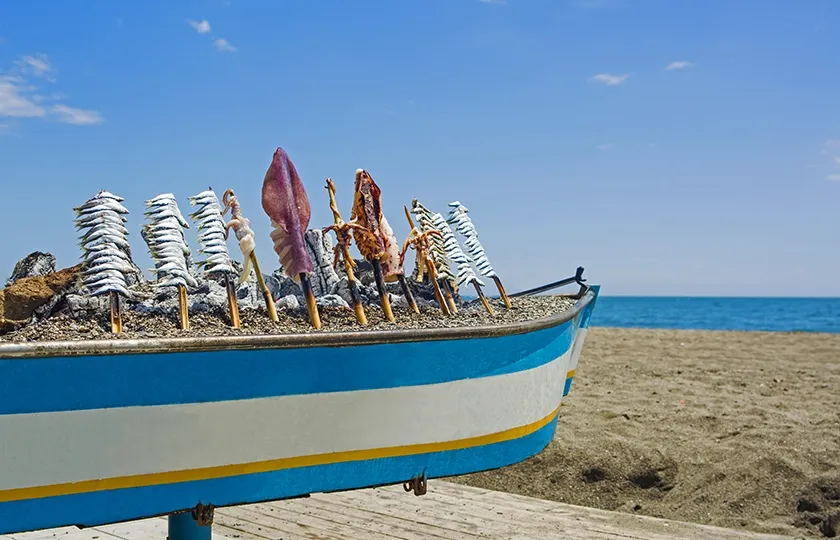
Another of the attractions of this marvellous region is its gastronomy. Thus, in addition to seafood dishes such as “pescaíto frito” (fried fish), shrimp omelette or the serrano dishes from inland, together with typical products and dishes such as ham or “gazpacho”, at Easter there are also those typical of Lenten cuisine such as ‘el hornazo’ or “huevo santo” (holy egg), typical of Jaén, “pestiños” (honey-coated fritters), “torrijas” (toasted sweet bread) or” limón cascarúo” (lemon) from the province of Málaga, to name but a few.
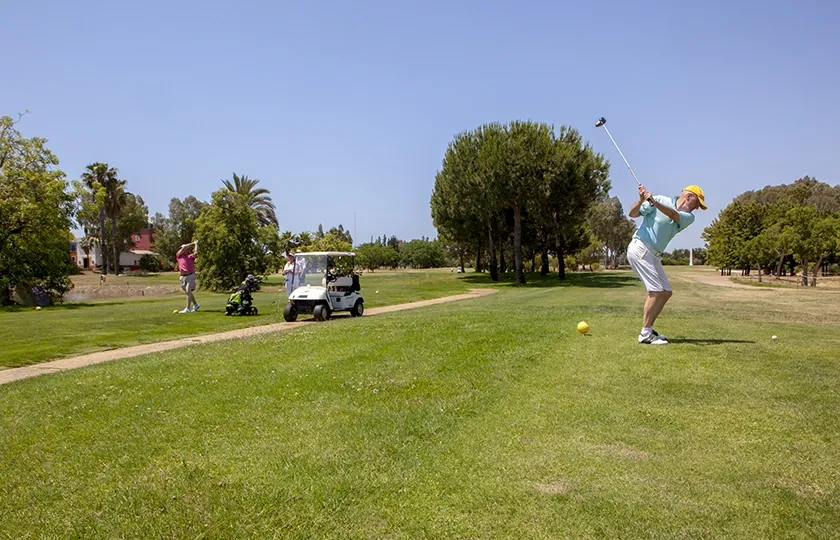
Andalusia is, without doubt, the best destination for golf lovers, both in terms of the quantity and quality of its infrastructures, but it is also exceptional for sports, leisure, health and beauty tourism.
Coming to Andalusia is having everything within reach.