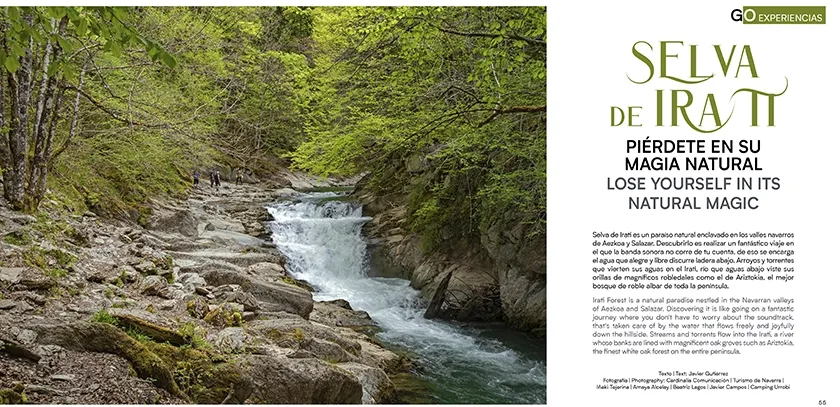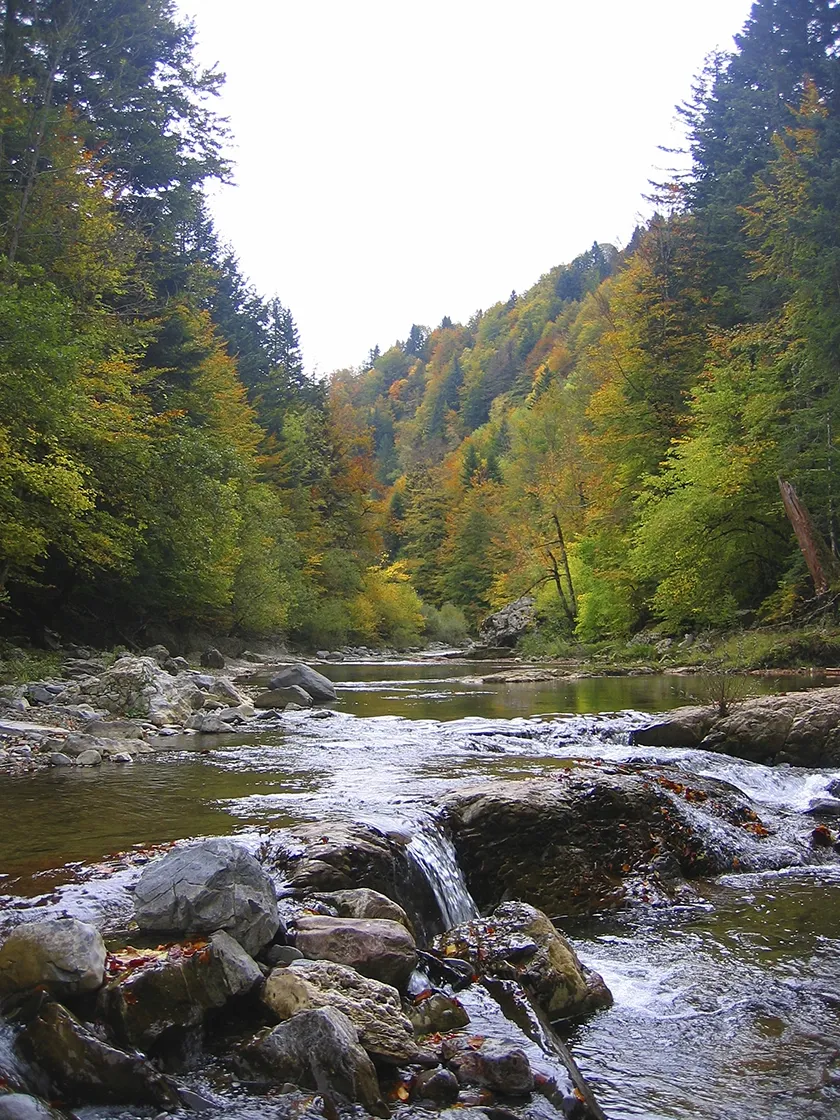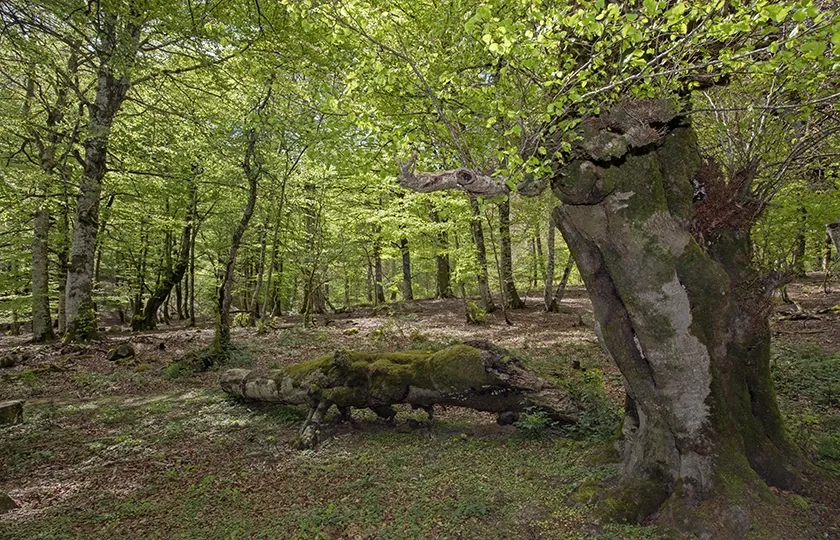
The Irati Forest is a natural paradise nestled in the Navarran valleys of Aezkoa and Salazar. Discovering it is like going on a fantastic journey where you don’t have to worry about the soundtrack, that’s taken care of by the water that flows freely and joyfully down the hillside. Streams and torrents flow into the Irati, a river whose banks are lined with magnificent oak groves such as Ariztokia, the finest white oak forest on the entire peninsula.
This treasure of the Pyrenees, one of the largest and best-preserved beech and fir forests in Europe, is relatively young, being only twelve thousand years old.
While oak trees originally populated its mountains, beech and fir trees are now the predominant species. Exploited for forestry since the 15th century, the high quality of its trees meant that three centuries later its wood was used to build ships for the Spanish and French navies. The logs were transported downriver on “almadías” rafts made from the same raw material until the Irabia reservoir was built. Today, it is in magnificent condition thanks to the enormous respect shown for it by the inhabitants of these valleys.
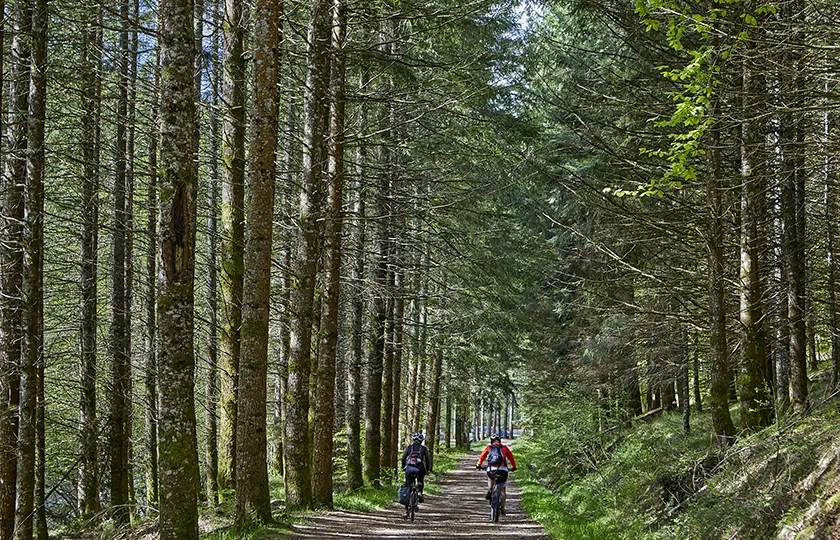
In the centre of this paradise lies the small Irabia reservoir, a crystal-clear island in the middle of the forest. Exploring the area on foot or by mountain bike along the numerous trails is a pleasant experience that brings us closer to places of unique beauty.
The Irati Forest is a treasure trove of legends. Perhaps the most deeply rooted is that of Basajuan, the Lord of the Forest, who is tall, has long hair, walks upright and possesses prodigious strength. If the traveller is called by him, he must not run away, much less confront him. He must only blindly obey his orders and thus render him harmless and turn him into a protective guide. Meanwhile, “lamias” are female entities that feature heavily in Basque tradition and are often described as beings of great beauty who live near water. Their non-human nature is evident in the fact that they often have animal feet, such as those of ducks, chickens or goats.
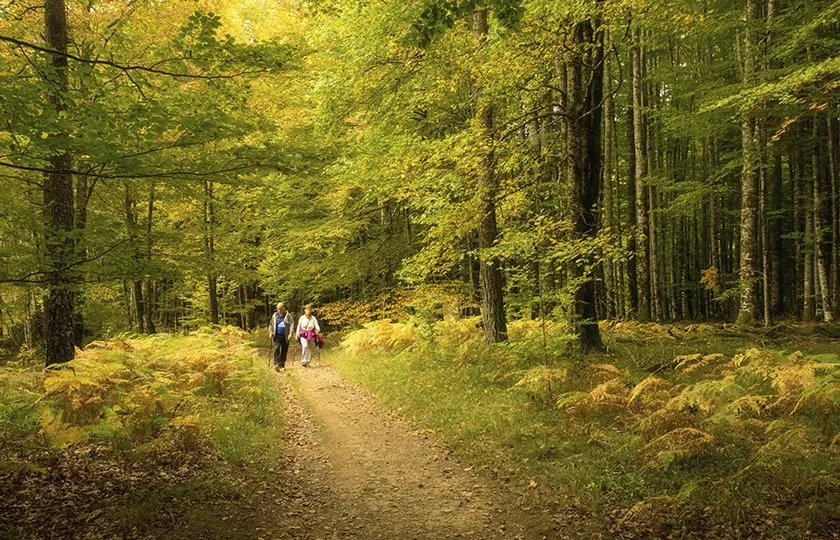
A space of generous biodiversity
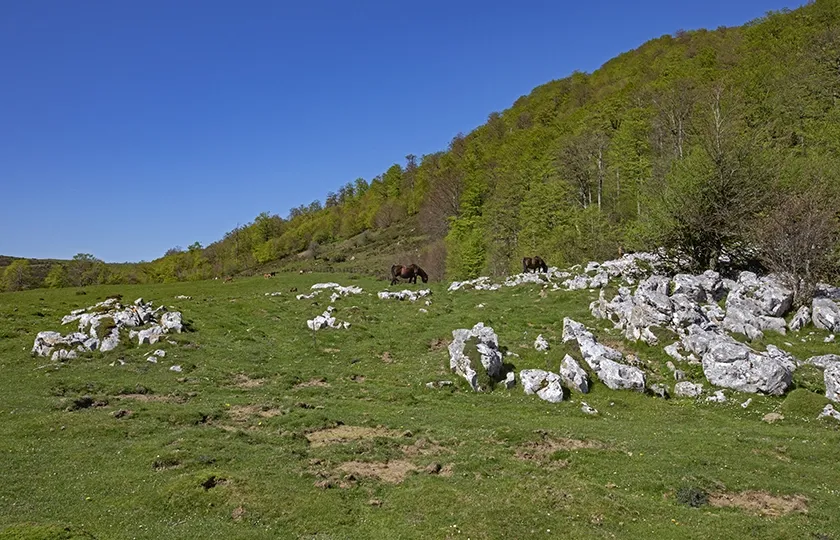
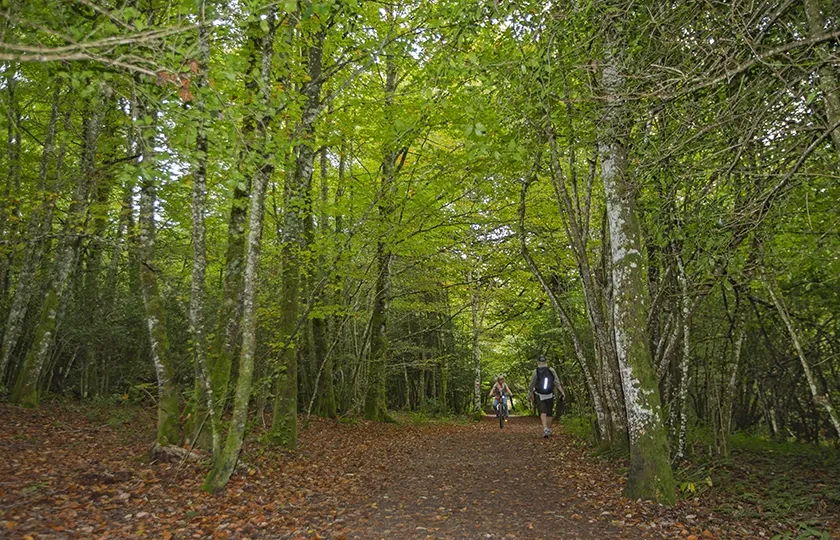
Driving through the Irati Forest means winding your way along roads under a canopy of intense green in spring, which in autumn changes to reds, yellows and ochres, like an immense cathedral that encompasses a whole universe of nature. As every darkness has its light, after travelling for miles where the sun barely penetrates the vegetation, we discover clearings decorated with endless green carpets where Latxa sheep, Pyrenean cows and Burguet mares graze oblivious to the noisy world in the shadow of ancient peaks.
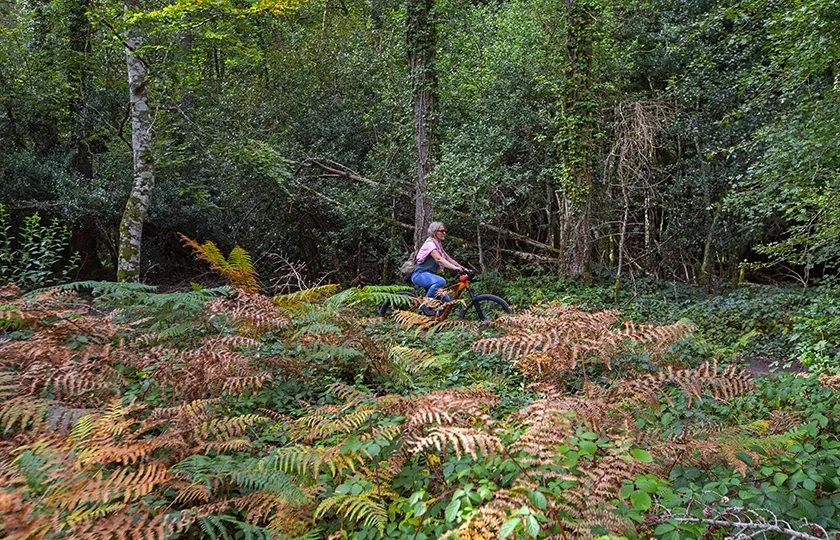
This almost untouched forest of beech, oaks, firs, birches, willows, ferns and mosses is home to deer – a must-see in autumn to admire the bellowing – roe deer, wild boar, wildcats, badgers, weasels and martens, agile and stealthy carnivores that are one of the most characteristic species of the beech and fir forest.
It is a special bird protection area, home to woodpeckers, for whom the Irati Forest is one of their last refuges, as well as black woodpeckers and white-backed woodpeckers, not to mention the birds of prey that dominate the skies, such as the bearded vulture, the peregrine falcon and the golden eagle.
Three protected areas are responsible for the magnificent conservation and biodiversity of the Irati Forest: the Mendilatz and Tristuibartea nature reserves and the Lizardoia integral reserve, which contribute to the good health of the forest.
Without a doubt, any time of year is ideal for visiting this environmental universe and taking a rejuvenating dip in nature, as well as enjoying the silence that surrounds you. Autumn is the time to admire the explosion of colours that completely transform the forest; winter is for enjoying the snow with cross-country skiing or snowshoeing at the Abodi cross-country ski resort; spring is for leisurely walks along the trails that wind through the beech forests; and summer invites you to cool off in the waters of the Irati River.
This unforgettable experience is rounded off by the countless options offered by the Irati Forest in the form of nature activities: hiking and mountain biking trails, horse riding, paragliding, canyoning and canoeing on the river, not to mention visits to small, traditional villages in the Navarran Pyrenees, rich in heritage and delicious cuisine.
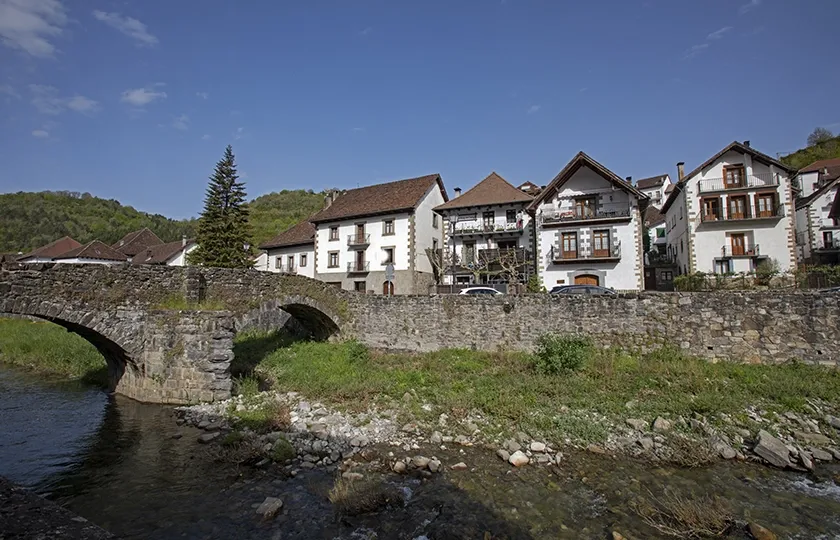
Ochagavía and Houses of Irati
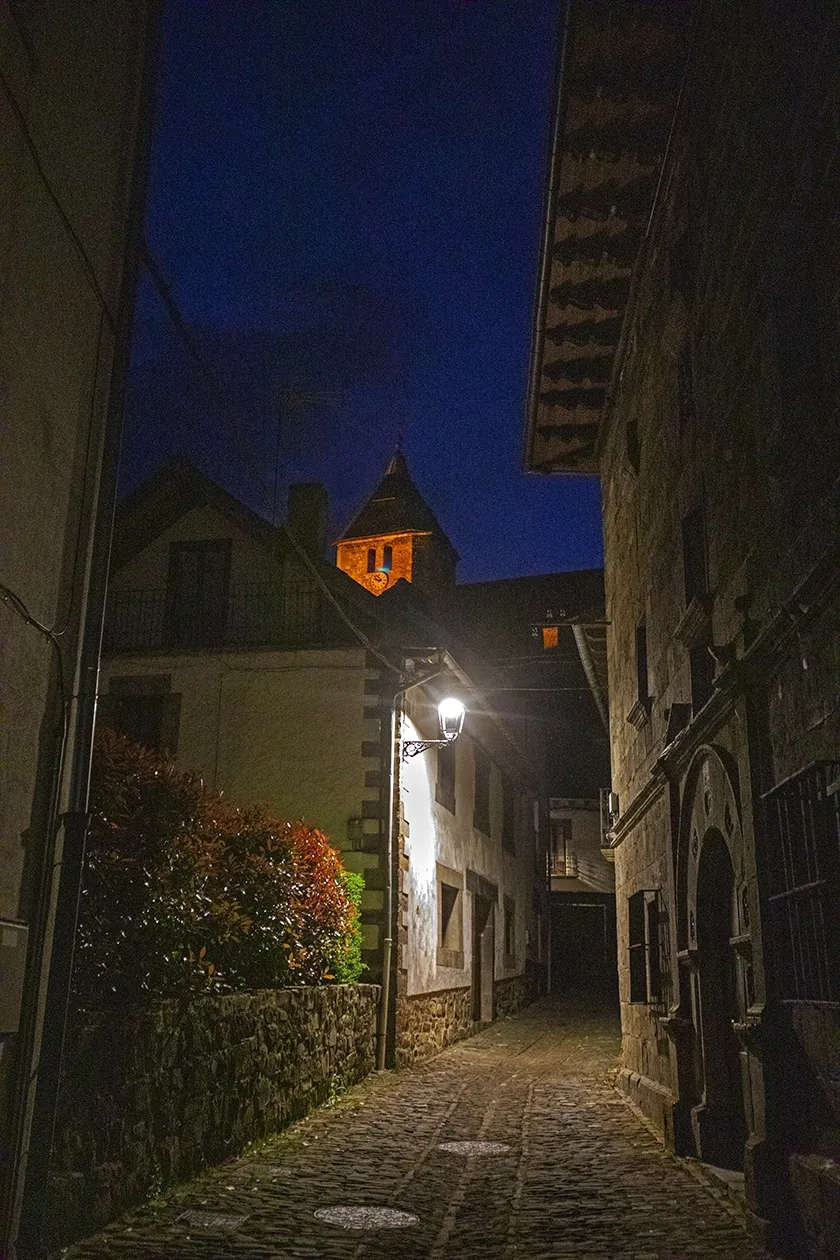
Ochagavía, located in the Salazar Valley and one of the gateways to the Irati Forest, is one of the best-known villages in the Navarran Pyrenees. With the Anduña River running through the village and its medieval bridge, it welcomes us with its beautiful, flower-filled balconies, cobbled streets and emblazoned palaces. Its architecture, typical of the area, is striking for its steeply sloping roofs, which prevent snow from accumulating during the harsh winters, and for the small gaps between the houses, known as “etxekarte”, whose sole function is to prevent the spread of fire in the event of a blaze.
Surrounded by mountains, strolling through its narrow streets brings us closer to discovering interesting monuments such as the parish church of San Juan Evangelista, considered one of the landmarks of Navarrese Renaissance sculpture, and palatial houses such as those of Urrutia, Iriarte, Donamaría and Casa Koleto. It should be noted that most of the houses in Ochagavía date back to the 18th and 19th centuries, as the previous ones were burned down by the French in 1794 during the War of the Convention.
A short distance from the village, on the summit of Mount Muskilda, stands the Basilica of Our Lady of Muskilda. Built at the end of the 12th century, it houses a beautiful Gothic image of the Virgin Mary.
After wandering through its streets admiring the architectural gems and beautiful corners hidden in the old town, it’s time to enjoy its rich and varied cuisine. From the excellent quality veal from Navarre, to the exquisite charcoal-grilled beef steak, the duck meat that can be enjoyed in numerous forms such as magret, confit, foie gras or pâté, or the trout from the rivers that run through the Irati Forest, known here as Trucha a la Navarra and stuffed with a slice of ham, to desserts such as fresh curd with honey, Roncal and Idiazabal cheeses, and walnuts with quince jelly.
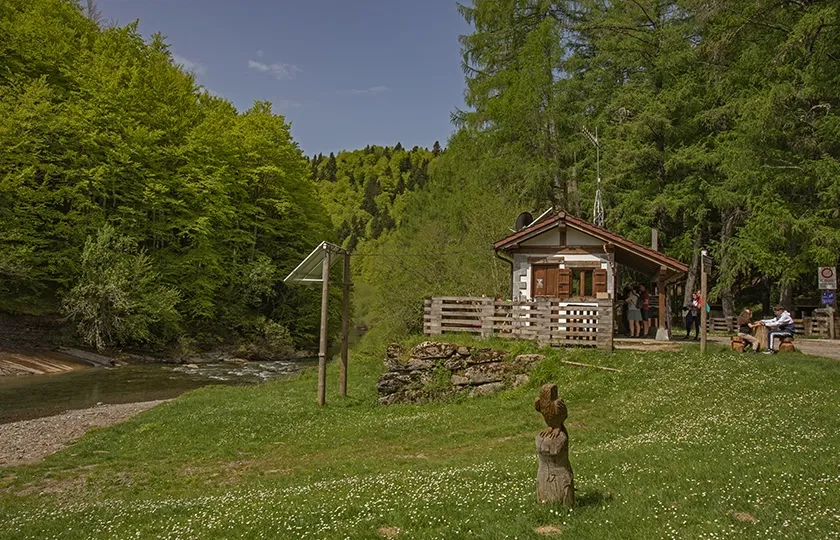
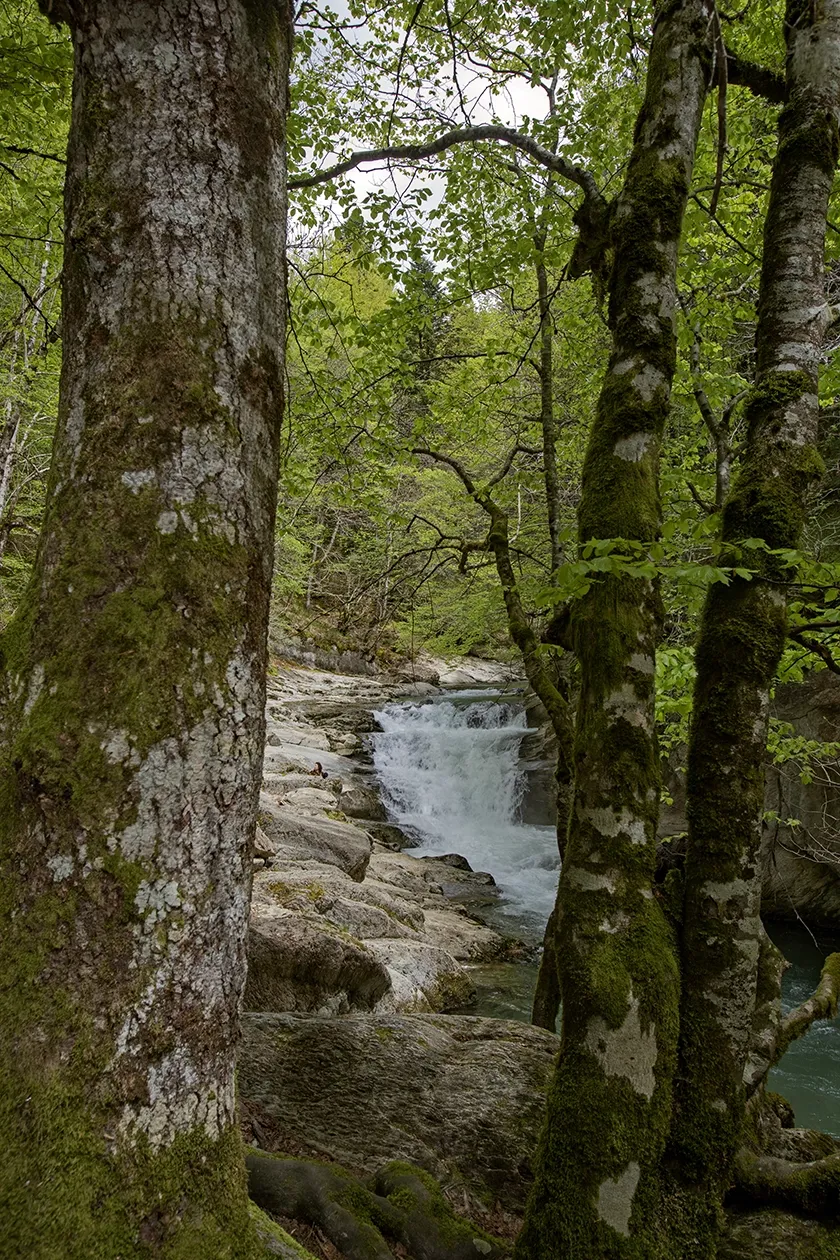
An entertaining mountain road takes us to the Casas de Irati “Virgen de las Nieves” Welcome Centre. It has an information point, security service, parking, picnic area, bar-restaurant, bicycle rental service and a small repair shop. It is important to note that during high season, in order to access this area, you must pay a maintenance fee of €7.00, but if you are staying in Ochagavía or the surrounding area, you are entitled to a €3.00 discount.
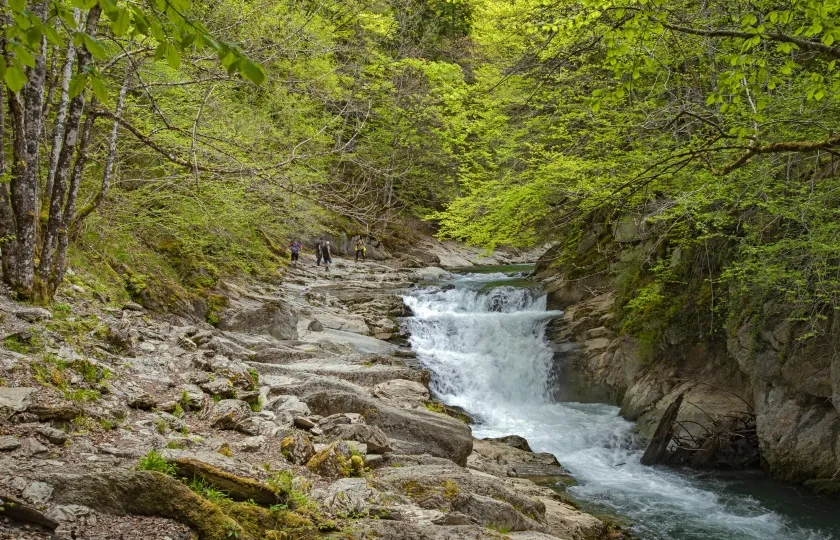
Next to the car park is the guardhouse, where you can get all the information you need to discover this beautiful spot. Various routes start from here, one of which is the Cascada del Cubo (Cubo Waterfall). Take the path parallel to the Urbeltza River in Errekaidorra, which is suitable for everyone regardless of fitness level and even for baby strollers. In about twenty minutes, you will reach this magical spot. The descent to the waterfall is not as easy as the path that brought us here, especially if it has rained, but it is worth the effort just to enjoy the view.
Orbaizeta and the Royal Munitions Factory
The second entrance to the Irati Forest is located in the Aezkoa Valley, specifically in the village of Orbaizeta, which welcomes visitors with the church of San Pedro Apóstol and its altarpiece, one of the most interesting in the area.
Further up the road, you will reach the Royal Munitions Factory of Orbaizeta. The abundance of timber, iron mines and waterways led to its construction in the 18th century, near the old ironworks of Aezkoa. Built to supply ammunition to the army, its proximity to the border meant that it was constantly looted and burned down. Although its existence was short-lived, lasting barely a century, it resurfaced several times until it was completely abandoned in the 19th century. Declared a Site of Cultural Interest in 2008, the ruins can now be visited, having been partially restored. The highlights of this industrial complex are the series of arches through which the Legartza stream flows and the furnace building, which has been reoccupied by the Government of Navarre. During its heyday, more than 150 workers lived here with their families and security troops.
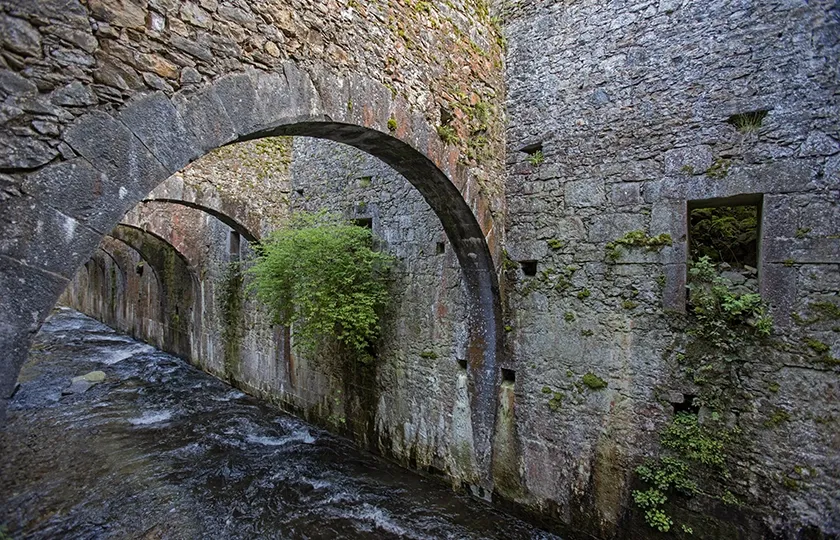
A few metres away is Kultur Ola, an exhibition centre run by the Aezkoa Valley Council where you can learn about the valley, its culture and history through videos, models, books, panels and exhibitions.
Take the track that branches off to the left of the church, right next to the exhibition centre, and you will first come to the Azpegi refuge and then the Azpegi Pass. Several trails start from the first one: Ursario Forest, Ascent to Mount Mendilatz and the Route through the Azpegi Megalithic Site. The latter, with a total length (round trip) of five kilometres, allows you to discover several prehistoric monuments such as the Azpegi I, II, III and IV and Soroluze dolmens and the Azpeqi and Soroluze cromlechs. The Azpegi pass offers wonderful views of the green meadows so characteristic of the Navarrese Pyrenees. So park your vehicle, enjoy the scenery and, before heading back, be sure to visit the modern cromlech at Organbide.
Nearby is the Urkulu Tower-Trophy, a Roman structure built in the 1st century BC to commemorate the conquest of Aquitaine. This defensive bastion, twenty metres in diameter and four metres high, dominates the border crossing at the Arnoztegi pass, through which ran the old Roman road linking the cities of Astorga (Asturica Augusta) and Bordeaux (Burdigala). You can get here by following a route that starts at the Azpegi refuge and is five and a half kilometres long, or by taking the road that connects Roncesvalles with Saint Jean Pied de Port. In both cases, it is advisable to obtain information from the Arrazola Information Point, located a few kilometres from Orbaizeta.
The best accommodation option
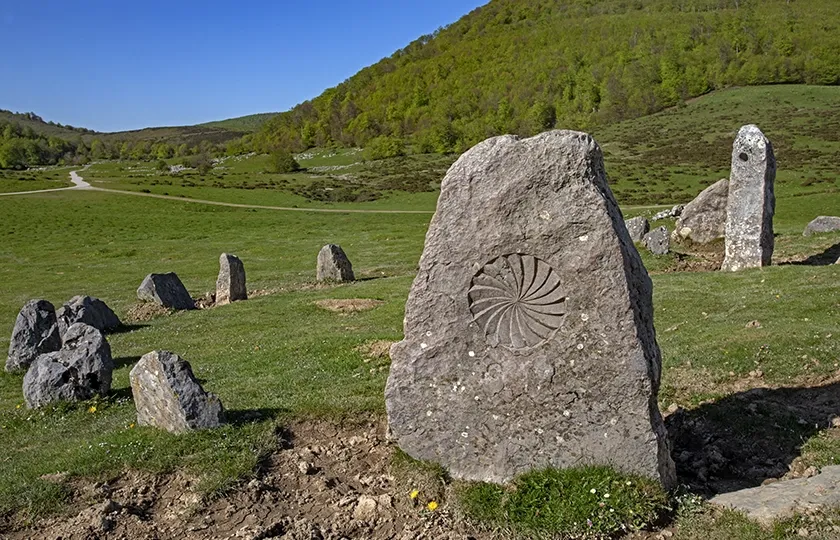
Just over sixteen kilometres from Orbaizeta is the ideal place to stay to discover the Irati Forest. In Espinal, a small village on the Camino de Santiago between Roncesvalles and Zubiri, founded in 1262 by King Teobaldo II of Navarre, where beautiful examples of Pyrenean architecture can still be seen, you will find the Urrobi campsite. Located in a privileged natural setting and surrounded by extensive beech and oak forests, this wonderful corner of Navarre shares its space with deer, roe deer, wild boar, badgers and a wide variety of birds, including vultures, woodpeckers and red kites. This second-class campsite covers an area of over fifty thousand square metres and has eight hundred pitches for tents and caravans, sixty bungalows and another thirty-six places in shared rooms.
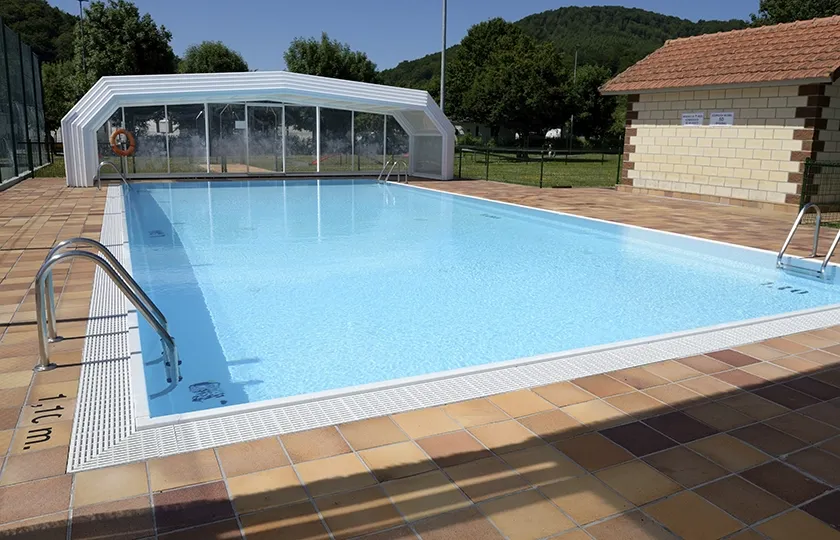
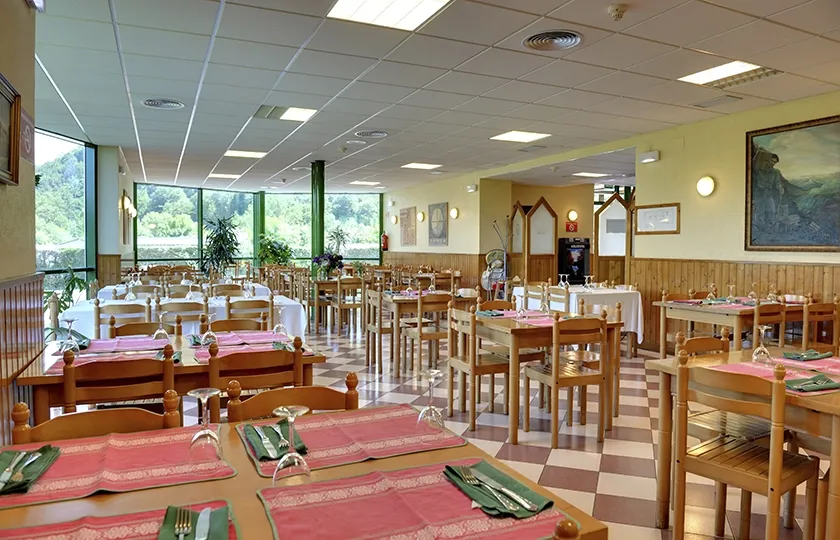
Among the services offered by the campsite, we have a restaurant and bar, self-service, playgrounds, sports facilities and a swimming pool. It also offers a bike rental service, including electric bikes, allowing you to comfortably explore any of the nine routes designed for all levels and styles.
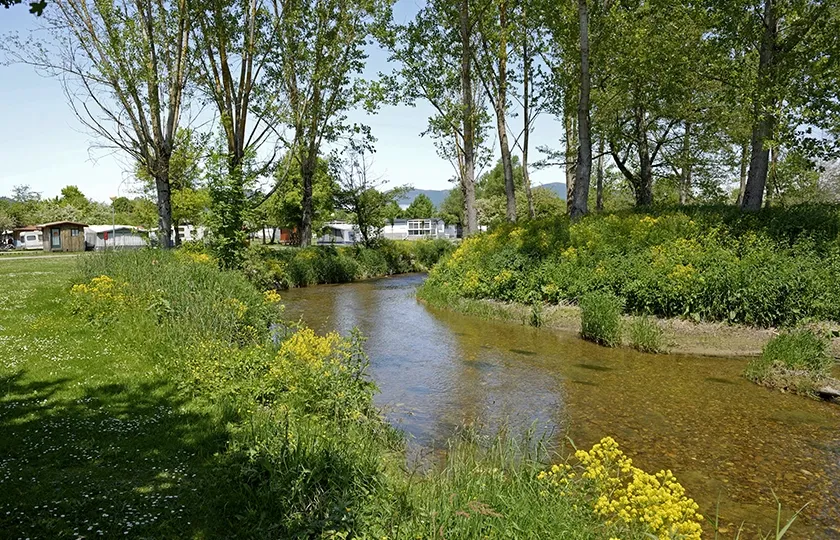
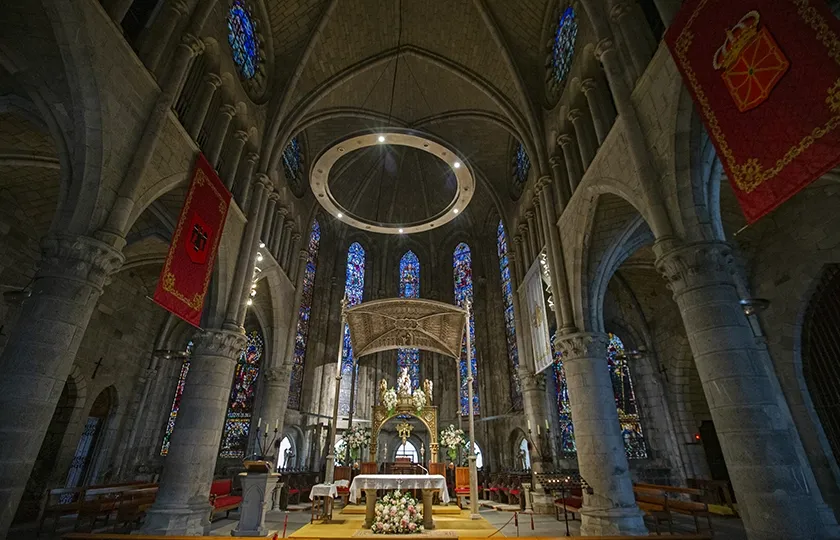
Its geographical location makes it ideal for discovering some of Navarre’s best-known places, such as Roncesvalles, a landmark on the Way of St James and steeped in mysticism, as it is here that the famous battle in which Charlemagne was defeated by a large army of Basques took place, and the Royal Collegiate Church of Santa María de Roncesvalles with its church, considered the finest example of Navarrese Gothic architecture. And once in France, not far away, Saint Jean de Pied de Port is another of the best-known towns on the Way of St James.