An internationally renowned sun and beach destination, Lloret de Mar is one of the most important on the Mediterranean coast. Named “gentle paradise” by the Catalan poet Josep Carner, it also has a rich cultural heritage that has earned it recognition as the Catalan Capital of Culture in 2023.
Located on the Costa Brava, it is a privileged area due to its high landscape value in which the sea and the mountains give it extreme beauty. It also has a forest territory that occupies three quarters of its territory with several protected natural areas.
Lloret de Mar has consolidated its position as an urban beach destination, while at the same time positioning itself in other tourism segments such as sports and events, complemented by a set of added values such as its culture, gastronomy, heritage… With five beaches and numerous coves, Lloret has more than one hundred and twenty hotels with thirty thousand beds used by more than one hundred and ten different nationalities. All this has made it the fifth largest sun and beach destination in Spain.
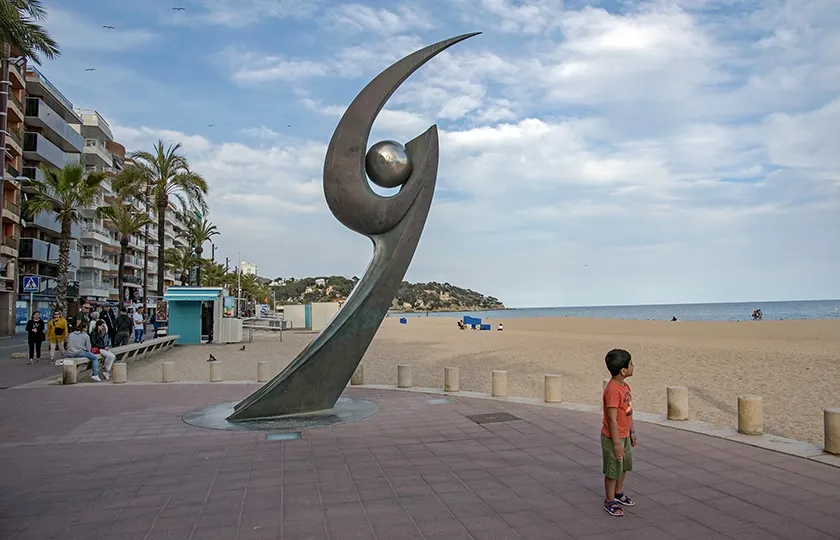
When you arrive in this town, the first thing you think of is the magnificent baths you can enjoy on its beaches and in its charming coves. And if your body wants to party, you won’t know where to choose from so many discotheques and nightclubs. But Lloret is much more than nightlife and sunbathing. The cultural offer is on a par with any other Spanish city. Attractions where heritage and culture go hand in hand with a generous offer that has recently earned it the title of Capital of Catalan Culture, making it one of the most attractive destinations on the Catalan coast.
Gardens of Santa Clotilde, a jewel of Noucentisme in Catalonia
To begin to enjoy the artistic gems that Lloret has to offer, there is nothing better than the Santa Clotilde Gardens. Of Renaissance inspiration, they are located in a beautiful setting on a cliff with breathtaking views of the sea. The garden is part of the European Route of Historic Gardens and is listed as a European Cultural Route by the Council of Europe.
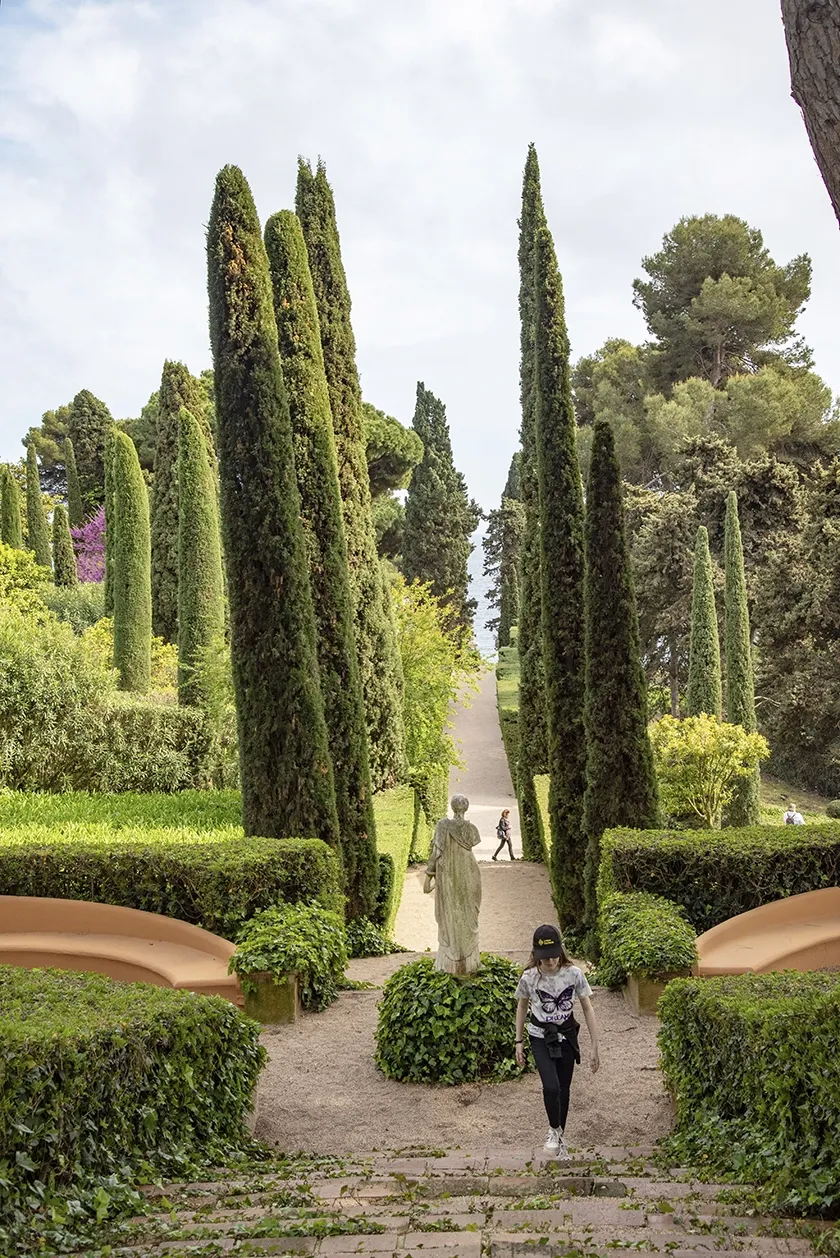
The architect and town planner Nicolau Rubió i Tudurí was chosen by the Marquis of Roviralta to design it in 1919. Staggered in terraces and with rich native vegetation arranged in harmony, they are a true example of the spirit of the noucentista movement in Catalonia. The route is laid out in overlapping terraces, with an abundance of laurel hedges, the plant that gave Lloret its name. Numerous intersecting paths, ramps, stairs, fountains, sculptures and ponds form a balance of space, volume and colour which, together with the landscape, make it a truly beautiful place flanked by the alignment of cypress trees in the form of walls that channel the visitor’s vision.
The icing on the cake are the viewpoints, located on the cliffs, which allow you to enjoy a dreamy maritime landscape and part of the coastline. It is not surprising that some streaming platforms have recently released The Dragon House, the prequel to the hit series Game of Thrones, choosing these beautiful gardens as one of the locations for their filming.
Hermitage of Santa Cristina (Obreria de Santa Cristina), the hermitage of Catalan hermitages
The entire coastline that runs along Lloret and the surrounding area, both towards the Pyrenees and to the south, can be done on foot along the GR 92 path, which is marked with signs and white and red paint. The Camino de Ronda leads to one of the most beloved places for all lloretenc/lloretenses: the hermitage of Santa Cristina. Its location, on a hill between the beaches of Santa Cristina and Cala Treumal, has been preserved in a natural environment full of trees that fortunately has not succumbed to urban speculation. Built in 1764 as a sign of the devotion that this seafaring town has always professed to its patron saint, every 24th July the town sets off in a maritime procession with a multitude of boats, carrying the image and a relic of the saint from Lloret to the beach of Santa Cristina. This sanctuary contains an interesting collection of votive offerings, including 18th century boats, as well as paintings, parchments and an ancient Renaissance altarpiece.
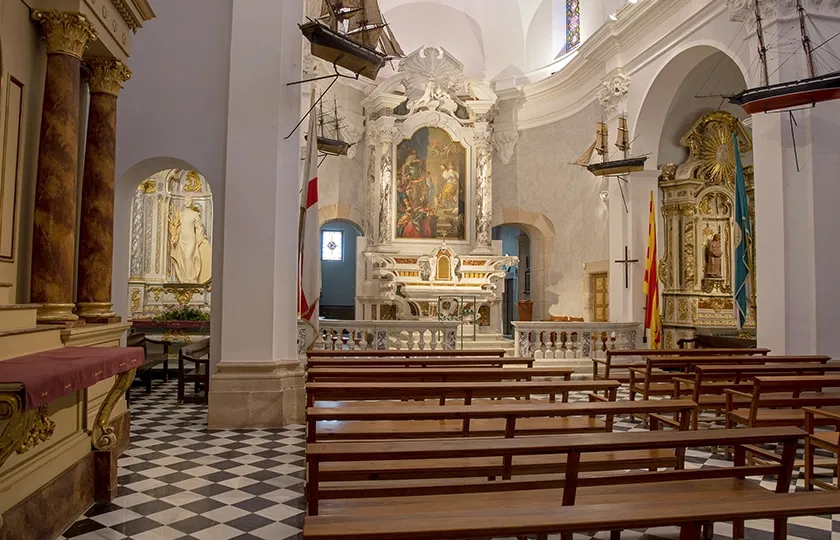
Santa Cristina has always been a source of inspiration for many artists who have decided to dedicate their works to her. The great Catalan writer Josep Pla wrote: “And above all there is the hermitage of Catalan hermitages, Santa Cristina, under the great patriarchal and venerable pine tree…” or, “…The place is luminous, its construction is of a joyful modesty and of a cheerful structure, everything has a point of spaciousness, of nature and a gentle character“.
Very close to the pine tree Pla was talking about is another of the landmarks that Lloret de Mar can boast of. We are referring to the viewpoint where the great Valencian painter Joaquín Sorolla, who this year marks the centenary of his birth, created the studio for his work: “Catalonia: The Fish”, from the “Vision of Spain” collection of the Hispanic Society of New York. A small monument that depicts the painting is a reminder of this fact.
We retrace our steps towards Lloret, still on the GR 92 and once past Fenals beach, we come across the Castell de Sant Joan with its medieval tower and fortification, which is well worth a visit.
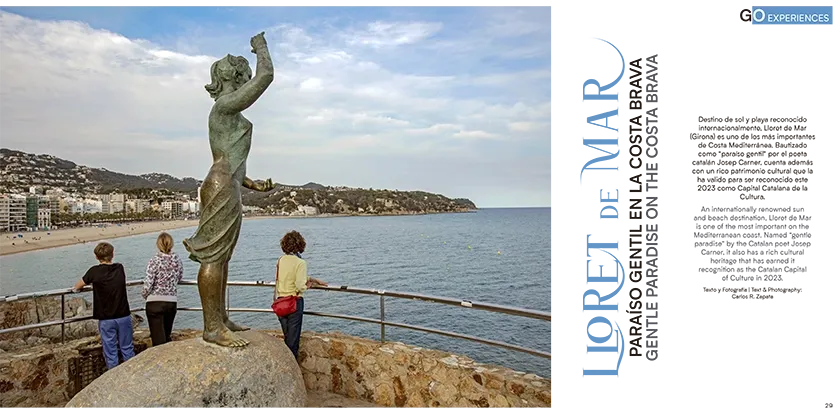
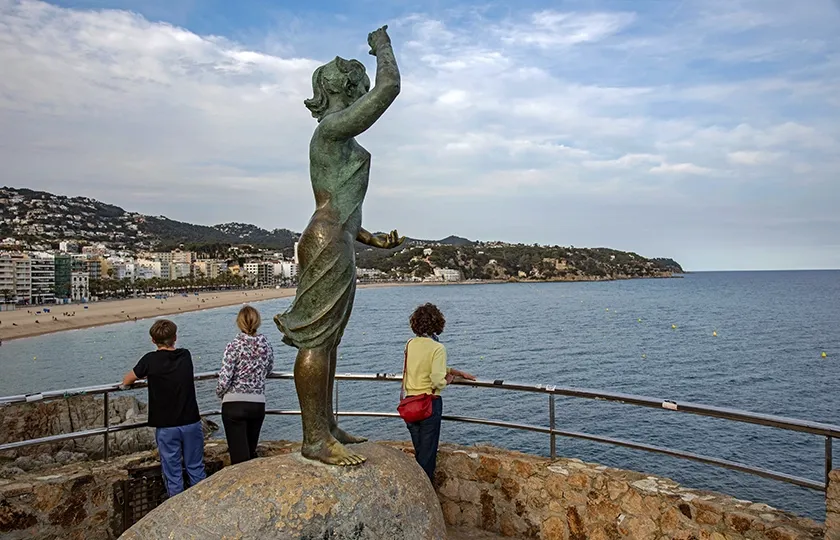
Shortly after, one of the symbols of the city appears, the Dona Marinera, a beautiful bronze sculpture symbolising the woman who watches the horizon awaiting the arrival of the sailors who have gone beyond the seas. From here the view of Lloret’s large beach in the centre of town is fantastic.
The footprint of the “Indianos” with colonial aromas
Parallel to the beach and already in the town centre is the Paseo Mossén Jacint Verdaguer in honour of one of the greatest poets in the Catalan language and very well known nationally during the 70s of the last century because his effigy appeared on a five hundred peseta note.
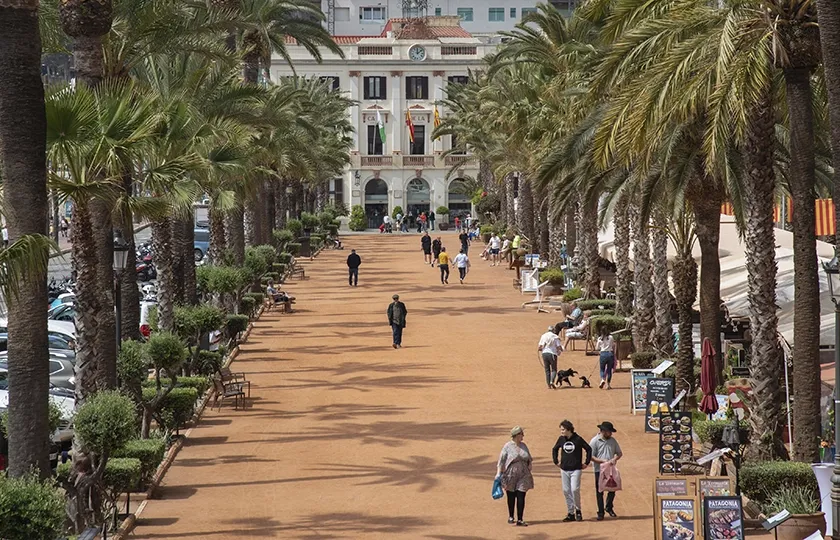
This colonial-style promenade was promoted by the “indianos” who built their houses around it. Adorned with palm trees, it is a favourite place for the “lloretenses” to stroll. This fantastic space is lined up between two beautiful buildings: the Casa de la Vila, a beautiful neoclassical building, and the Casa-Can Garriga, built by one of the Indianos who became rich in Cuba and one of the few remaining in Lloret, together with the Casa Font, of the “indiano”-modernist type, located in the old quarter. Nowadays, the house houses the Museum of the Sea, which displays the history of Lloret over the centuries, as well as that of the enterprising “lloretenses” who set sail for America in search of better living conditions. The museum is part of MOLL, the Open Museum of Lloret, a project that was launched in 2003 with the aim of recovering and making different elements of Lloret de Mar’s heritage accessible to visitors.
My “mojito” at La Bodeguita, my “daiquiri” at La Floridita
Few people know of a story that is on many people’s lips, but whose origin is unknown. A “lloretense” called Constante Ribalaigua i Vert emigrated like many others to Cuba at the beginning of the 20th century, where he started working as a barman in the mythical bar La Floridita l and of which he would end up being the owner. A meeting place for celebrities, including Hemingway, Ribalaigua, better known as Constante, created a cocktail called “Daiquiri“, which the Nobel Prize winner made known all over the world, uttering the famous phrase: “My “mojito” at La Bodeguita, my “daiquiri” at El Floridita”.
And speaking of “indianos” like Constante, Lloret also offers an exceptional “indianos” route, which offers visitors the chance to discover what remains of these constructions in the historic centre of the town.
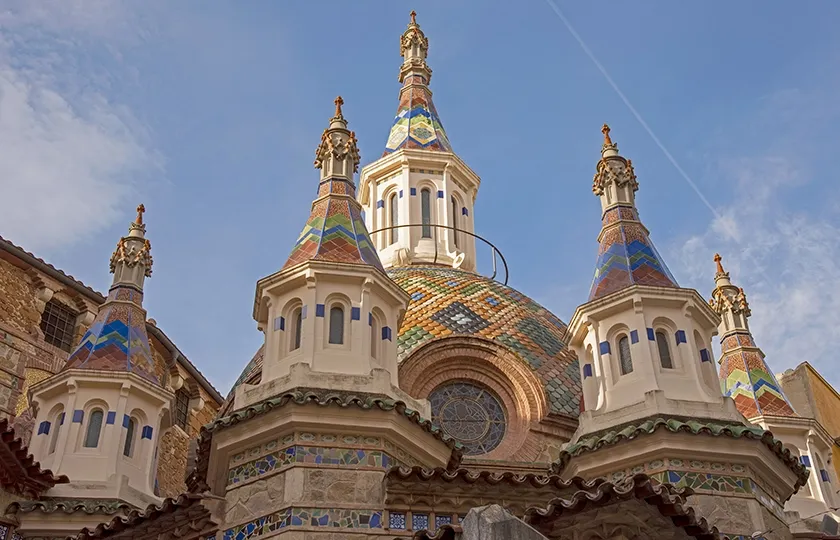
Some of the “indianos” who sailed to America in the 19th and 20th centuries returned to their homeland having made their fortune, contributing to the urban transformation of Lloret. But they not only built large mansions that, with the passing of time, have become a hallmark of the town’s identity, but also financed various charitable works, such as the hospital and schools, and also participated in the modernist reconstruction of the parish church of Sant Romà. This church, located in the heart of the city centre, in the Catalan Gothic style, was badly damaged during the Civil War, but the pictorial part of the altarpiece of the main altar is partially preserved inside a chapel. But what is most striking about this building is its exterior, with its colourful domes and mosaics with colourful modernist elements, which have become one of the icons of Lloret.
The modernist cemetery of the “Indianos”
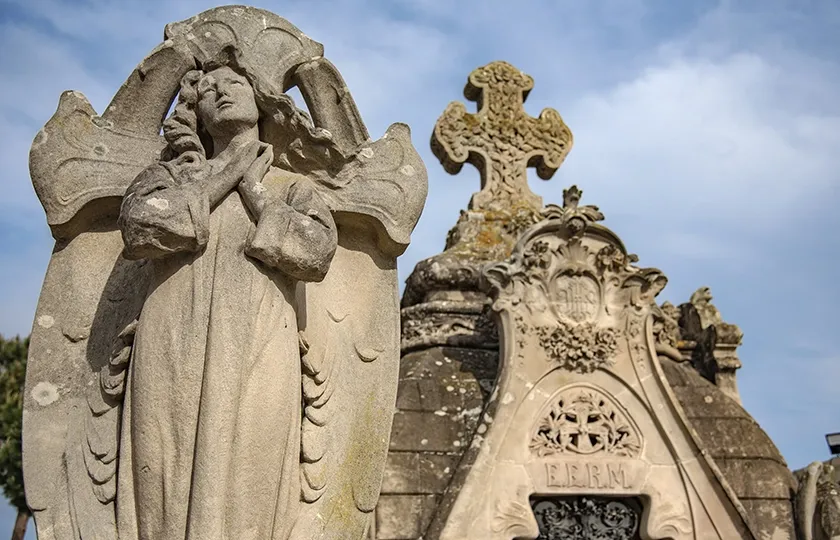
The Indiana Route takes us to another of Lloret de Mar’s icons, the Indianos cemetery, whose extraordinary pantheons, designed by architects of the stature of Puig i Cadafalch, Vicenç Artigas and Antoni Gallissá, display the best of late 19th-century modernism. An interesting route that will also allow us to admire the Casa de Nicolau Font or Can Font, built in 1877 by the Lloret-born Félix Torras i Mataró, commissioned by Nicolás Font i Maig, and which today houses an interesting museum. A modernist house-museum, it is considered to be the prototype of the stately homes linked to the “lloretense” fortunes made in America.
The Benedictine monastery of Sant Pere del Bosc, whose restoration and adaptation into a house, and now a hotel and restaurant, was carried out by Puig Cadafalch, is also worthy of admiration, although it is only a few kilometres outside Lloret.
A fairytale castle
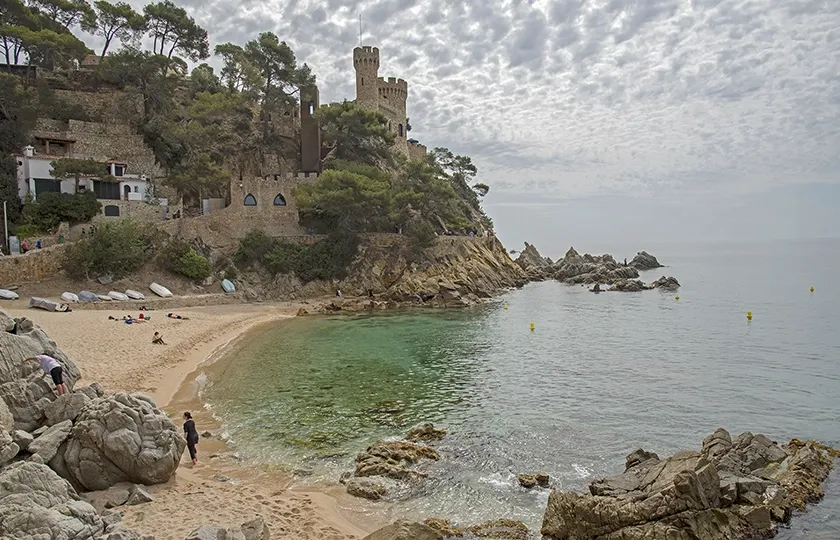
Along the beautiful promenade from Lloret beach towards the north, that is to say towards Tossa de Mar, and following the Camí de Ronda GR 92, at Sa Caleta, you reach the Castell de Lloret, a building in the form of a medieval castle built in 1935 that looks like something out of a fairy tale. With its elegant appearance hanging from the cliff, it has become an emblematic place, not only of Lloret but of the whole of the Costa Brava. A must-see, it has recently been renovated and refurbished so that everyone can see it from both the inside and the outside. Visitors will also be able to enjoy a virtual show called “No Time Left”, which, through an immersive experience on the climate crisis, discovers the human activities that have polluted the planet and experiences, in first person, the effects of the climate emergency. In the afternoons or evenings, it is the place to relax, have a drink and enjoy the spectacular views of the Mediterranean Sea.
Good cooking and better rest
With a diverse and wide gastronomic offer that allows us to taste local and Mediterranean or international cuisine that transports us to other latitudes and cultures, the gastronomy of “loretense” is known worldwide and boasts of being healthy, sustainable, good and balanced. From fuet, to pa amb tomàquet (bread with tomato), to botifarra dolça (sweet sausage), anchovies from L’Escala, escalivada (with roasted vegetables such as peppers and aubergines), esqueixada, espardenyes or cogombres de mar, sea urchins or the delicious crema catalana, sitting at a table in Lloret de Mar is without doubt one of the greatest pleasures you can enjoy. And to pay tribute to the excellent products that fill its pantries, there are two annual events that are another excuse to visit this beautiful corner of the Costa Brava: the Rice Gastronomic Days in May and the Fish and Seafood Gastronomic Days in October.
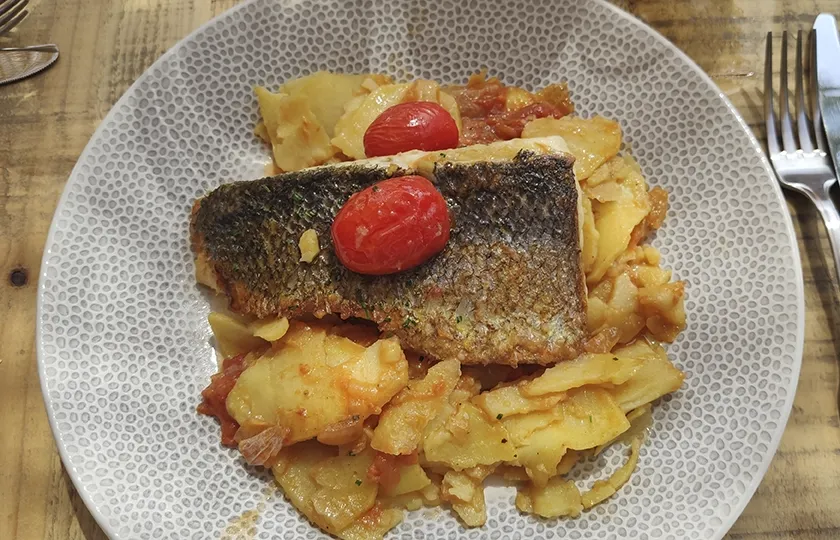
If the gastronomic offer is varied, it is no less so when it comes to choosing one of the establishments that carefully offer us some of the most succulent dishes of its cuisine.
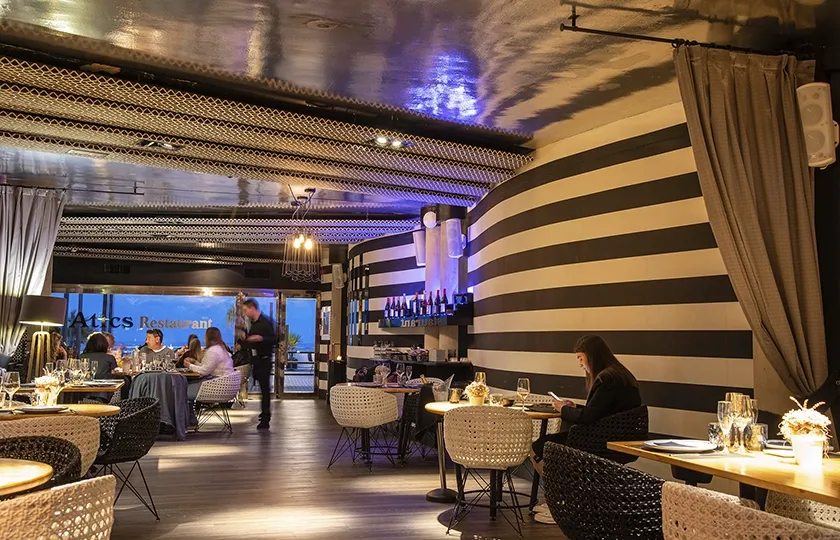
If you are looking for the best seafood and the most delicious paella, then you must visit Gammarus (https://gammarus.es/), located in Cala Canyelles, on a lovely, uncrowded beach and very close to the Castell de Lloret. But if you prefer exquisite tapas, your place is La Terrasa del Bella in Plaça de Espanya, where you can enjoy bravas with special sauce, Angus beef tartare, prawn lollipops, Andalusian-style squid… Another interesting option is the highly recommended Atics Restaurant (https://aticsrestaurant.com/es) and its delicious cod au gratin with honey aioli accompanied by fantastic views of Lloret.
But if you wish to savour a delicious gastronomy made with local products, the restaurant of the Hotel Sant Pere del Bosc (https://hotelsantperedelbosc.com/) awaits you, a true oasis of relaxation in an idyllic and romantic setting where you can immerse yourself in a world of sensations.
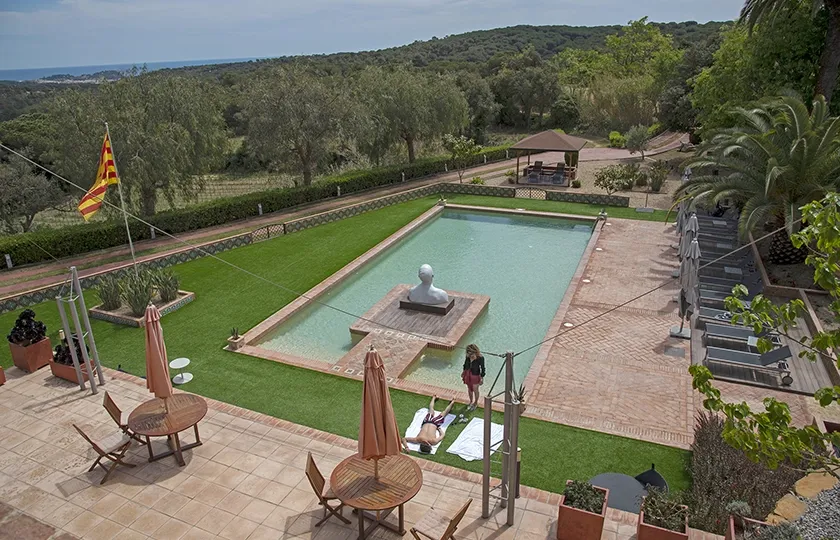
When designing our next getaway to this wonderful land, it is important to choose quality accommodation that guarantees comfort and good service. And Lloret de Mar is also generous in this respect. Family hotels with water parks, others designed for adults-only relaxation or specialising in the Mediterranean diet make up an extensive catalogue of accommodation. Two examples that are sure not to disappoint are the Hotel L’Azure (https://lazure-hotel.com/el-hotel/) which has family areas and activities for young and old, a large swimming pool and Splash Park and less than ten minutes from the beach. It is also an adults only hotel with exclusive areas for adults, with a varied gastronomic offer and a wellness area that make it an unbeatable option if you are looking for a hotel with Spa in Lloret.
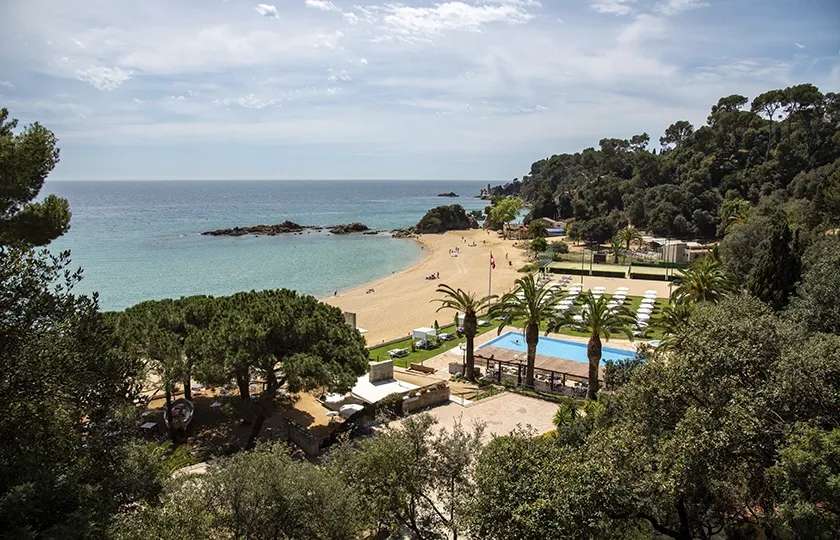
Overlooking Santa Cristina Beach, the Hotel Santa Marta (https://hotelsantamarta.es/) offers a gastronomy based on seasonal and local products, bright and comfortable rooms with the best views and the most relaxing and therapeutic treatments in its Wellness & Spa.