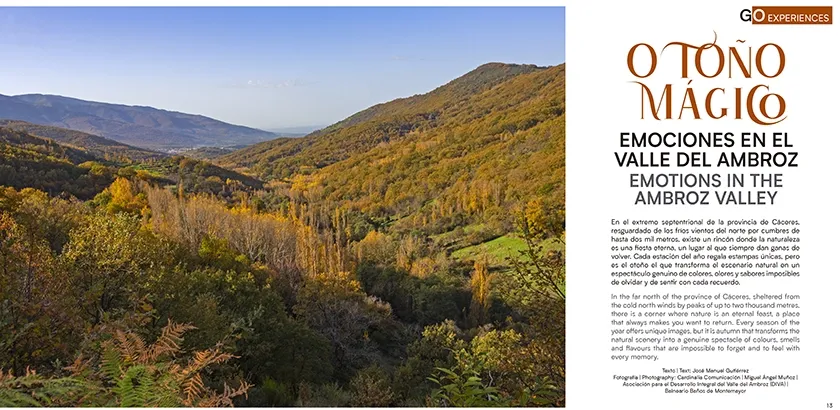
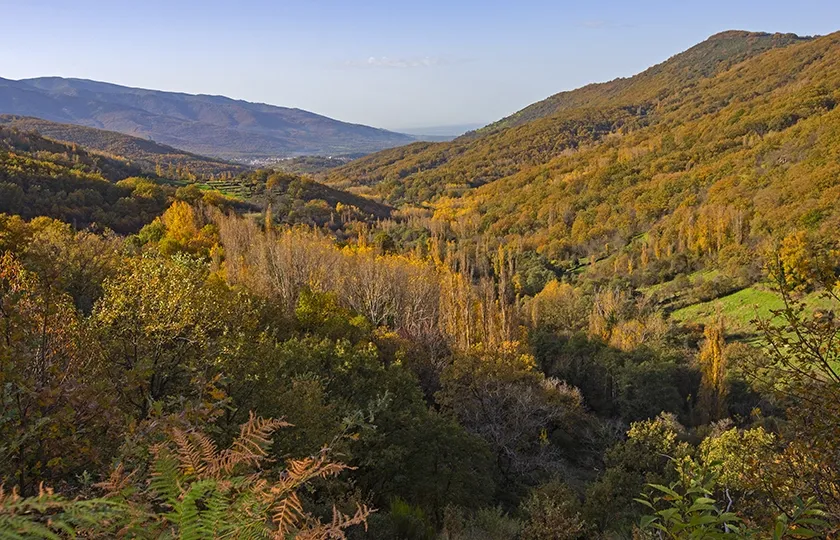
In the far north of the province of Cáceres, sheltered from the cold north winds by peaks of up to two thousand metres, there is a corner where nature is an eternal feast, a place that always makes you want to return. Every season of the year offers unique images, but it is autumn that transforms the natural scenery into a genuine spectacle of colours, smells and flavours that are impossible to forget and to feel with every memory.
The fresh and crystalline waters of the Ambroz river, coming from hundreds of streams and waterfalls or “chorros” as they are called here, give life to this particular Eden full of contrasts, far exceeding all expectations.
But if the natural environment is surprising for its extreme generosity, its cultural values are no less so. Thanks to its strategic geographical location as a transitional territory between the southwest of the Iberian Peninsula and the northern plateau, the Celts and Vetons, the Romans and the Jews left their mark here, whose landmarks have withstood the passage of time and historical upheavals, thus preserving an undisputed ethnographic and heritage legacy.
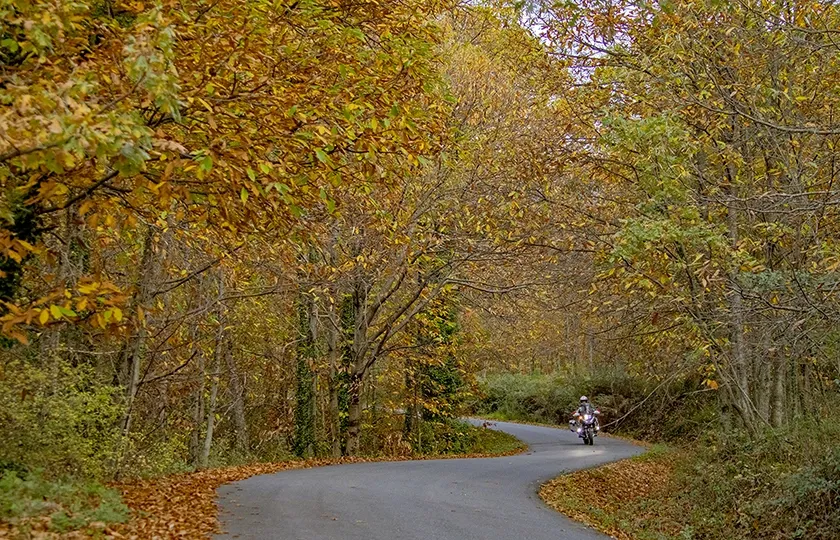
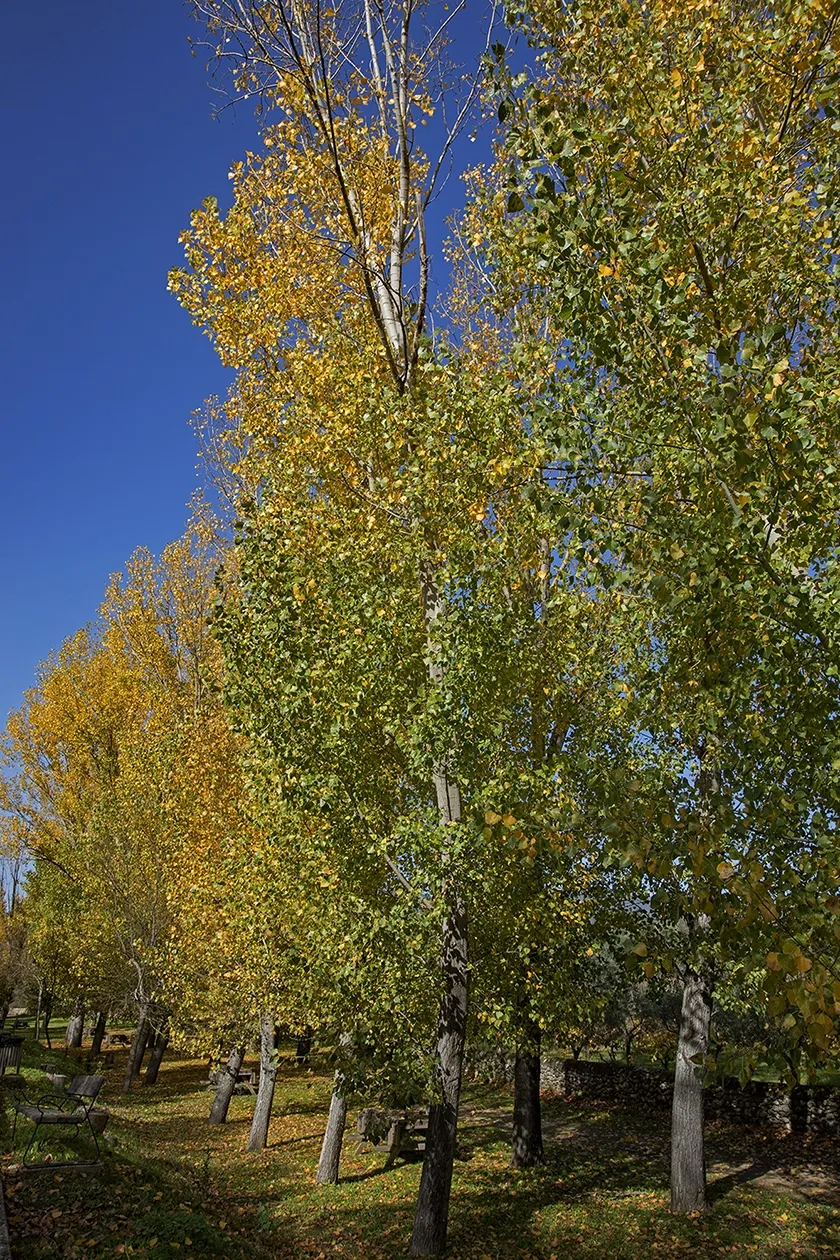
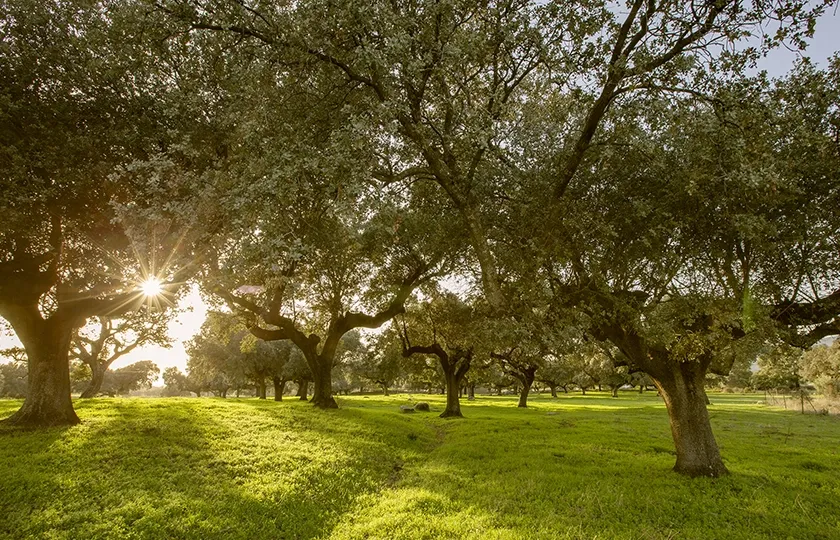
The Ambroz Valley is the smallest region in the province of Cáceres, so the natural beauty is concentrated to unsuspected limits; it is the universe of small details. It is striking how, in such a small space, altitudes range from around four hundred metres in the lower areas of the meadows and pastures, where olive trees, fruit trees, holm oaks and cork oaks grow, to two thousand metres with vegetation typical of the high mountains. Between one elevation and the other stretches the kingdom of chestnut and oak trees, putting the finishing touch to a chromatic palette that changes throughout the year in a competitive scenario between seasons to be the most beautiful.
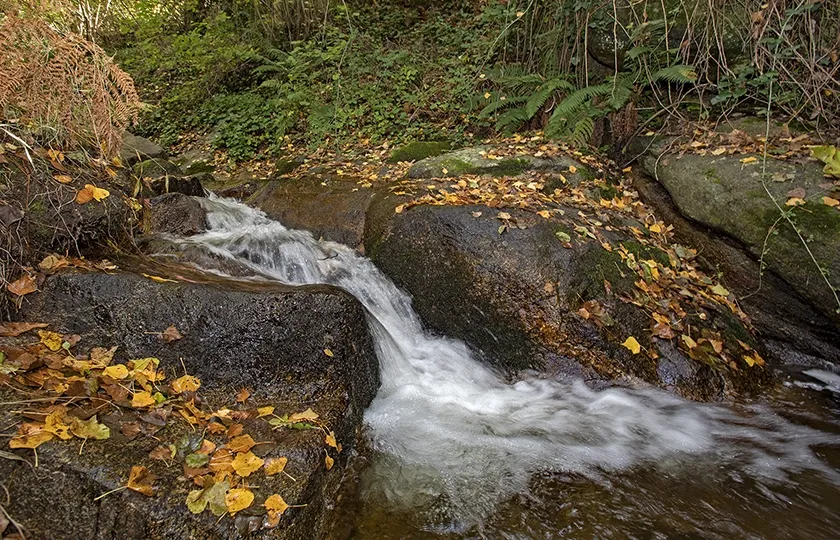
Winter transforms silences into melodies and the air smells like the protective home of the snowy peaks, those from which spring will take the waters with which it will stage an explosion of colours and fragrances as a song to life that is reborn. The weeks go by and the summer invites you to meet up again, to soak up the light filtered by the leaves of the trees, to refresh yourself in the hundreds of natural pools with their fresh, clear water and to enjoy magical sunsets.
The feast of nature
The arrival of autumn is much more than just another festival of colours and temptations to enjoy nature. The Magic Autumn in the Ambroz Valley, now in its twenty-seventh edition, has become a tourist and cultural reference point of the first order thanks to the effort and commitment of the institutions and people of the eight municipalities that populate the valley. As a result of this work well done, it has already been recognised as a Festival of International Tourist Interest, a national milestone as it is the first celebration that pays tribute to a season and turns it into a sign of identity. According to the Ministry of Industry and Tourism, this well-deserved classification is due to its “capacity to transform a season of the year into a celebration of nature with a tourist, environmental and social cohesion vocation for a territory, as well as enhancing the tangible and intangible cultural heritage”.
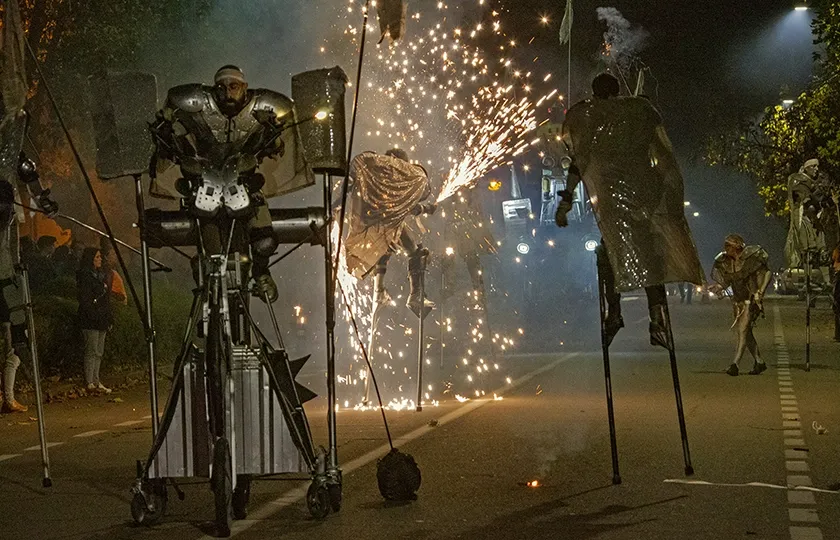
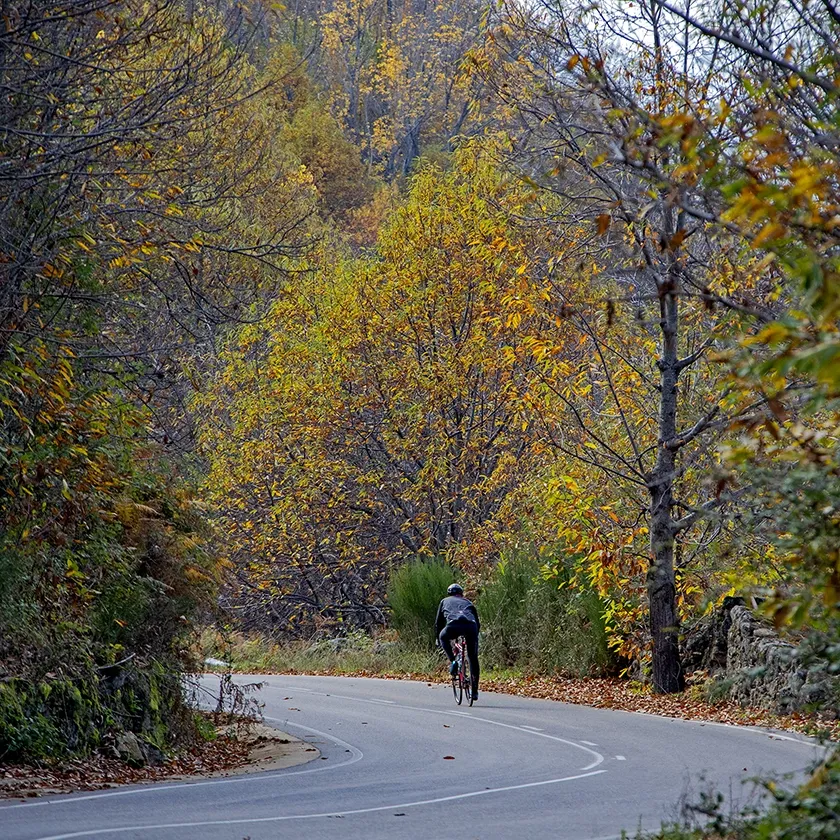
When the forest is ready for the celebration, for seven weeks a full agenda of activities and events takes place in a different municipality every weekend, such as themed hiking or mountain biking routes, mountain races, adventure raids, gastronomy, mycology, astronomy, workshops, photography, craft markets, audiovisual shows, music, theatre or events with a high traditional significance such as the Transhumance festival, among many others.
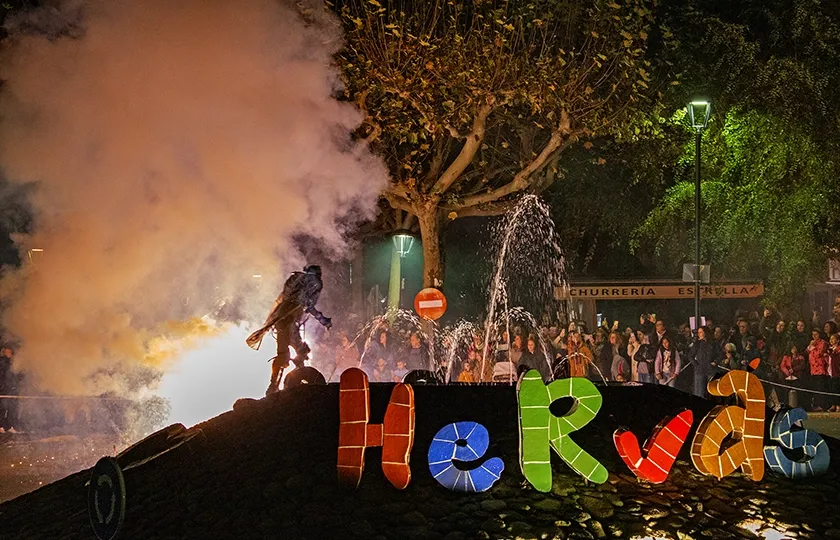
The Magic Autumn in the Ambroz Valley is the perfect excuse to discover the seductive capacity of this corner of Cáceres, to experience first-hand how it is possible to harmonise contact with a particularly generous and well-preserved nature with a festive atmosphere that is full of imagination and where boredom has no place, but nothing overcrowded. All this makes every moment especially pleasant.
The Ambroz Valley, with its more than two hundred kilometres of trails, is the universe of routes to serenely immerse oneself in the natural environment and in its autumn side they provide a special dimension. Designed with maximum enjoyment in mind and for all audiences, many of them have a cultural component, bringing us closer to ancestral ways of life such as livestock farming and transhumance or to singularly genuine pieces of history.
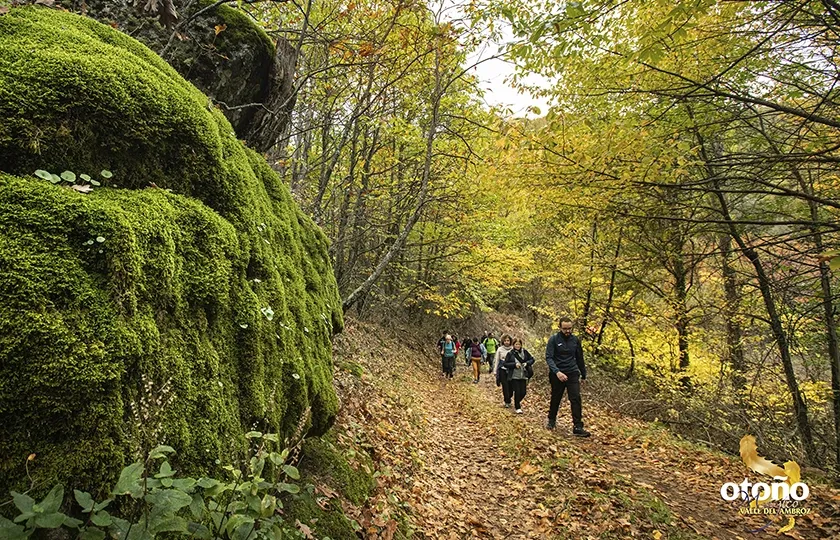
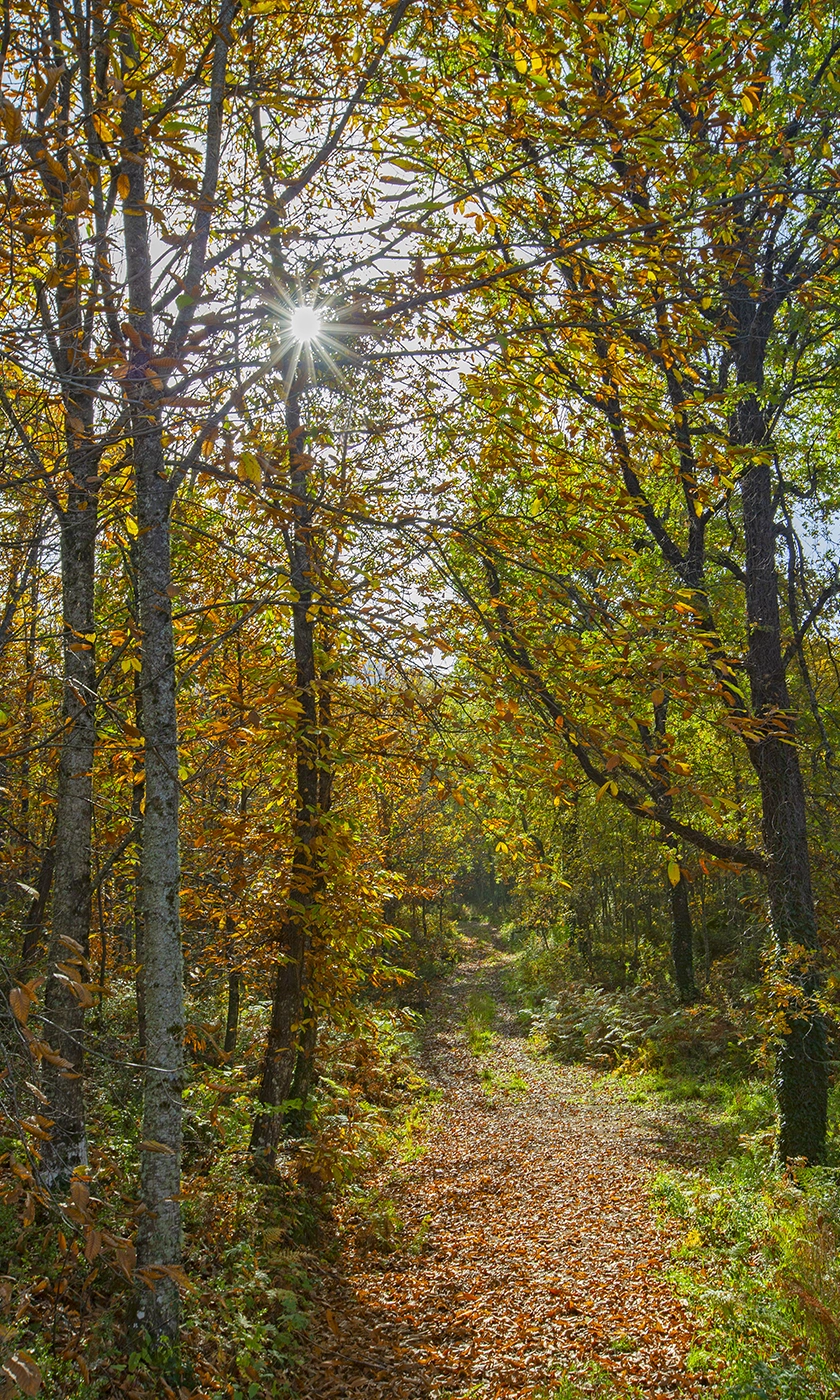
One of the most beautiful for the diversity of landscapes it crosses, acquiring a great chromatic richness in autumn, is the Ambroz Forest Trail. With a total distance of 24 kilometres downhill and perfectly signposted with white and yellow markings, it can be covered in its entirety or in sections starting in the mountains surrounding La Garganta at an altitude of over a thousand metres. Continuing in the direction of Hervás along the historic road and the cattle track, the path leads us to the bottom of the valley, crossing leafy oak woods, marvellous chestnut groves, meadows and riverside woods, until we contemplate the plasticity of the terraces of cherry, olive and plum trees or the magical image of the Extremaduran pastureland in the vicinity of Segura de Toro, the oldest town in the region, situated at an altitude of six hundred metres above sea level.
Eight villages to get lost in
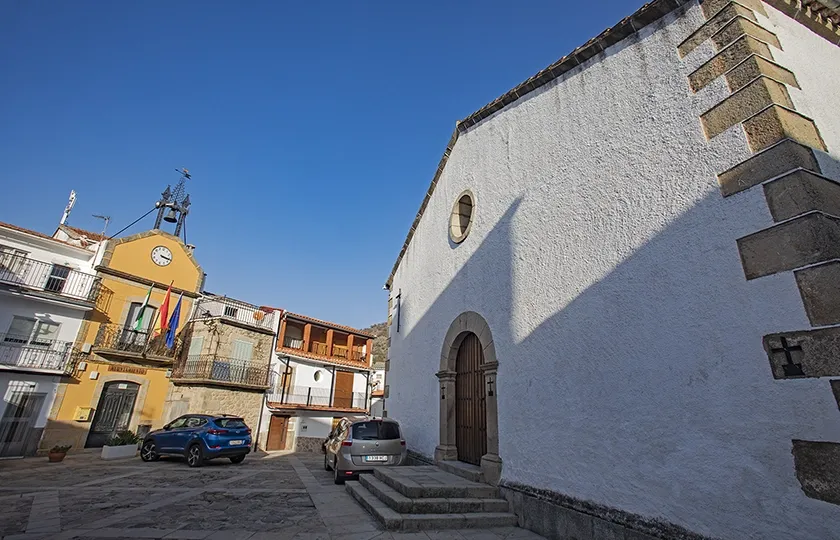
Spread throughout the territory of this genuine garden, eight municipalities with very heterogeneous origins tell us about their history, which in some cases is the history of all of them, as is the case of Hervás or Abadía and Baños de Montemayor and their links with the Romanisation of the Peninsula.
Abadía is one of those villages of uncertain origin, although some remains found seem to indicate its relationship with a Roman villa linked to the nearby and very important city of Cáparra, through which the Vía de la Plata (Silver Route) passed. It was not until the 12th century that there was a written reference to it when it became a Cistercian abbey. A century later, during the reign of Alfonso X the Wise, the current settlement of the village was established.
The Sotofermoso palace, with its splendid Mudejar courtyard and Renaissance gardens, has preserved an air of monumentality from that past. This complex was an important cultural centre of the Renaissance and within its walls some authors, such as Lope de Vega, wrote part of their work.
Very close to here, Aldeanueva del Camino clearly refers to its origin as a Roman camp located in the middle of the Vía de la Plata, which runs through the centre of the village, crossing the riverbed over a charming bridge that preserves its Roman foundations.
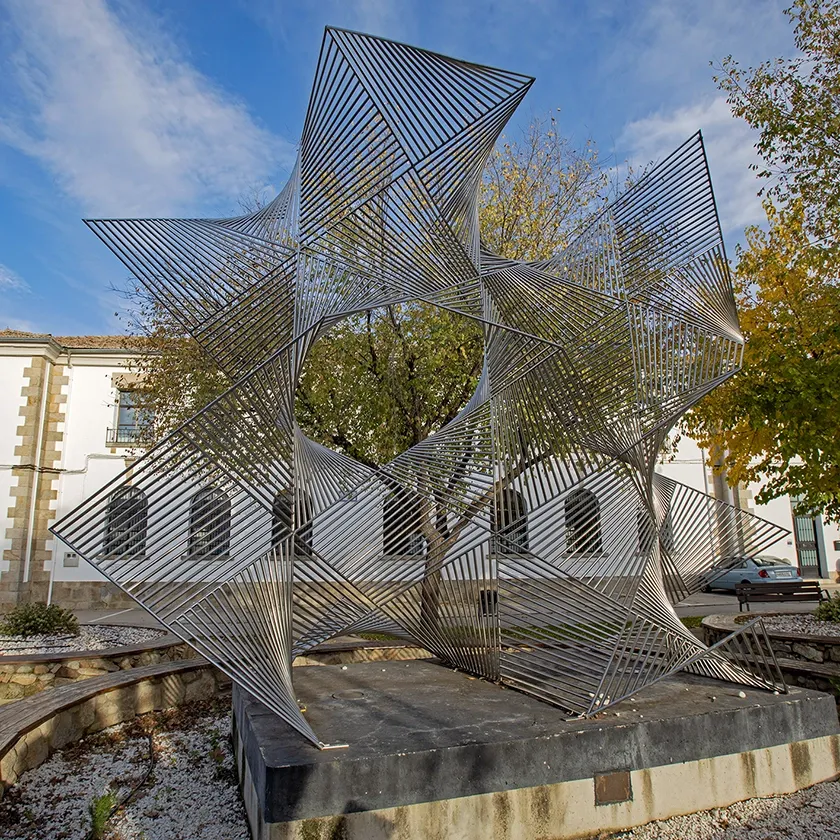
As we walk through the streets we can see some interesting examples of traditional architecture, as well as a sign of identity hanging from the balconies: bunches of paprika drying in the sun, a tradition whose origin is lost in time. Suddenly, in a square stands a monumental sculpture by Ángel Duarte, one of the most interesting painters and sculptors of the 20th century, born in Aldeanueva del Camino, whose cultural recognition reached worldwide heights.
A section of the Vía Verde-Camino Natural de la Plata also runs through here, following the route of the old railway line. This pleasant path through a changing landscape between the riparian forest and the Extremaduran pastureland offers magical spots such as the Pozo Hondo, a subtle waterfall of wild waters that can be reached by a path flanked by stones and moss with almost romantic overtones. Not far away, heading south, we can admire the good state of preservation of a stretch of the primitive Roman road between pastures dotted with holm oaks and cork oaks.
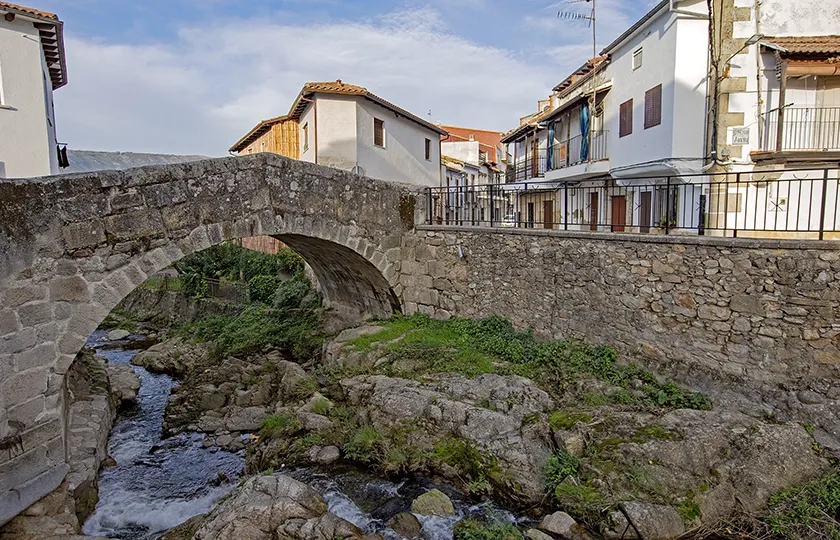
Hervás is the nerve centre of the valley. Its origins date back to the 10th century and, according to tradition, it was founded by the Templars, although it is its Jewish quarter, one of the most beautiful in the country, which maintains the clear signs of identity of its past, even conserving the craftsmanship of the time based on the manufacture of leather, wood, wrought iron and glass.
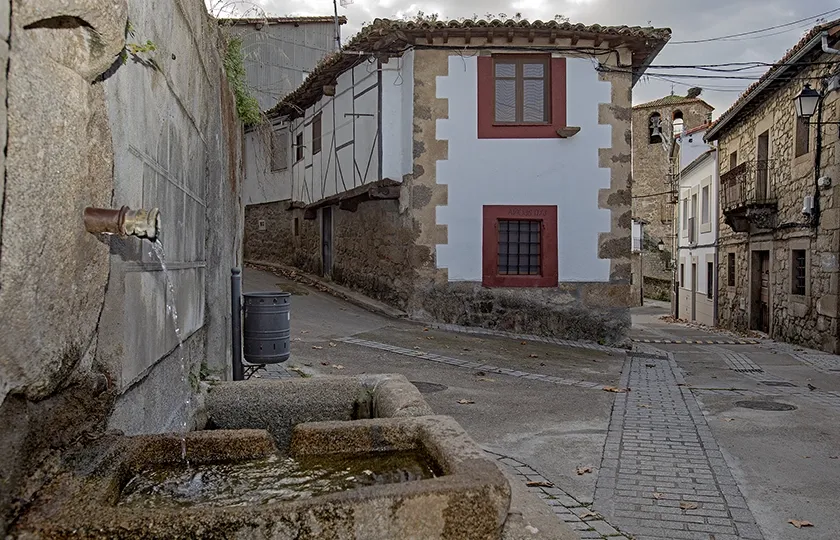
Walking through the old town it is impossible to resist the emotional evocation of what it was and what it meant. Its streets and corners flanked by splendid traditional houses built with a chestnut and adobe framework are a masterly exercise in wisdom. Perfectly maintained for centuries, because here the conversion was massive, preventing the Sephardic exodus and guaranteeing the survival of their culture, the serpentine of houses catches the eye, especially in what is now Calle Rabilero, where it is believed that the synagogue was located at number 19, and in the surrounding area, provoking a real journey back in time.
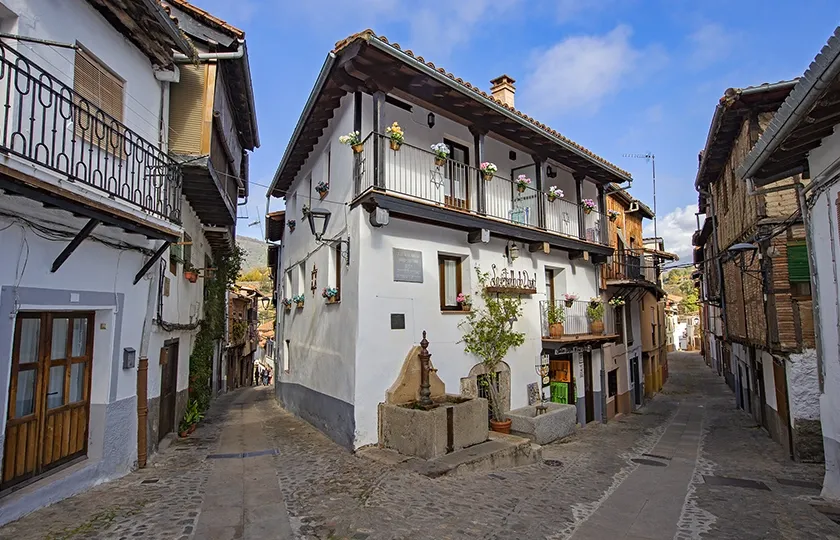
The aljama of Hervás has been declared a Historic-Artistic Site and is one of the best preserved Jewish quarters, even making an effort to pay homage to its Jewish past by dedicating a street to “Judeo-Christian friendship” and, above all, with an extremely careful recovery and restoration of the old quarter.
The entire medieval quarter of Hervás, presided over by the Renaissance church of Santa María, is decorated with symbols such as the Star of David or menorahs, a permanent reminder of its Sephardic past, but perhaps the most colourful moment is during the Los Conversos Festival, which is held every year in the first days of July with various activities and a great theatrical representation of the historical moment of the expulsion, with an unbeatable setting on the banks of the Ambroz river, on the edge of the medieval quarter.
We cannot leave Hervás without tasting the delicious Jewish pastries that have been wisely recovered, nor should we forget to visit the Pérez Comendador-Leroux Museum, in whose rooms of the Casa de los Dávila palace we can enjoy a large part of the sculptural production of Enrique Pérez Comendador (Hervás, 1900-Madrid, 1981) and the paintings of his wife, the French painter Magdalena Leroux (Paris 1902-Madrid 1985).
Baños de Montemayor is another town with an important historical legacy. Located in the middle of the Silver Route, of which it preserves two large, perfectly restored stretches at the entrance and exit of the village, as well as the charming bridge of El Cubo, its origins date back almost two thousand years. Over time, this road became a transhumance route and nowadays a pilgrimage route to Santiago, which has contributed to an important cultural enrichment.
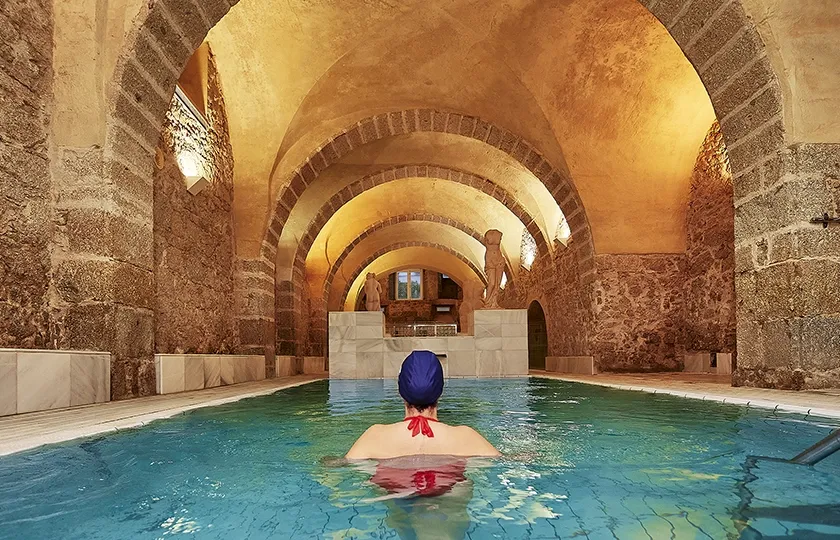
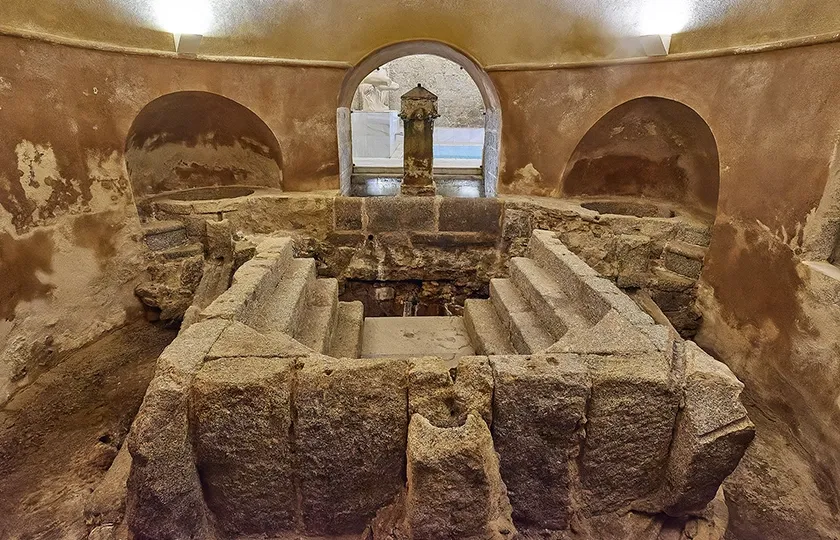
The existence of thermal springs, whose mineral-medicinal waters gush forth at 43 degrees Celsius, justified the construction of the Roman baths that are still in use at the Baños de Montemayor spa, where you can also admire an inscription dedicated to the Caparian Nymphs and two milestones from the Vía de la Plata from the times of the emperors Trajan and Hadrian, respectively. This thermal culture has been kept alive for centuries and proof of this is that the primitive spa, declared an Asset of Cultural Interest, has been transformed and modernised from the 19th century to the present day. The construction of the new spa as a complement to the old one has meant the creation of one of the most modern thermal complexes in Spain in terms of its complete facilities and the use of the most advanced hydrotherapy techniques, which does not prevent it from conserving the romanticism of the legendary enclave.
At the same time, Baños de Montemayor preserves good examples of religious and civil architecture such as ancestral and traditional houses, as well as some modernist examples linked to thermal activity.
We leave behind this enclave characterised by water to face the ascent to the higher areas of the Candelario mountain range, but not before making a stop at the Centro de Interpretación de la Molinería (Milling Interpretation Centre) at the exit of the village. Nestled in a bucolic setting that can be reached after a short, pleasant walk, this 18th century mill conserves the machinery in operation, driven by hydraulic energy, whose educational work is complemented with audiovisual resources to better understand everything related to the cultivation of cereals and their subsequent transformation.
The road that leads to the village of La Garganta is quite a spectacle, both for the changing landscape as you gain altitude, for the lush forests of chestnut, oak, birch and holly trees at the highest altitudes, for the breathtaking views of the valley and for the mosaic of autumn colours that permeate our retina.
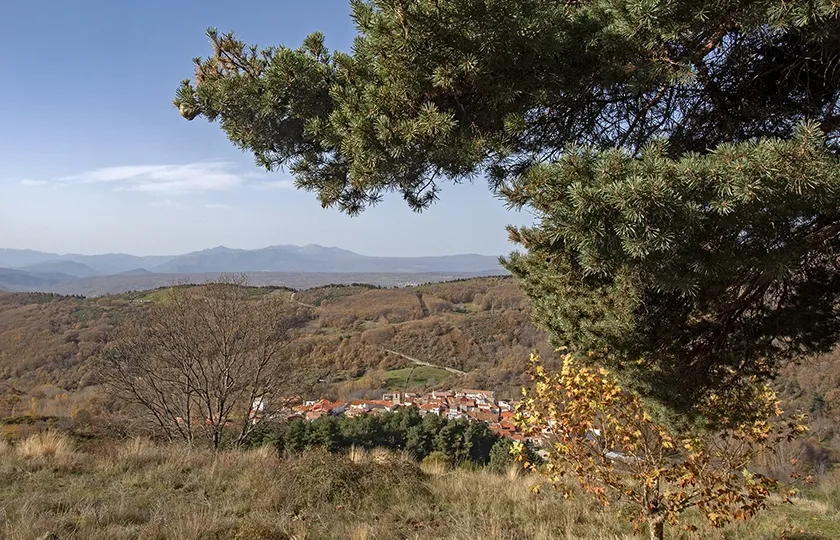
At an altitude of over a thousand metres, La Garganta sits on a natural balcony with views over the whole valley, and is one of the best examples of the livestock and transhumance tradition thanks to the cattle trails and cattle tracks that used to run through this area. As a result of this legacy, it preserves some very interesting ethnographic landmarks such as the wolf pen used in the past by shepherds to hunt the main predator of their flocks. Today the relationship with the wolf has changed and the El Lobo Visitor Reception Centre, located in the centre of the village, explains how this coexistence has been over time and its importance in the balance of the species.
Another interesting witness to the way of life in the higher areas of the Ambroz Valley is the snow well located above 1,200 metres above sea level. Between the 14th and 19th centuries snow was an important economic resource, which was collected and transported in the form of large balls to the pits. Here it was compacted into ice and, depending on demand, distributed to neighbouring villages for the preservation of foodstuffs.
Some testimonies of well-preserved popular architecture, the lively pilgrimages full of tradition and the many hiking possibilities offered by the surrounding area make La Garganta a cultural and tourist reference point that should not be missed.
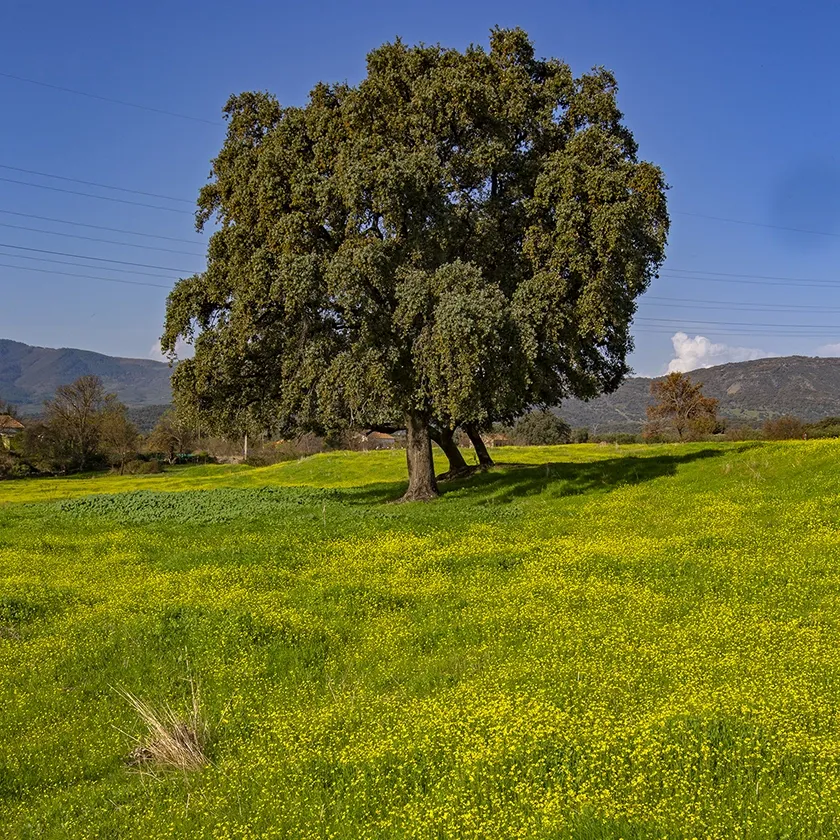
At the opposite end of the valley, surrounded by a beautiful landscape of terraced crops where its famous cherry and plum trees grow, is Gargantilla, a small village that can be reached from Hervás by a beautiful road that winds through one of the most evocative chestnut forests. A scenario that in autumn becomes pure reverie.
In the centre of the village there is a small corner known as the Perché neighbourhood, where an interesting example of popular mountain architecture is still preserved, but if you are looking for contact with nature, from Gargantilla you can follow the Bosques del Ambroz path or the path of the charcoal burners which, starting from the natural pool of the Buitrera gorge, connects with the valley through the Honduras pass, both through incredible landscapes.
Continuing south, immersed in the beautiful Extremadura dehesa, we visit Segura de Toro, believed to be the oldest village in the Ambroz Valley. Everything points to a Vetón origin, a pre-Roman people who inhabited these territories, as important remains have been found, such as a carved Celtic Gratine bull, a replica of which is on display in the village square, as the original, together with the stele of a Celtic warrior also found here, is in the Museo de las Veletas in Cáceres.
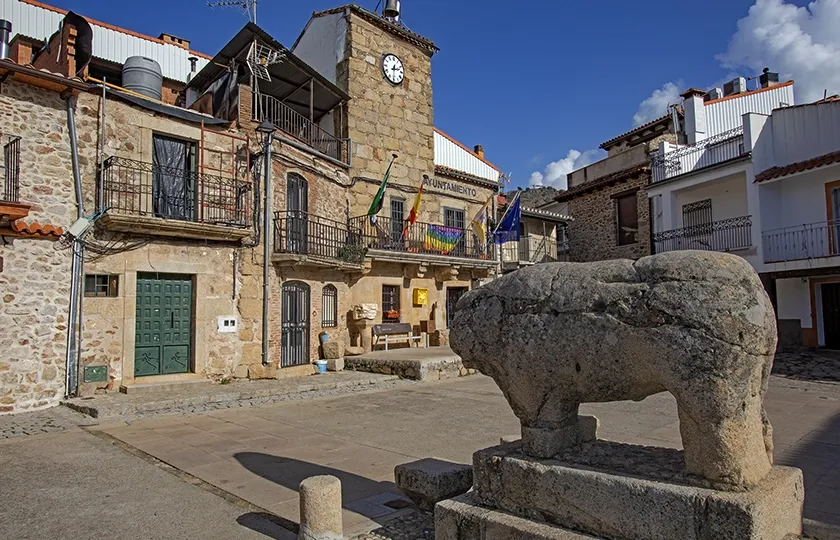
Segura de Toro is one of the best preserved villages, whose streets are lined with magnificent traditional houses of ashlar masonry and wooden balconies, not forgetting its Templar past represented by the remains of the castle and the wall, as well as its Renaissance church.
Its geographical location on one of the slopes of the Tras la Sierra massif makes it a spectacular viewpoint over the valley, from where you can enjoy marvellous sunsets. This environment that unfolds before us holds some fantastic surprises such as the centenary chestnut grove of Temblar, with specimens that are up to eight hundred years old or the natural pools of the Ancha gorge.
We ended, not without some regret and with a great desire to return, this exercise in reverie in the Ambroz Valley in Casas del Monte, surrounded by fields of cherry and olive trees. Of its past, linked mainly to the Vetons and the Romans, there are remains of the Roman villa of La Granjuela, as well as wine presses and anthropomorphic tombs, while the more recent past can be found in the beautiful traditional architecture of the districts of Las Lanchas and Hondón, as well as the Plaza de los Morales.
Getting to know the small universes that the Ambroz Valley holds is also a bath of reality, as we understand that it is impossible to tell so many wonders in a single report, so the best thing is for you to discover them for yourself. A fabulous time to do this is in autumn, so take my advice and save a few days for next year and escape to this wonderful corner of Extremadura. You will disconnect and you will never forget it.