

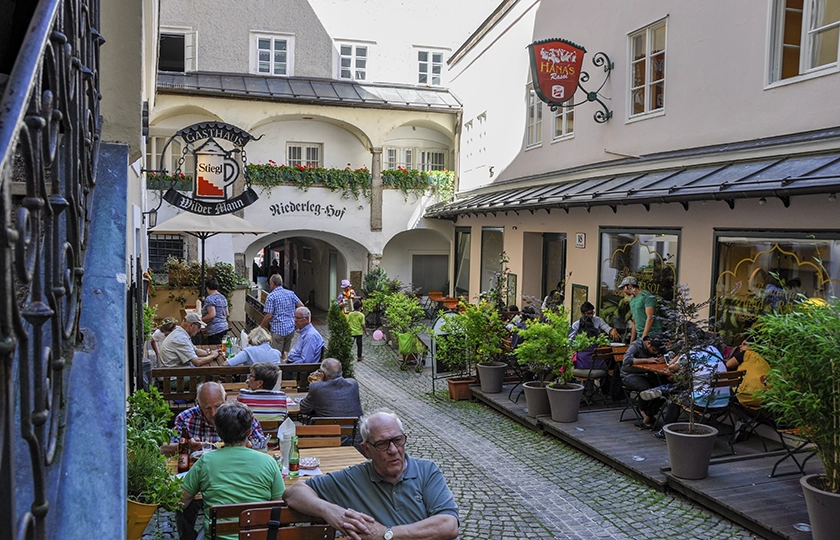
- The birthplace of great artists, its monuments preserve a significant part of the country’s history, with some of them having served as the setting for one of the most famous films in the history of cinema.
Since ancient times, the transport of salt along the Salzach River – whose name is derived from the word for salt – has been an important part of the local economy. It was precisely white gold that enabled the prince-archbishops to enhance the city’s artistic splendour.
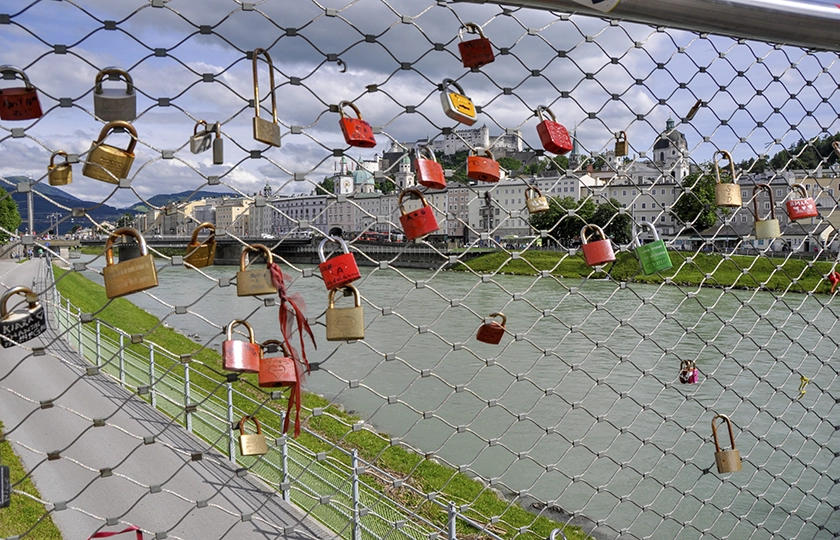
The cobbled streets of the old town, the Mirabell Gardens, the majestic Hohensalzburg Fortress and the numerous cultural events make this city a place worth exploring all year round.
It could be described as the city of music, as Mozart and Von Karajan were both born here. This year marks the 270th anniversary of Mozart’s birth and the 70th anniversary of Mozartwoche (Mozart Week), a double celebration that puts the city in tune with its musical genius. And to mark these two events, an exciting programme has been put together, featuring exhibitions, concerts, audio walks and immersive experiences, creating a unique atmosphere where the past meets contemporary creativity, with the composer’s music present in every corner.
In this Austrian city, music and cinema came together sixty-one years ago to bring to life one of the most acclaimed films of all time, The Sound of Music. Today, you can relive the experiences of the Trapp family by visiting the most iconic locations where the film was shot.
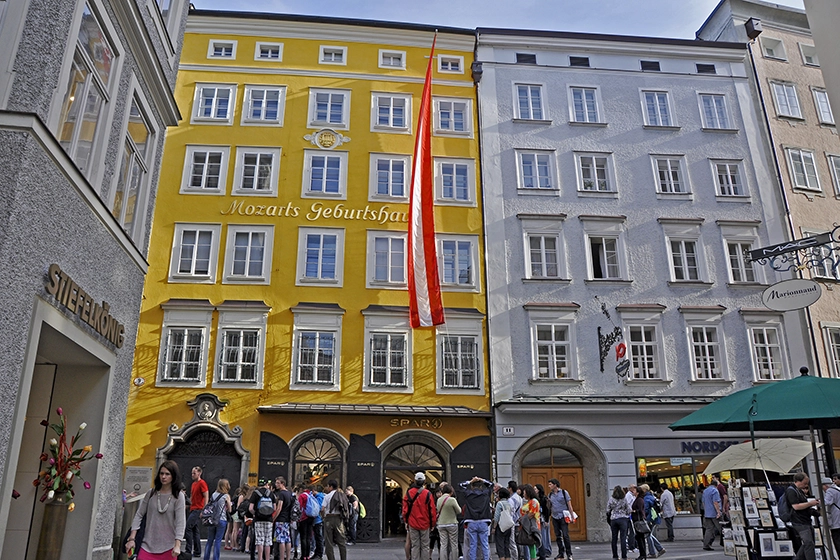
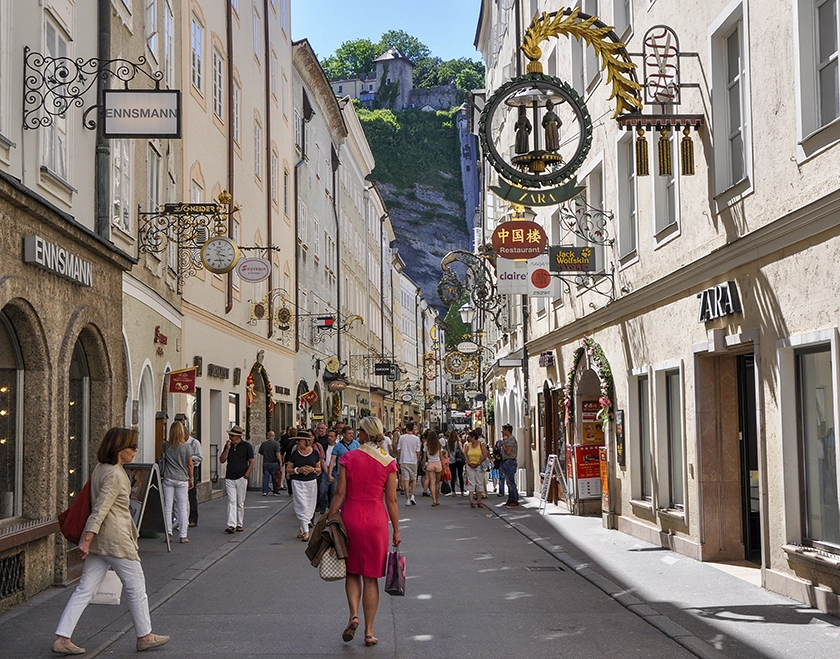
A stroll through the streets and squares of Salzburg allows us to discover such iconic sites as Mozart’s Birthplace, the house-museum where the genius was born in 1756. Located on the city’s main thoroughfare, Getreidegasse – always bustling with tourists and lined with numerous shops – is easily recognisable by its yellow façade. Mozart spent his childhood and youth in what is known as the “Hagenauer House” with his parents, Leopold and Anna Maria, and his sister Nannerl, until they moved to the Mozart Residence on Makartplatz in 1773. It was in 1880 that the International “Mozarteum” Foundation opened the museum’s doors. The tour of the original rooms lasts an hour, allowing visitors to admire everyday objects and 18th-century furniture such as original certificates, letters, mementos and portraits, with particular highlights including historical instruments such as the small violin Mozart played as a child and his harpsichord.
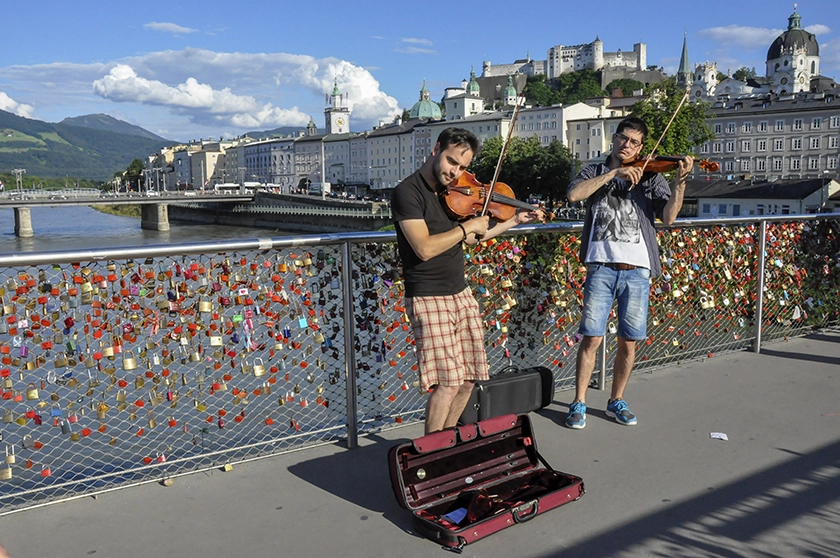
As we wandered through the city, we realised that the whole of Salzburg lives and breathes the composer. There are so many places linked to the musician’s life that, as we stroll through the streets, we imagine we might bump into Mozart, violin under his arm, as we round any corner.
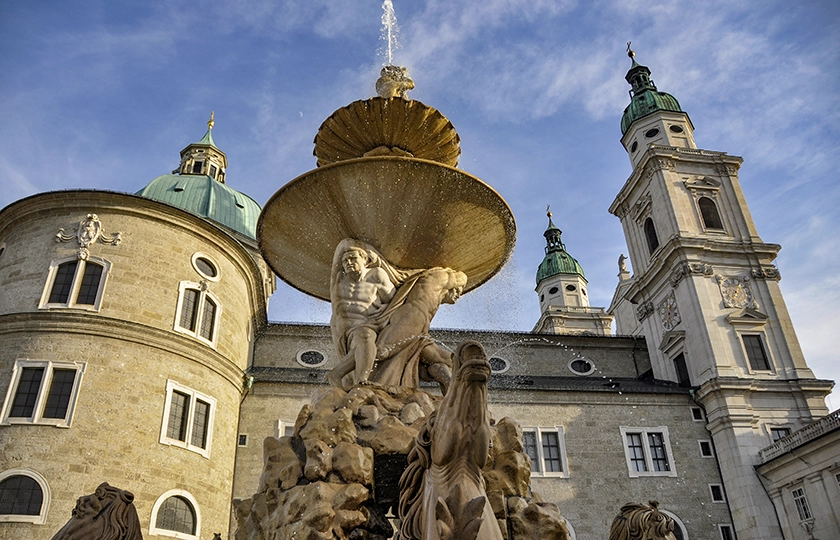
And following in his footsteps, we arrived at the cathedral. It was in this impressive early Baroque church that the child prodigy was baptised; and, as a curious aside, in keeping with the city’s centuries-old love affair with music, it is worth noting that Joseph Mohr, the lyricist of the famous Christmas carol “Silent Night, Holy Night”, was also baptised here. The baptismal font, the crypt, the reliquary containing the bones of Saints Rupert and Virgil, the magnificent main organ, the cathedral doors by Schneider-Manzell, Mataré and Manzú, its seven bells, the ‘Vanitas’ art installation and the Cathedral Museum, which houses artistic treasures spanning 1,300 years of the church’s history, are all gems preserved within its walls that we must admire during our visit to the city.
Another notable building in the city is the Residence (Residenz), a magnificent Baroque building constructed in the late 16th century, which served as the seat of the prince-archbishops. The link between this place and Mozart lies in the fact that it was here that he gave his first concert at the age of six. The tour includes sumptuous halls, the former state and private apartments of the prince-archbishops, as well as the “Residenzgalerie” (Residence Gallery) with its magnificent collection of European paintings from the 16th to the 19th centuries. Today, the Residence is used for official receptions, meetings and international conferences, and also houses several museums.
As we strolled leisurely along the cobbled streets, we came across a huge statue of the composer standing in Mozartplatz, and in the windows of every patisserie and souvenir shop, the famous chocolate bonbons known as ‘Mozartkugeln’.
The best way to get an overview of Salzburg is to head up to the Hohensalzburg Fortress, the city’s most famous landmark. Open to the public all year round, since 1892 it has been possible to reach it either by a leisurely walk or by the ultra-fast funicular, which takes just over a minute. Perched on the Festungsberg hill, from a height of 542 metres, you can admire the city as it is bisected by the River Salzach, which forms the boundary between the old and new towns. It is well worth a visit to admire the treasures it houses: the depiction of the night sky, formed by golden spheres against a blue background, and the Gothic stove in the Golden Hall, as well as to visit its museums: the Fortress Museum, the Puppet Museum and the Regular Regiment Museum, not to mention the magnificent Gothic chambers of the princes: the Golden Hall, the Golden Room and a room whose décor has remained unchanged since the 16th century.
Salzburg’s close connection with music now takes us to the Mirabell Palace and Gardens, one of the city’s most popular attractions and a UNESCO World Heritage Site. Setting for the filming of the famous The Sound of Music; there is no city in the world for which a film has done more to attract tourists. Thousands of visitors flock to the film locations to have their photos taken, such as the Pegasus Fountain, around which Maria and the children sang and danced to the famous song “Do-Re-Mi”, or the steps in front of Rosenhügel (Rose Hill), where the Trapp family gather at the end of the scene to bring the song to a close.
The Marble Hall, the former ballroom of the Prince-Archbishop where Leopold Mozart and his children Wolfgang and Nannerl once performed, is now regarded as one of the most beautiful wedding venues in the world, not to mention the Staircase of the Angels, which leads to the Marble Hall and is adorned with numerous cherubs. Together, they live up to the name Mirabell, an Italian female given name derived from mirabille (admirable) and bella (beautiful). The gardens display the basic geometric forms so characteristic of the Baroque style, whilst their visual alignment with the cathedral and the fortress creates a stunning effect, forming one of the city’s most iconic and historic sights.
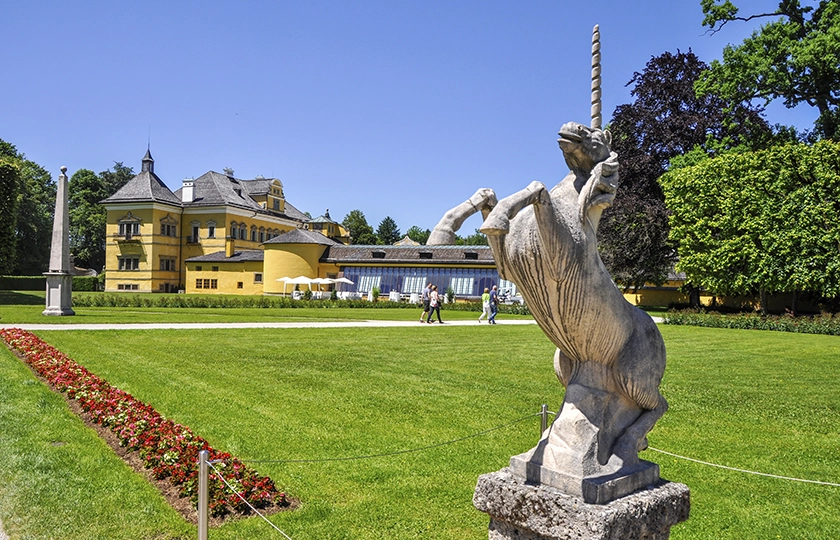
Located around four kilometres from the city, the Hellbrunn Palace and Gardens have been delighting visitors for over four hundred years with their impressive architecture and fabulous water features. Its strategic location, next to the water-rich Hellbrunner Berg, allowed them to make water a central feature of the design. And so the Water Games were born – a unique example of Mannerist style that remains unrivalled to this day. From the mechanical theatre featuring water-spouting deer to the crown that dances atop a jet of water, and including mysterious caves, water-powered figures and hidden jets, these hydraulic contraptions inspire admiration for their originality and astonishing effects. Designed by Prince-Archbishop Markus Sittikus as a place of entertainment and a summer residence, Hellbrunn Palace was built in an exceptionally short period, between 1612 and 1615. The commission was awarded to the master builder Santino Solari, who was also responsible for the construction of Salzburg Cathedral, and who created one of the most opulent buildings of the late Renaissance north of the Alps.
Salzburg is also a city of cafés, such as the Sacher, Bazar, Demel and Tomaselli, which serves a spectacular Mozart cake, and the Einspanner, whose speciality is coffee with whipped cream – a veritable institution that draws visitors like a magnet to its terraces and tables.
To get a better feel for the city, you need to wander aimlessly through its streets and admire its monuments, even if this puts a strain on your eyes as you take in so much beauty. Without a doubt, exploring it is the closest thing to embarking on a dreamlike journey that will take us back to 18th-century Salzburg.
You might be interested in: Austrian Romantic Route