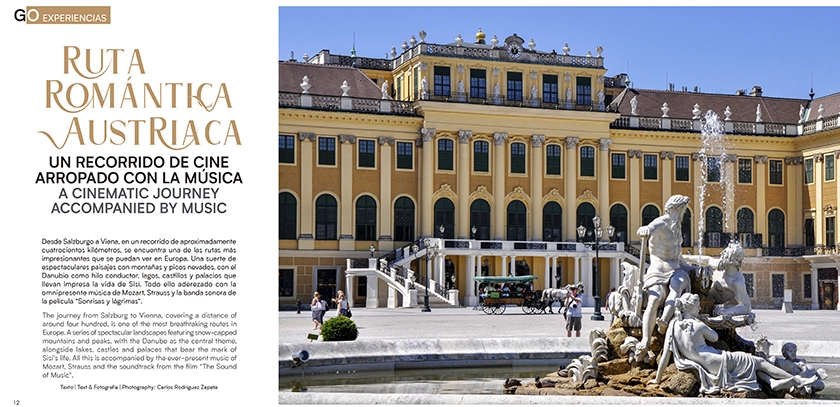
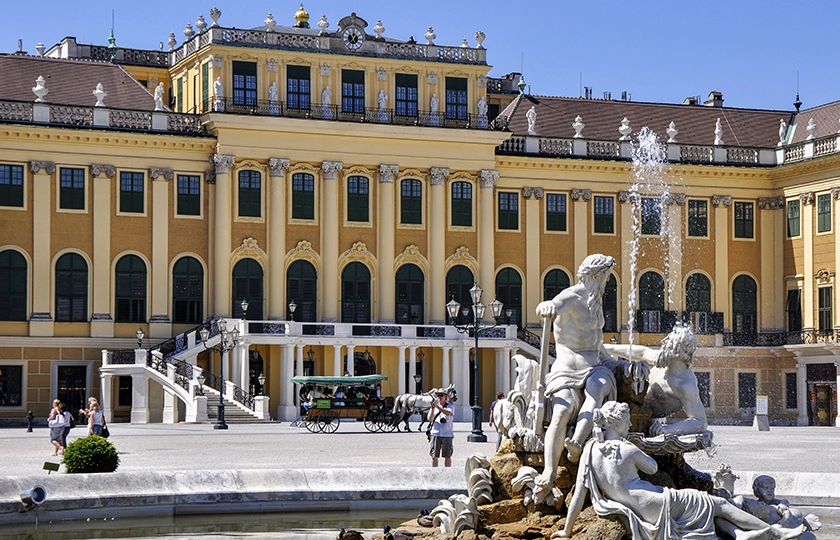
The journey from Salzburg to Vienna, covering a distance of around four hundred, is one of the most breathtaking routes in Europe. A series of spectacular landscapes featuring snow-capped mountains and peaks, with the Danube as the central theme, alongside lakes, castles and palaces that bear the mark of Sisi’s life. All this is accompanied by the ever-present music of Mozart, Strauss and the soundtrack from the film “The Sound of Music”.
Talking about Romanticism in Austria is like talking about sunshine in Spain. Romanticism is ingrained in the country’s character. And as if that weren’t enough, there is something else that is deeply rooted in its ancient culture: music. Romanticism and music complement each other perfectly and accompany us throughout the Austrian “Romantic Road”.
Salzburg, where a genius was born
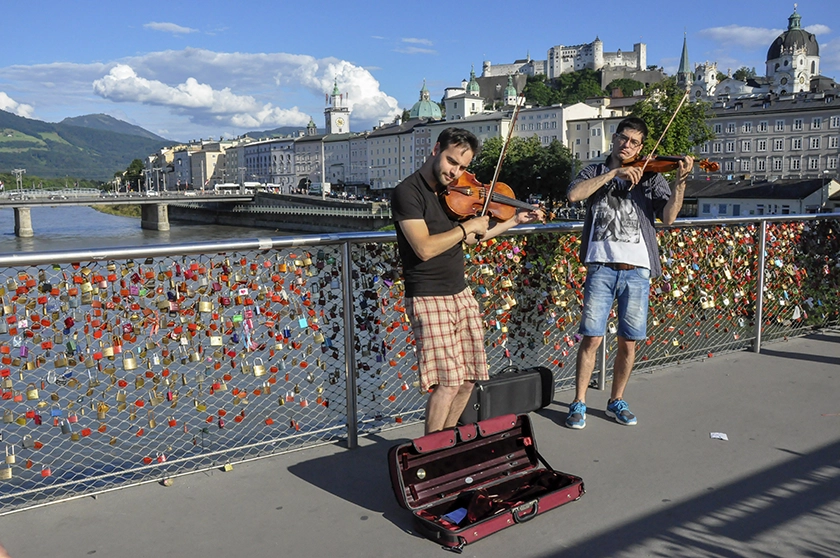
Just four kilometres from Germany lies the starting point of our route: Salzburg. A city which, amongst its many monuments, preserves a significant part of Austria’s history. What’s more, it can be regarded as the city of music, as Mozart and Von Karajan were both born here. It is also the city featured in the film “The Sound of Music”. And, of course, it is the city of the prince-archbishops who ruled it for centuries, making it a serious rival to the cultural and artistic heritage of Vienna itself.
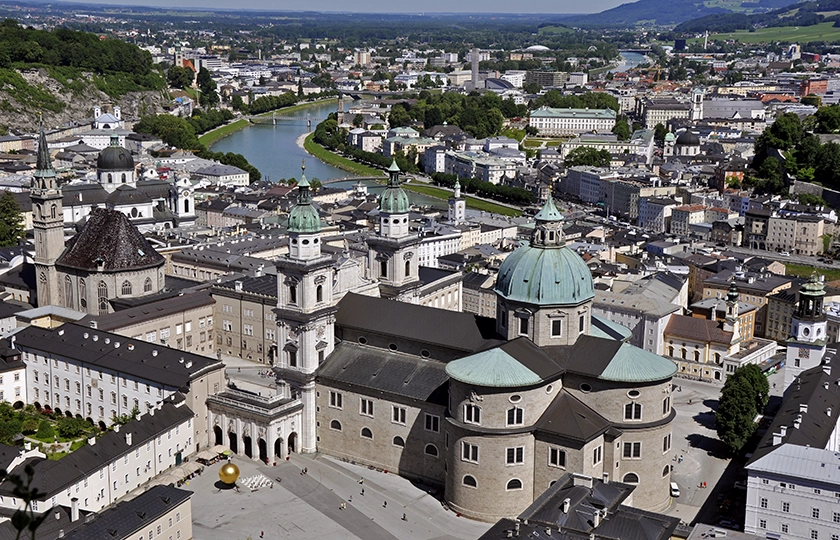
The town lies on the banks of the River Salzach, whose name derives from the word ‘salt’, as the transport of salt along its course has been an important part of the local economy since ancient times. It was this white gold that enabled the prince-archbishops to enhance the city’s artistic splendour, to such an extent that its historic centre (Altstadt) has been designated a World Heritage Site. Strolling through its streets and visiting its monuments is a feast for the eyes, given the sheer beauty on display. The best way to get an overview of Salzburg is to climb up to Hohensalzburg Fortress, the city’s most famous landmark. An ultra-fast funicular takes just one minute to reach the top of this magnificent fortress, perched on a cliff, from where there is an exceptional view of the city, divided by the River Salzach into the old town and the new town. Another outstanding building in the city is the Residenz, a magnificent Baroque building constructed in the late 16th century, which served as the headquarters of the prince-archbishops and now houses several museums. This was the venue where Mozart gave his first concert at the age of six.
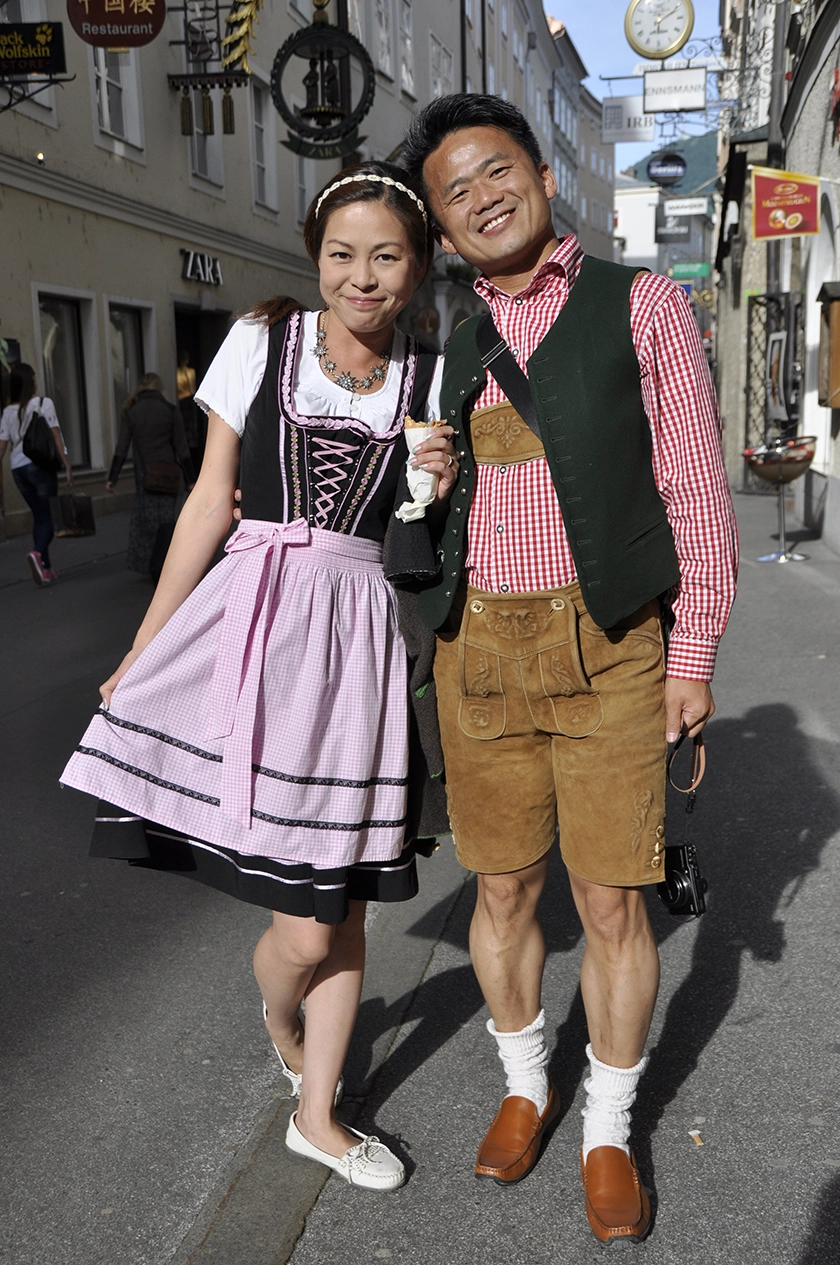
Mozart's Birthplace
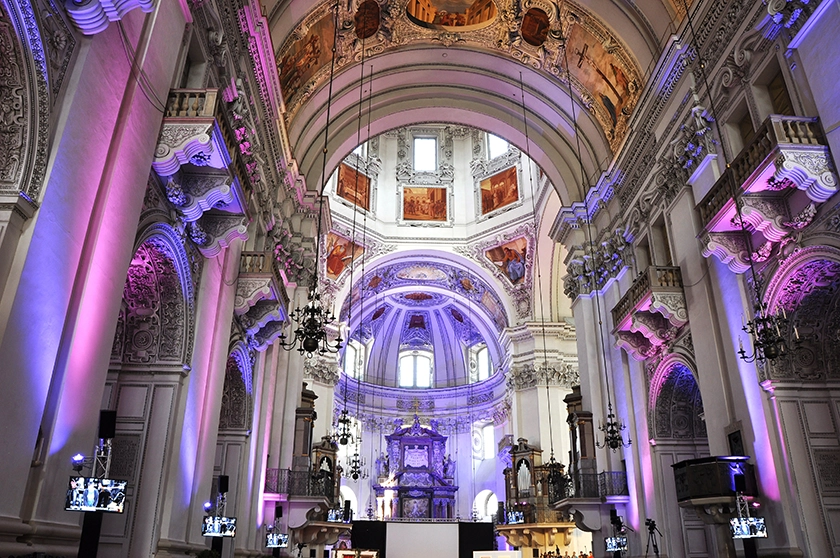
The other monumental building is the cathedral (Dom), another Baroque masterpiece with a spectacular interior, where the child prodigy was baptised. But to really get to know Salzburg, you need to wander through its streets without any particular destination in mind. The streets and houses are so beautiful that we feel as though we’ve been transported back to the 18th century, and that at any moment Mozart might step out of his house with a violin under his arm. Speaking of this genius, it’s clear that the whole of Salzburg lives and breathes him. On the city’s main street – Getreidegasse – which is lined with shops and always bustling with tourists, stands a pretty yellow building: Mozarts Geburtshaus, the house-museum where the genius was born in 1756. One of the highlights of the collection is the small violin that Mozart played as a child. Following in his footsteps, at Mozartplatz, we come across a huge statue of the composer that dominates the square. As you explore, you’ll come across many places connected in some way to the composer, and by the end you’ll simply have to buy the famous chocolates known as ‘Mozartkugeln’, which fill the windows of every bakery and souvenir shop.
But the city’s connection with music doesn’t end with its favourite son. To round off the musical experience, one of the most acclaimed films of all time was filmed here: The Sound of Music. No city in the world has benefited more from a film in terms of attracting tourists. Many visitors want to have their photo taken at the locations where various scenes were filmed, including the palace and gardens of Mirabellgarten, where Maria sings and dances to the famous “Do-Re-Mi” song.
Salzburg is also a city of cafés, such as the Sacher, Bazar, Demel and Tomaselli – the latter serving a spectacular Mozart cake – and the Einspanner, a café specialising in coffee with whipped cream; a veritable institution that draws visitors like a magnet to its terraces and tables.
Just a three-minute walk from these cafés lie the Mirabell Gardens and Palace. A stroll through Mirabellgarten, with views of the fortress and the city’s historic centre, leaves every traveller speechless.
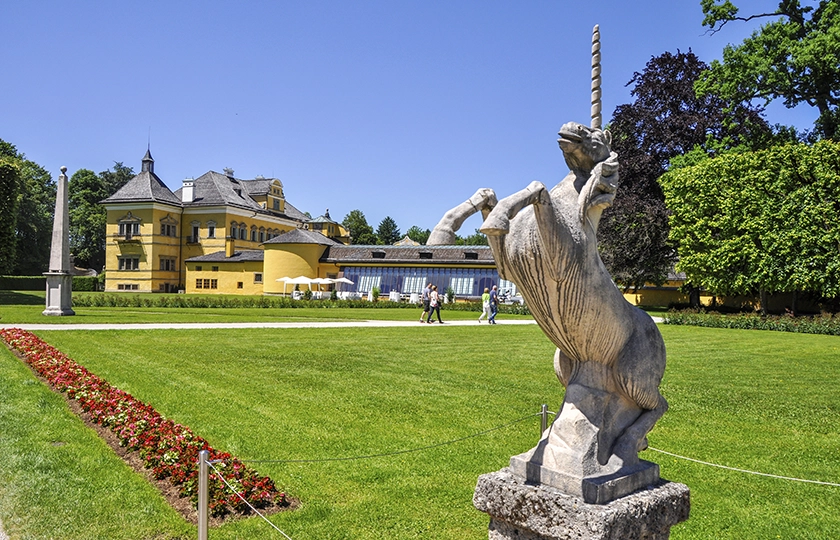
To round off our tour of this stunning city, we headed to Hellbrunn Palace and Gardens, located about four kilometres from the city centre. Although the palace is Italian in style, it is well worth a visit; what is a must, however, is a visit to its gardens, where the “Wasserspiele” or “Water Plays” delight all tourists (in summer, of course), as at any moment during the walk jets of water will spring from their hiding places and drench unsuspecting visitors.
Bad Ischl and Sisi
We leave Salzburg behind and take the road (not the motorway), which will take us to Vienna along the 380-kilometre “Romantic Road”. Along the way, we’ll come across palaces, monasteries, castles and the stunning landscapes of the Danube Valley, framed by the towering Alps and dotted with picture-postcard lakes and villages that will capture our hearts at first sight. Our first stop is in Bad Ischl, a famous spa town that leaves no one indifferent. The town, situated in the heart of the Salzkammergut region, was where Emperor Franz Joseph I met his future wife, Princess Elisabeth of Bavaria, better known as Sisi. Its charming streets are lined with magnificent buildings such as the Trinkhalle, the Kongresshaus and the Stadtmuseum, the building where the Emperor’s engagement to Sisi was celebrated.
But if there is one thing that makes Bad Ischl stand out, it is undoubtedly its “Kaiservilla”. A magnificent palace surrounded by lush gardens, which Emperor Franz Joseph’s mother bought as a wedding present for her son and Sisi. The emperor enjoyed it for most of his life as a summer residence, quite unlike Sisi, who disliked it thoroughly.
Bad Ischl also has the distinction of being at the heart of one of Europe’s most spectacular regions. More than six large lakes surround Bad Ischl, some with the Alps providing a backdrop. The sight of these inland lakes set against the mountains has even led to the region known as Hallstatt-Dachstein being designated a UNESCO World Heritage Site.
We set off from Bad Ischl and, as we drive along the road, we see signs telling us to continue along the Romantic Road. Although it’s hard to get lost, these signs are a welcome reminder that we’re in the midst of one of Europe’s most beautiful romantic landscapes.
The fact is, few regions can rival it in terms of beauty. To see this for ourselves, we headed to Lake Hallstätter See, home to the small village of Hallstatt, which Alexander von Humboldt described as ‘the most beautiful lakeside village in the world’. And he was certainly right. The towers of the two churches—one Protestant, the other Catholic—together with the slate roofs of the pastel-coloured houses reflected in the lake, against the backdrop of the towering mountains that surround it, make this little village a gem you will never forget.
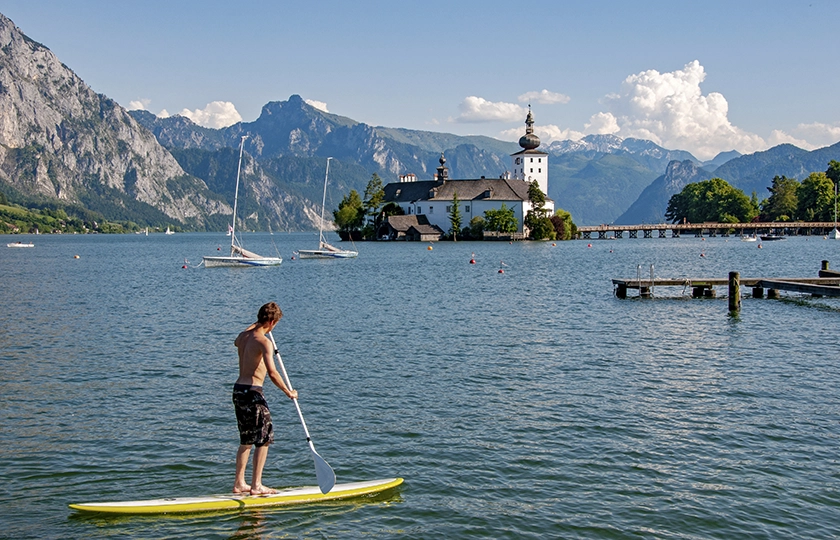
We continue our journey towards Lake Traunsee, Austria’s deepest lake. Another huge lake that we drive alongside without getting lost, thanks to the brown-backgrounded signs visible along the road, indicating the direction to follow on this Romantic Road. Lakeside villages such as Traunkirchen, with its Johannesbergkapelle, a small church jutting out into the lake, and Gmunden, where you’ll want to stroll through the tree-lined gardens by the lake — with young bathers enjoying its crystal-clear waters — whilst you catch sight of Seeschloss Castle, as if it were about to emerge from the lake.
Steyr and the Cider Route
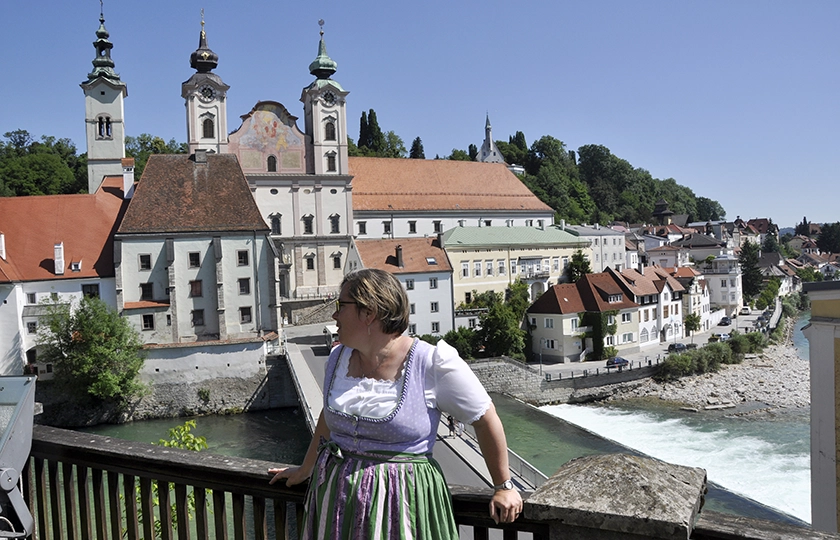
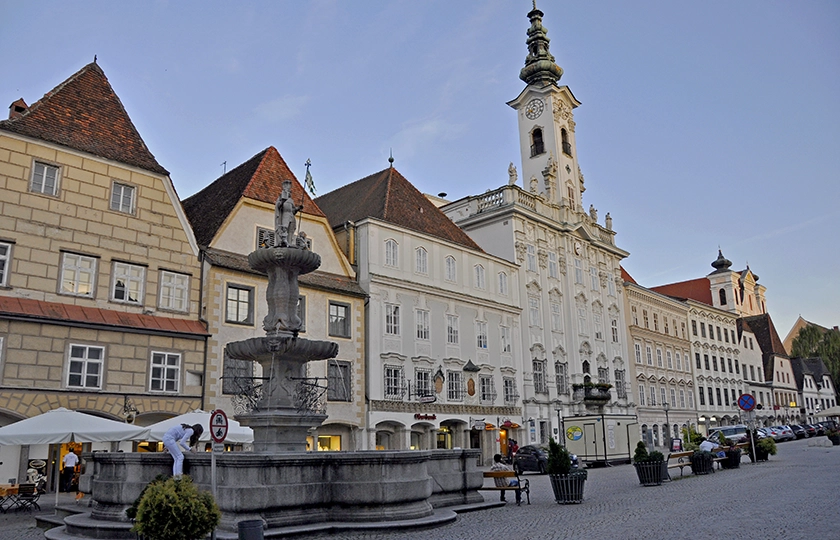
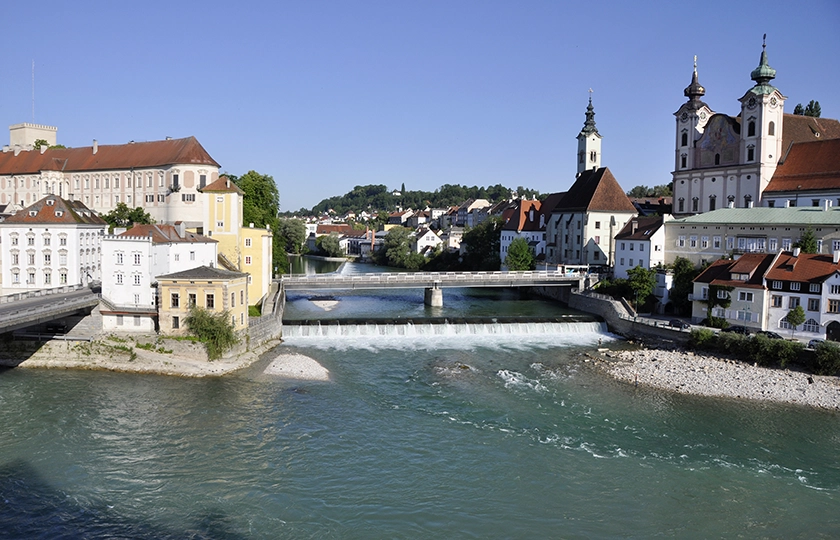
Our next destination is Steyr, arguably the most beautiful town on this route after Salzburg. Situated at the confluence of the Enns and Steyr rivers, it boasts one of the most beautiful squares in Europe, the Stadtplatz, where architectural styles ranging from Gothic to Rococo, via the Renaissance and Baroque, coexist in perfect harmony. In the square stands a Gothic-style house—the oldest in the town—known as the Bummerlhaus, which is the town’s symbol. A few metres away is the house where Schubert lived; he described Steyr as an “incredibly charming” place. And it is true, for Steyr, with its cobbled streets, its Baroque houses—all in perfect harmony—a Gothic church (Stadtpfarrkirche) and a Baroque one (Michaelerkirche), and the remains of a castle now housed in Schloss Lamberg Palace, with its beautiful library, makes this city an unmissable destination.
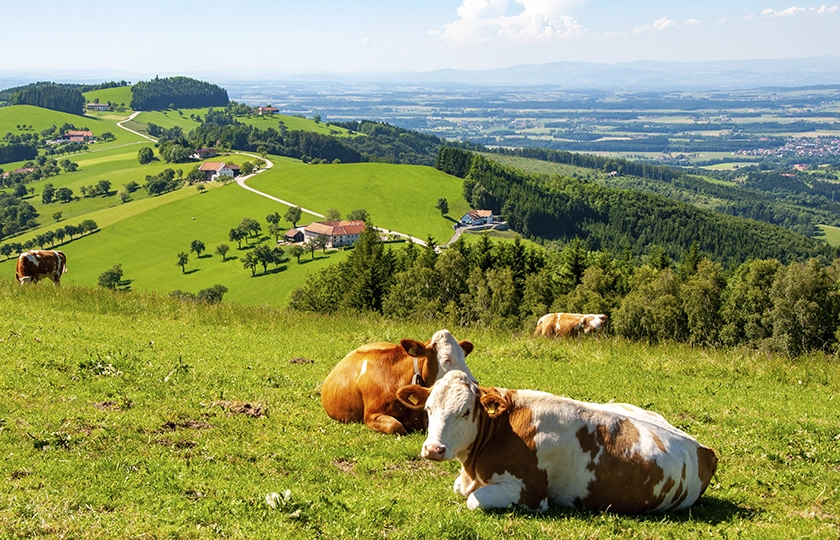
Steyr is a great place to explore the so-called Most-Strasse, or “Cider Route”. Thousands of pear trees scattered throughout the region bear fruit thanks to the mild climate south of the Danube. Our first stop on the route is the Voralpenblick viewpoint. From here, you can take in the spectacular landscape of rolling hills and meadows, with small villages and houses (many of them farmhouses) dotted across the countryside along winding country lanes, against the backdrop of the Alps. Some farm-wineries, such as the Mostbaron Bauernhof distillery, have tables where many locals go to spend the afternoon eating and drinking local produce, always washed down with a good pear cider and mustards made from those fruits, which add the perfect touch to the meal.
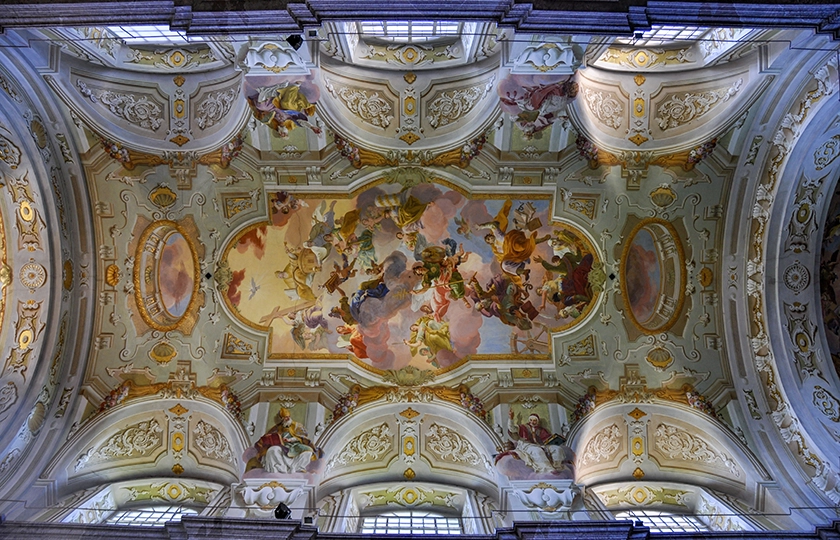
Our tour of Moststrasse continues with a visit to the Sonntagberg Basilica, a spectacular Baroque building with a majestic interior decorated by the Venetian painter Daniel della Torre. From the basilica, perched on a hilltop, there is another beautiful panoramic view of the cider-growing region.
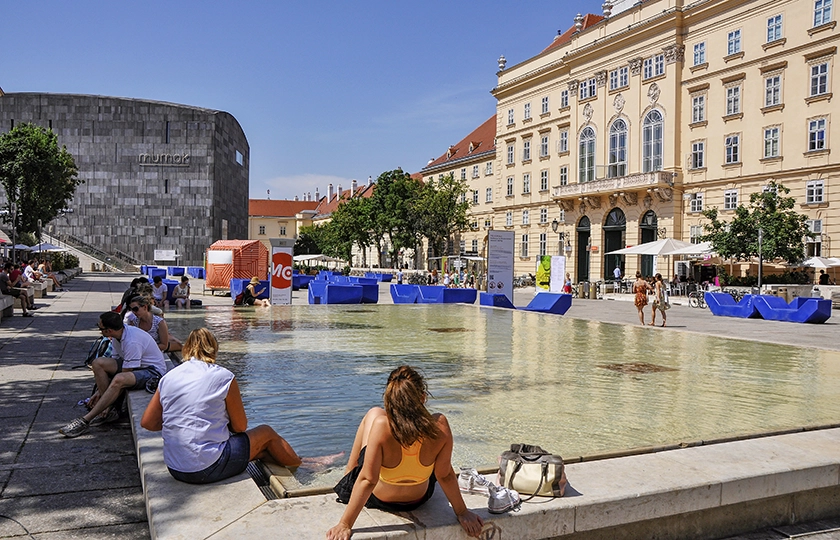
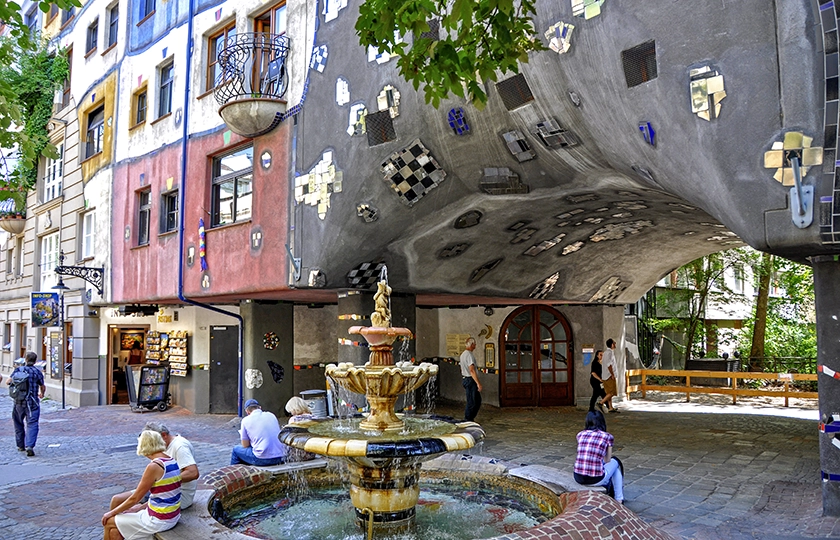
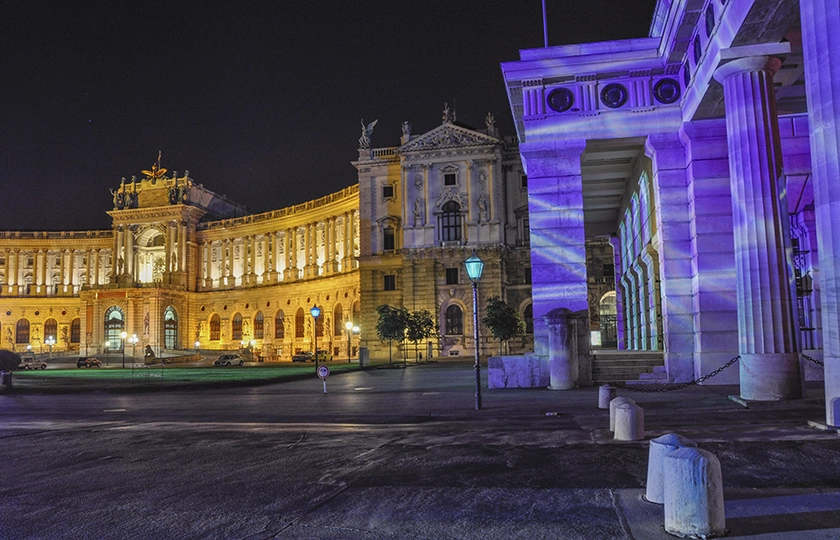
After visiting the Benedictine Abbey of Melk, perched on a rocky outcrop as if poised to soar above the Danube, and world-famous not only for its treasures but also for being mentioned in Umberto Eco’s bestseller “The Name of the Rose”, we headed, as the grand finale of our tour along the Romantic Road, to the wonderful city of Vienna. This ancient imperial city, situated on the banks of the Danube, would take many pages to describe in full. But if we were to mention just one palace that ties in with this route, we would have to refer to the Hofburg Palace, and within it the “Kaiserappartements”, where the rooms once occupied by the Emperor and Sisi are located. Such is the Romantic Route, a journey through Austria’s most captivating landscapes and cities, with Sisi, with music ever-present, and with the Alps and the Danube taking centre stage. A real treat.
Where to stay and eat, and other useful informationf
With direct flights from Madrid and Barcelona to Vienna, operated by Iberia, there is a wide and varied range of hotels and restaurants.
In Salzburg, the IMLAUER Palais Mirabell Hotel combines historic architecture dating back to 1653 with modern comforts. Situated in one of the city’s best locations, next to the Mirabell Gardens, in the heart of the old town, and very close to Mirabell Palace and Mozart’s residence.
When it comes to enjoying fine dining in the city where Mozart was born, the St. Peter Stiftskulinarium restaurant is the perfect choice. With over 1,200 years of serving diners and culinary delights, this is the oldest restaurant in Europe. A perfect combination of gourmet cuisine, a great atmosphere, wine culture and live music every evening featuring the works of Salzburg’s most illustrious son. A real treat.
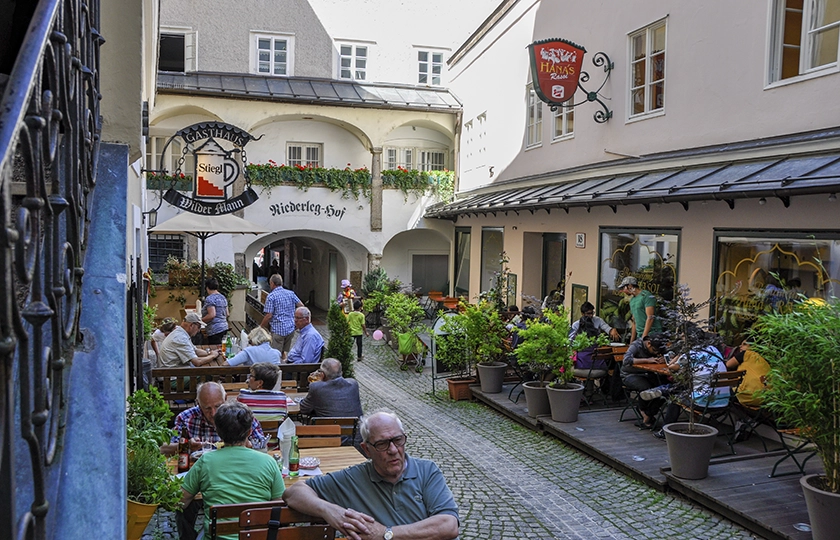
In the heart of the historic Getreidegasse, where Mozart took his first steps, lies Gasthaus Zum Wilden Mann (The Wild Man Inn). This historic inn, which opened its doors over 160 years ago, is a symbol of authentic Austrian hospitality and culinary excellence.
Located at the confluence of the Enns and Steyr rivers, the Minichmayr Hotel and Restaurant in Steyr is housed in a historic building dating back to 1543. From its rooms and restaurant, it offers stunning views of the city and both rivers.
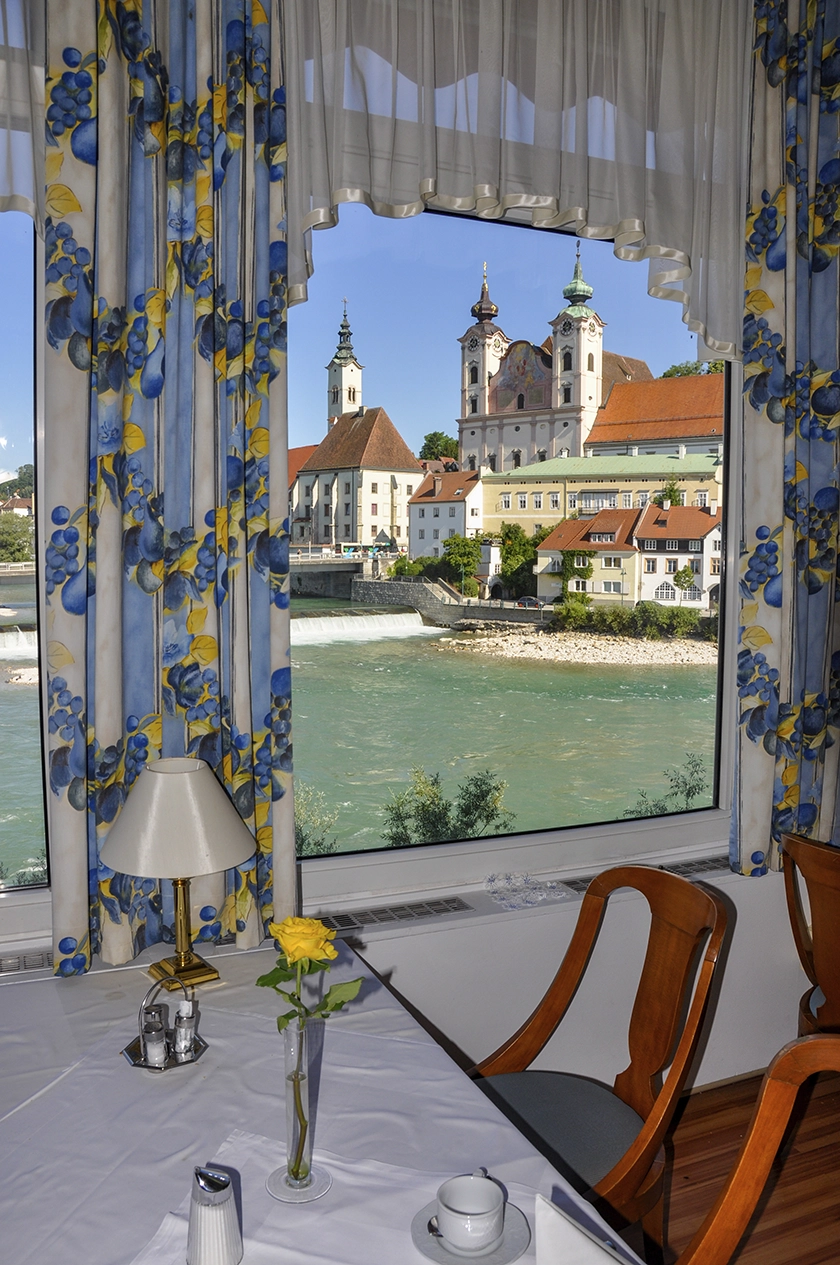
Elfriede and Wolfgang Pötzl are the third generation to run the Schwechaterhof, a restaurant in Steyr that champions regional cuisine. Wolfgang is a certified beer sommelier and also possesses extensive knowledge of beer production, storage and the art of serving it. If you visit Steyr, be sure to take a look at the Gothic Stadtpfarrkirche church, located right next to the restaurant.
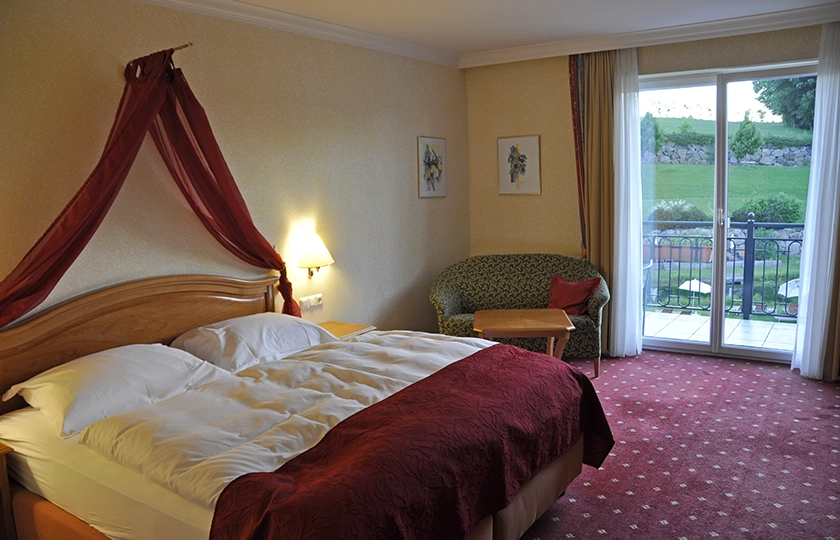
In the Mostviertel region, the Hotel Relax Resort Kothmühle is regarded as one of the best in Austria and is the ideal base for exploring the surrounding area. Located in the town of Neuhofen an der Ybbs, this four-star superior hotel features a heated outdoor swimming pool, a wellness area, a 20,000-square-metre garden and a restaurant where guests can enjoy Lower Austrian cuisine.
Also in the Cider region is the tavern Mostbaron und Spezialitätenheurigen Reikersdorfer. Four generations of the same family take pride in honouring, cherishing and passing on the culture of must and the region’s traditions. Don’t forget to try the delicious must accompanied by Brettl Jause or Steckerl Fisch, traditional Austrian snacks.
The Hotel Boutique Altstadt Vienna has sixty-two rooms and suites, each one unique and inspiring. It is situated very close to the historic centre and next to the Hofburg, home to several of the Habsburg palaces, including the Sisi Museum.
You might be interested in: Pure baroque delicacy, historic elegance and a modern lifestyle