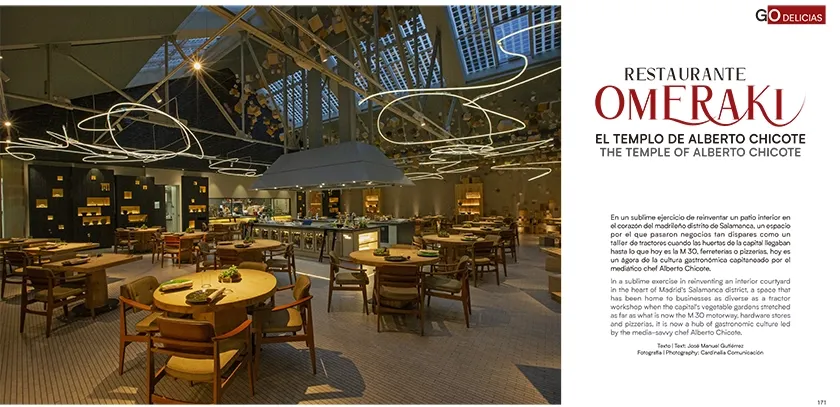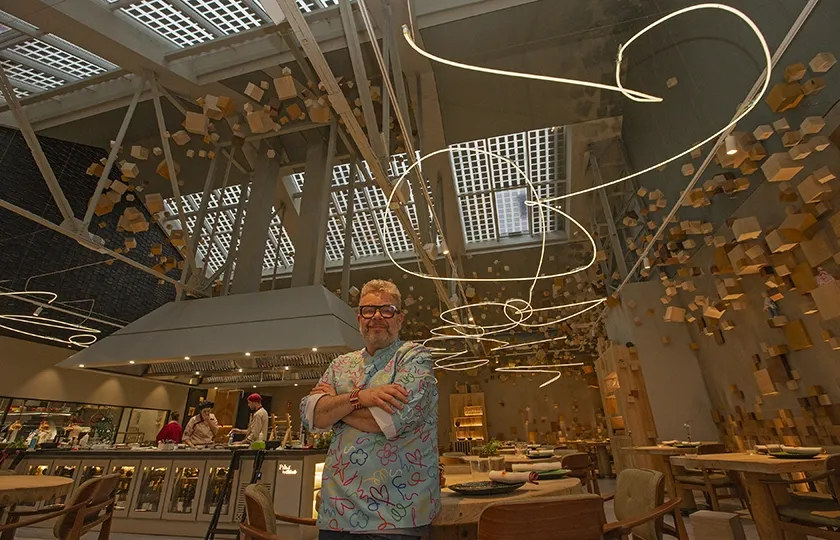
In a sublime exercise in reinventing an interior courtyard in the heart of Madrid’s Salamanca district, a space that has been home to businesses as diverse as a tractor workshop when the capital’s vegetable gardens stretched as far as what is now the M 30 motorway, hardware stores and fishmongers, it is now a hub of gastronomic culture led by the media-savvy chef Alberto Chicote.
Omeraki is much more than a name; it is a made-up word that symbolises and gives deep meaning to the spirit and passion that led Alberto and his partner Inma to turn their most personal project into a reality, a benchmark for knowledge, innovation and culinary expertise in Spain.
The ‘O’ represents the constant and free pursuit of creative perfection in Japanese culture, although the restaurant’s logo takes the liberty of not closing the circle as a nod to the ambition to keep improving every day. On the other hand, ‘meraki’ is the Greek term that defines the ability to put your heart and soul into everything you do; passion, in short. Both, as motivating concepts, give a value of excellence to the work that Inma and Alberto, together with their team, put at the service of their customers, turning the basic need to feed ourselves into a sublime experience.
The inner universe
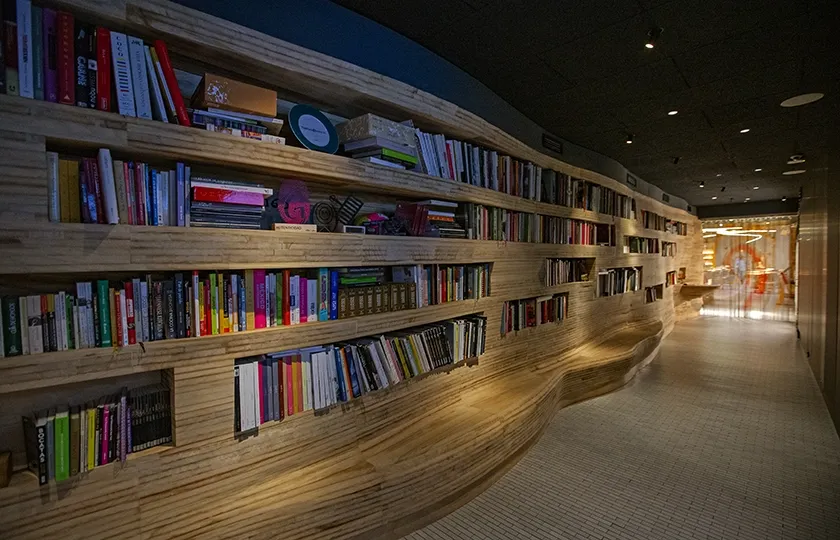
Behind the imposing entrance door to Omeraki lies an inviting, softly lit corridor flanked by a library containing almost two thousand cookbooks. In those few metres, you will find the most brilliant creations of the gastronomic universe, compiling the knowledge that is the fruit of the cultural heritage and creativity of countless culinary masters. Each of these books is available to customers who are curious to explore its pages.
Thus, this space may well seem like the antechamber to the gastronomic sanctuary that awaits a few steps further on.
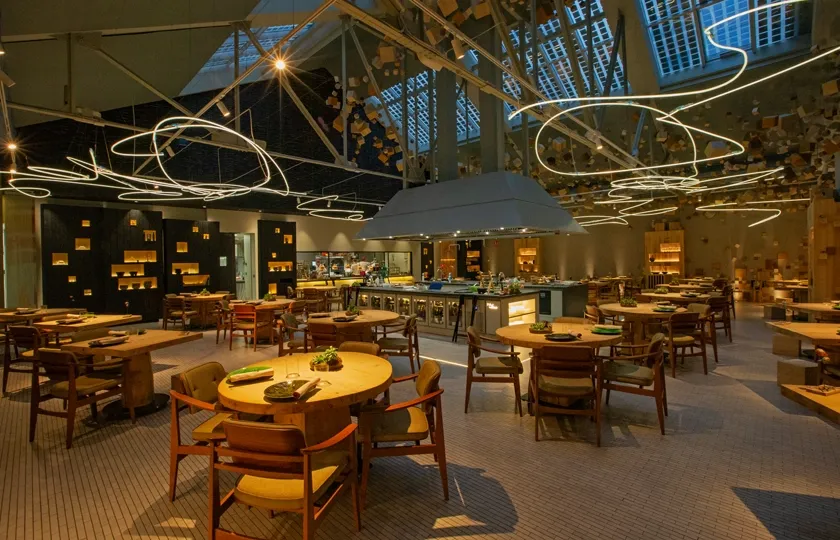
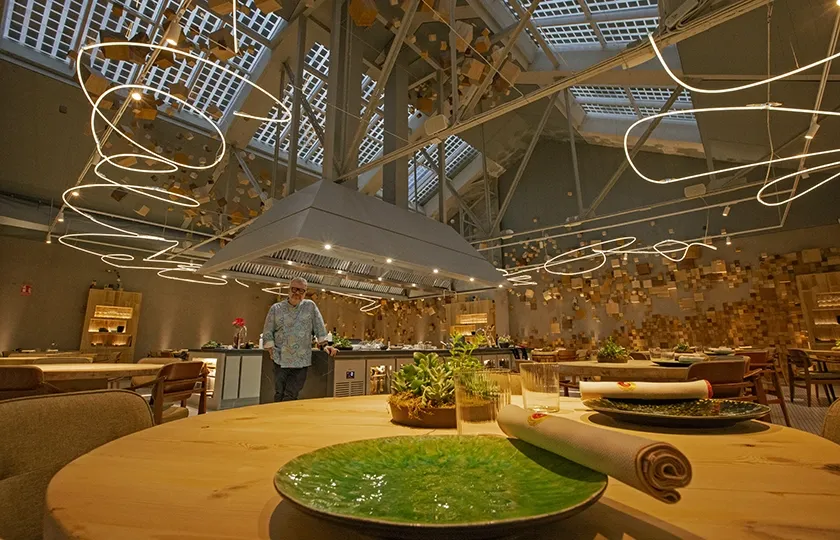
The heart of Omeraki beats in a spacious, bright space with balanced nods to Japanese culture, where neon lights inspire dynamism and energy and natural wood adds a touch of serenity.
Under an enormous dome made of customised crystalline silicon photovoltaic glass that catalyses sunlight, filling every corner with a serene glow while generating the energy needed to power the powerful extractor hoods, magic happens: the pure spectacle of seeing live how the delicacies that will be on our tables just a few minutes later are prepared.
Generally, when we talk about restaurants, we focus more on the details of the décor or the food, but on this occasion there is another aspect that deserves special mention. When chatting with the chef, he frequently reiterates his concern and commitment to sustainability, something that is not just a statement of intent, but rather a series of solutions that Alberto has put into practice to contribute to environmental conservation, making them another of Omeraki’s values.
In keeping with this conservationist approach, the furniture in the library and bar, and the thousands of cubes that hang above the restaurant, have been made from fast-growing and fully recyclable paulownia wood.
Ceramic materials for floors and walls are environmentally friendly, recycled and can be recycled again. In the toilets, an innovative system collects water from the sinks, treats it and uses it to fill the toilet cisterns.
In Zamora’s Plaza Sagasta there is a beautiful modernist building called Las Cariátides, whose interior underwent extensive renovation, removing all structures built with white pine wood brought from Argentina in 1910. This century-old raw material was purchased by Alberto Chicote and used to make the restaurant tables, meaning that not a single tree had to be felled to furnish Omeraki.
The chef’s new initiative to make Omeraki an even more sustainable and committed project is both surprising and admirable. Alberto wants to ensure that nothing goes to waste, so he is working with some of his main raw material producers to develop a way to reuse organic food waste and produce organic compost that his suppliers can use as natural fertiliser on their fields.
After the tragedy of the Cumbre Vieja volcano on La Palma, Chicote felt the desire to pay tribute to the islanders who lived through the nightmare for three months, to do something tangible that would last over time. After much effort, he managed to bring back a few volcanic rocks which, once carved, resulted in the elegant cutlery rests that now adorn the tables. A gesture of solidarity with a dual purpose: on the one hand, to keep alive the memory of the island of La Palma and, on the other, to convey the message that it is possible to reuse the material that caused so much misery and transform it into something useful and even beautiful.
Ready for a different experience
Crossing the threshold of the Omeraki is to surrender to the senses and good feelings. The exquisite kindness of the staff makes us feel at home from the moment we arrive. Meanwhile, on the two large islands presiding over the dining room, the entire kitchen team works feverishly, but without fanfare and with almost surgical precision, bringing to life a culinary choreography directed at all times by Alberto Chicote.
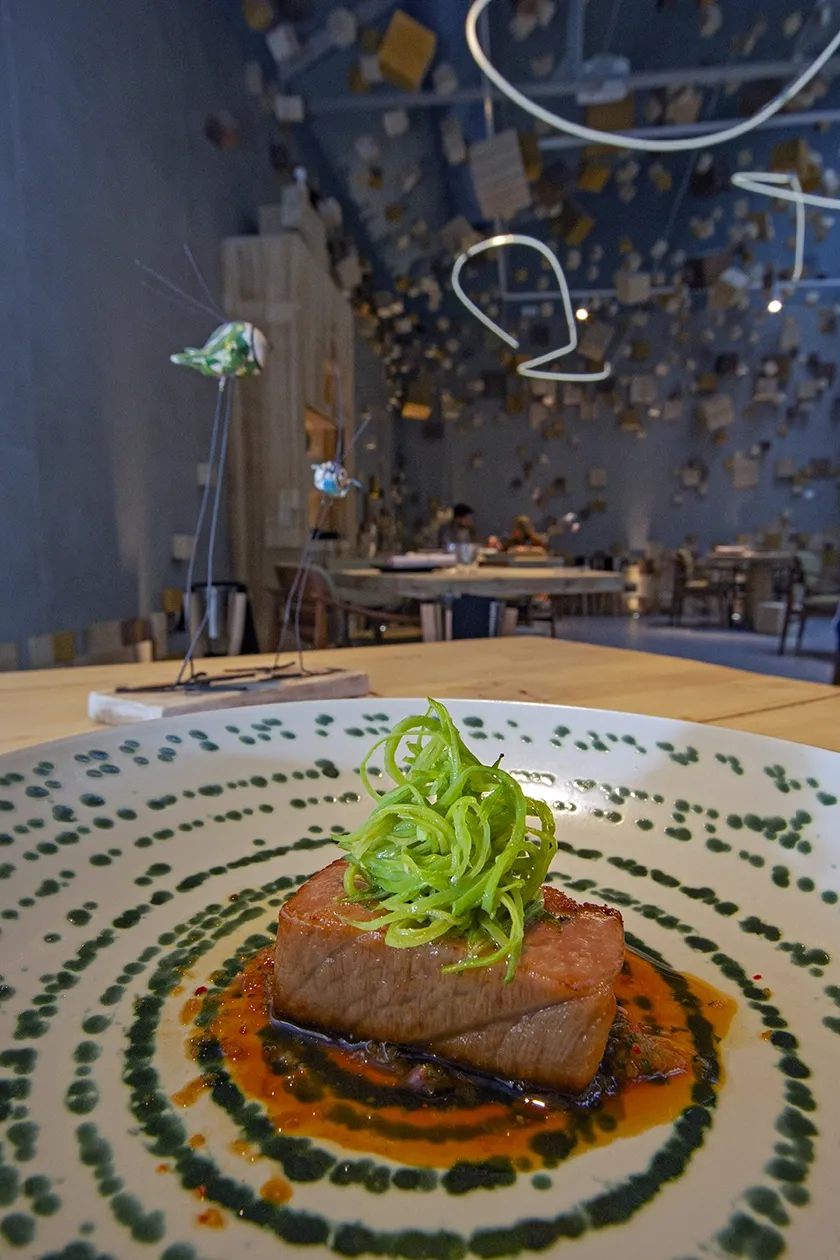
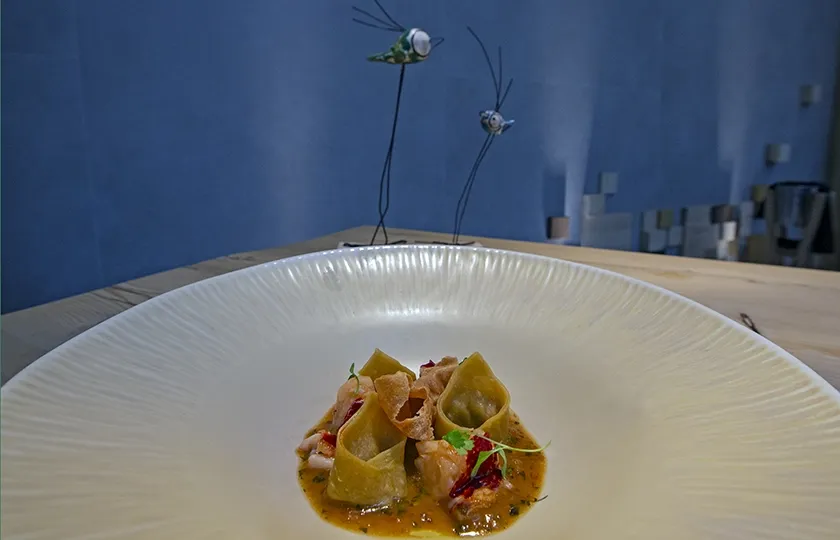
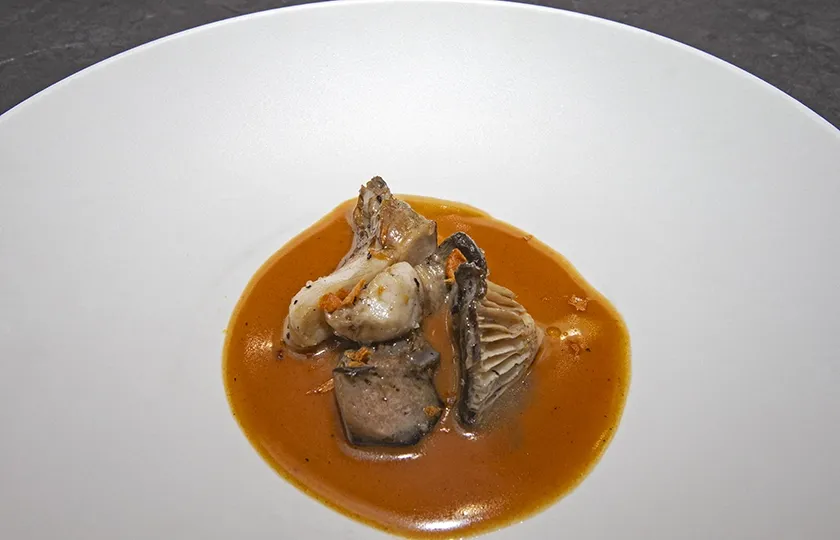
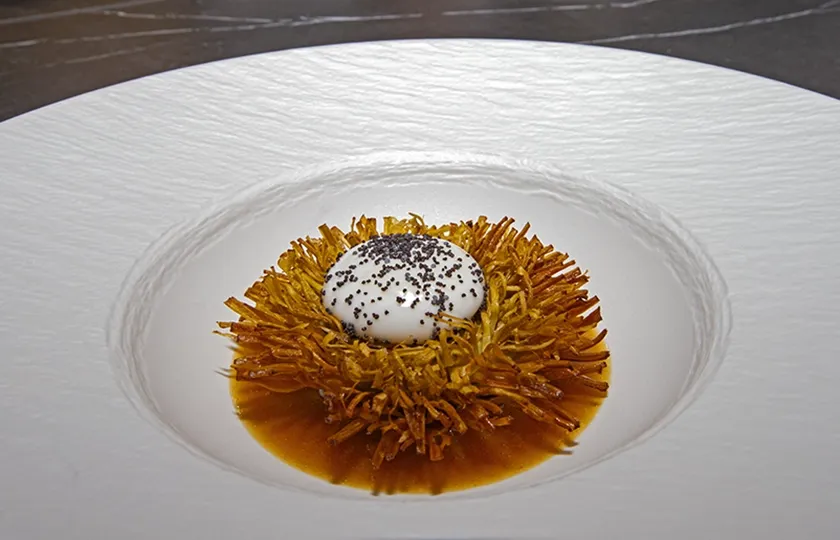
The result is a festival of tempting dishes that, in addition to being delicious, look like real works of art thanks to their masterful presentation.
At Omeraki, there is never any rush, and each dish is savoured at its own pace. The pace is set by the diners, and it is the masterful management in the kitchen that adjusts the flow of dishes to the rhythm of each table.
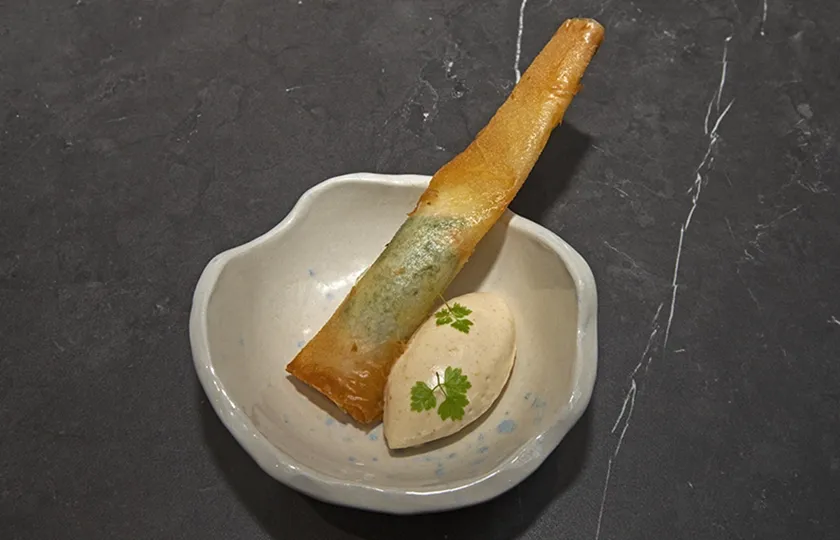
Alberto Chicote creates three weekly menu options of varying lengths, always based on market and seasonal produce, adapting the preparations to the specific characteristics of the raw ingredients. This makes Omeraki’s cuisine something alive that changes every week.
More than three decades of experience in some of Spain’s most important restaurants, together with Alberto’s love of cooking and the passion he puts into everything he does to achieve excellence, are evident in each of the three menus that will be presented to us at the table.
The time has come to choose which of the three proposed menus will be the star of this festival of flavours.
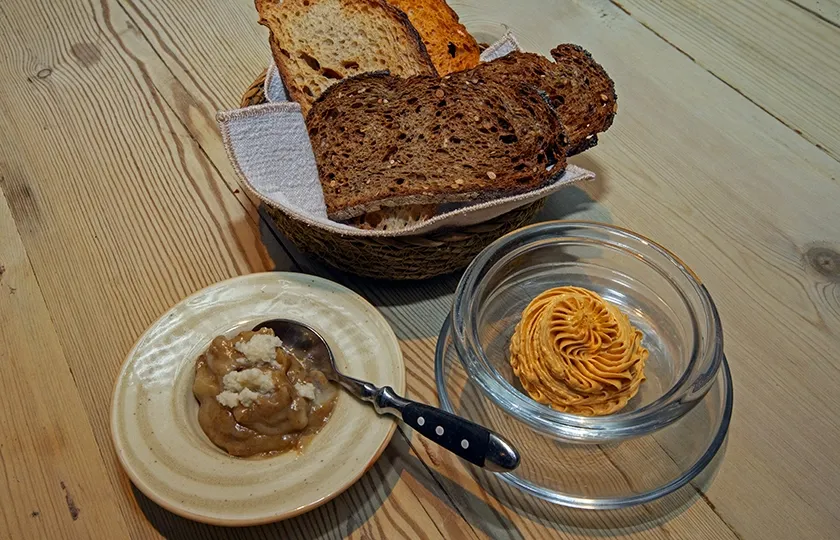
The Tribute, with its thirteen courses, is preceded by a delightful starter of butter and garlic paste made with five cloves of garlic in a mortar, to be spread on freshly toasted bread. This is followed by two snacks, four appetisers, four starter dishes, a choice of two fish dishes, a choice of two meat dishes and a choice of four desserts prepared especially for that day.
The Festival consists of eleven courses, including two snacks, four appetisers, three starter dishes and a main course chosen from two fish and two meat options, followed by a dessert chosen from four different options.
The Express menu is only available from Wednesday to Friday, for both lunch and dinner. It consists of two snacks, four appetisers, two starters and a main course to choose from two meat or fish options. For dessert, you can choose from one of four delicious options that change every day.
This is the liturgy of flavours that Alberto Chicote lavishes every week at his Omeraki del alma, a gastronomic temple where boldness and daring to experiment based on knowledge and courage in the dishes served deliver flavours that enliven the taste buds, suddenly bringing back memories of our grandmothers’ cooking while we travel to exotic kitchens.
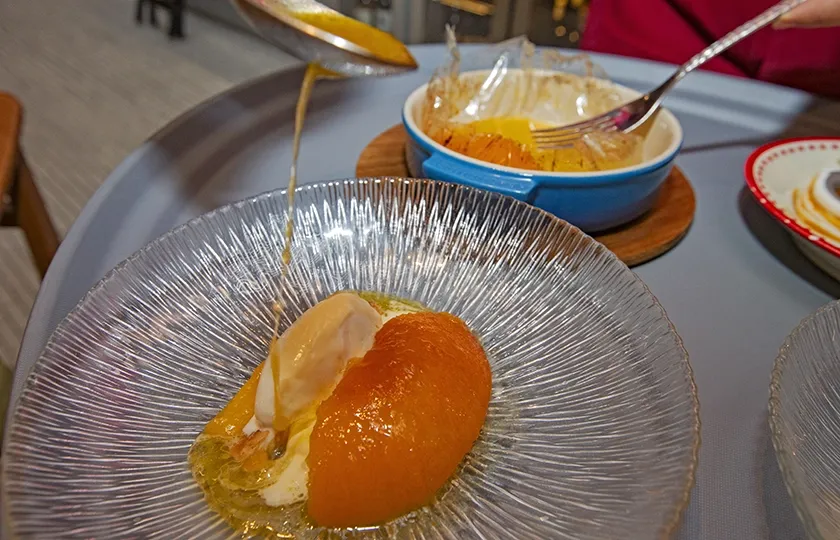
However, there are dishes that are already a staple at Omeraki, such as fried artichoke with Iberian sauce, liquid burrata and poppy seeds; white veal meatballs with cocoa centre; lamb tataki with ajoblanco and dehydrated olives; and roasted orange with yoghurt ice cream and Sichuan pepper.
Whatever you choose, a festival of flavours on the palate is guaranteed. But as every special moment deserves a fitting end, Alberto Chicote acts as the perfect host and personally sees each guest off as they leave the restaurant.