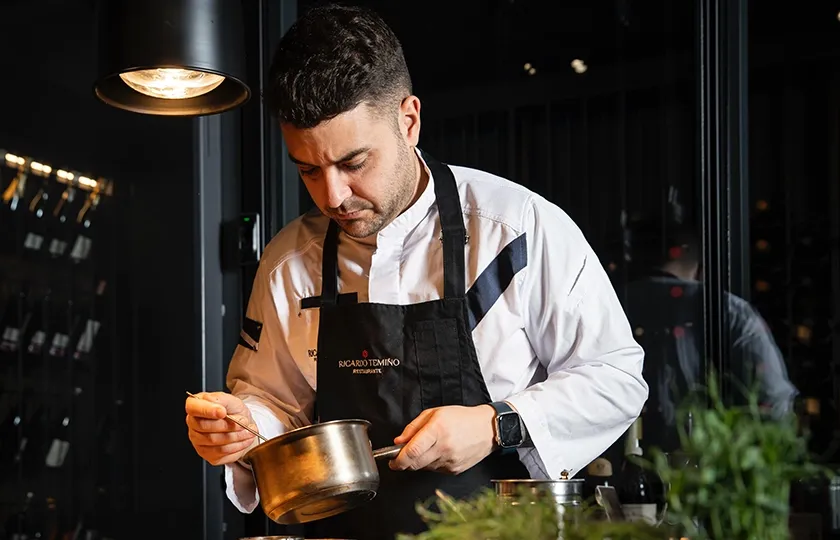
It has taken just over a year and a half for this restaurant in Burgos, on the ancient pilgrimage route to Santiago de Compostela as it passes through the capital, to earn a prominent place in the Olympus of national gastronomy with a Sol Repsol and a Michelin Star with an intimate and multicultural proposal.
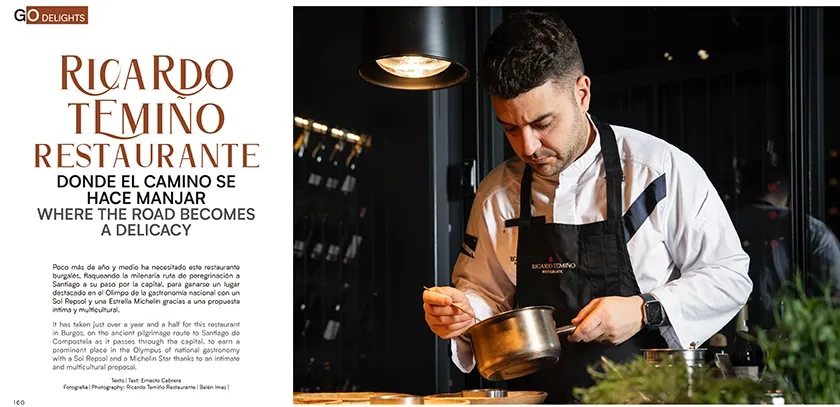
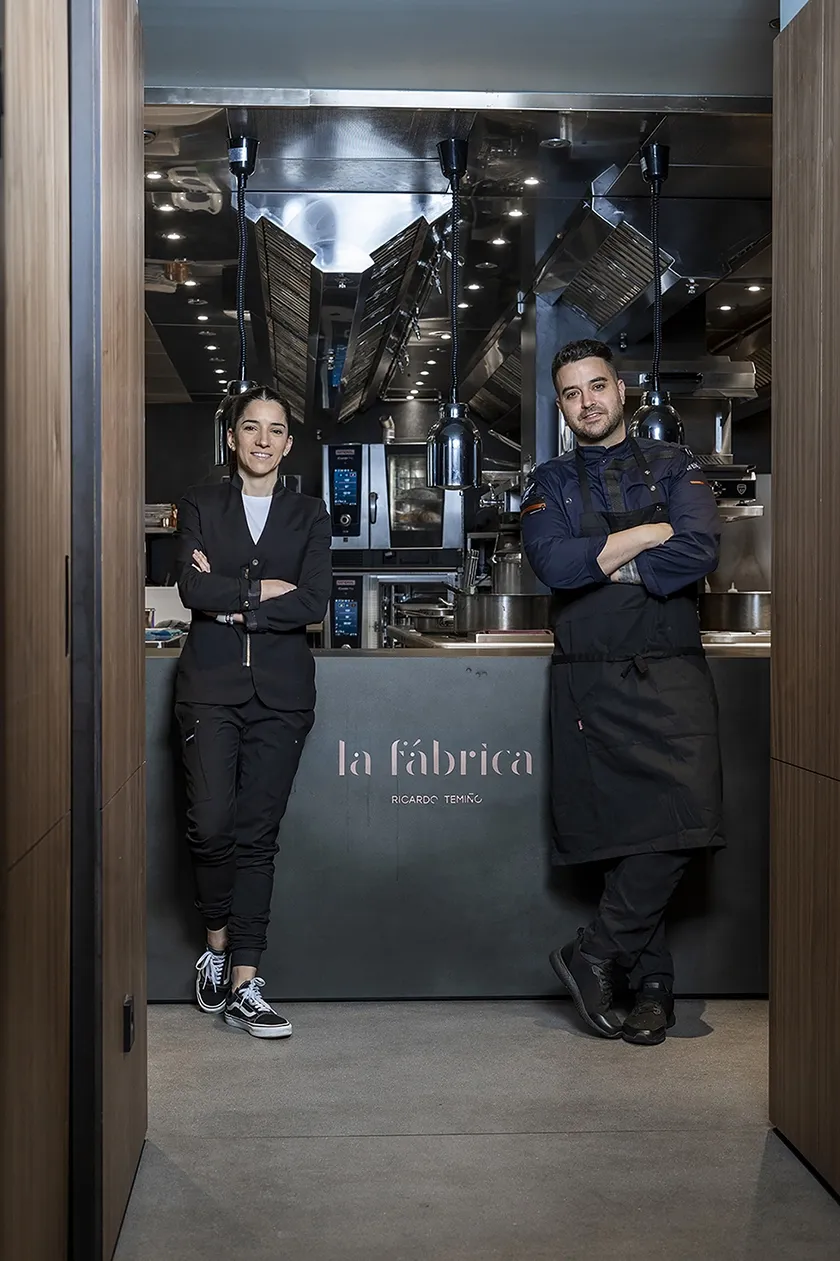
Run by the Burgos-born chef Ricardo Temiño and his partner, sommelier and dining room manager Cristina Lázaro, as well as his partner in his personal life, it is the realisation of a dream that began a decade ago with the opening of La Fábrica, his first restaurant after growing up in a family of hoteliers while training in cooking, working hard in the legendary restaurant Landa, learning alongside the legendary French chef Paul Bocuse and doing internships in restaurants in Japan.
But now it is a more mature, technical and haute cuisine concept, combining traditional flavours with a contemporary vision.
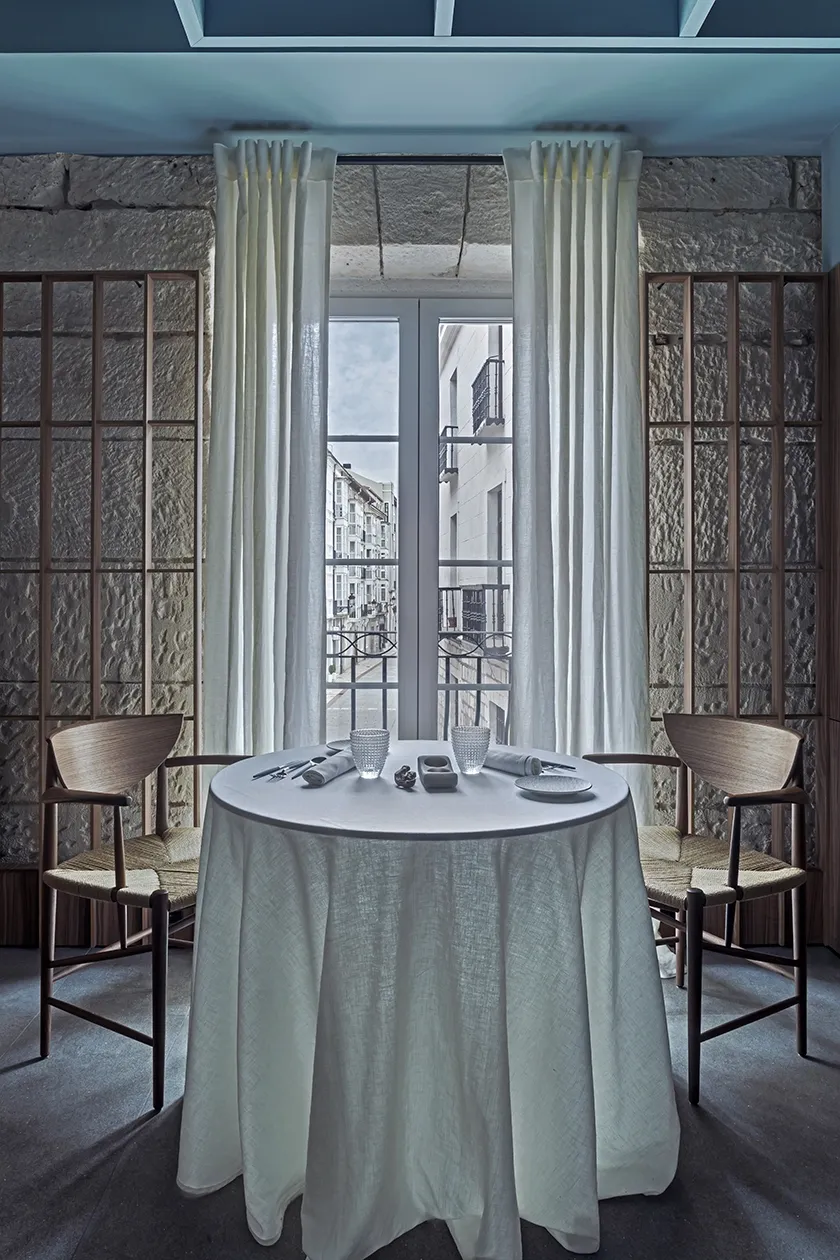
With a clear objective of achieving excellence, the Ricardo Temiño Restaurant was born, sharing space with La Fábrica through an elegant reception area that distributes access to the different gastronomic spaces, right at kilometre 256 of the French Way, between the walls of what was once a pilgrims’ hospital on Calle San Juan, which still preserves the bush-hammered stones and the wedges used to fit them, and a few metres from Burgos Cathedral, at the epicentre of a World Heritage Site.
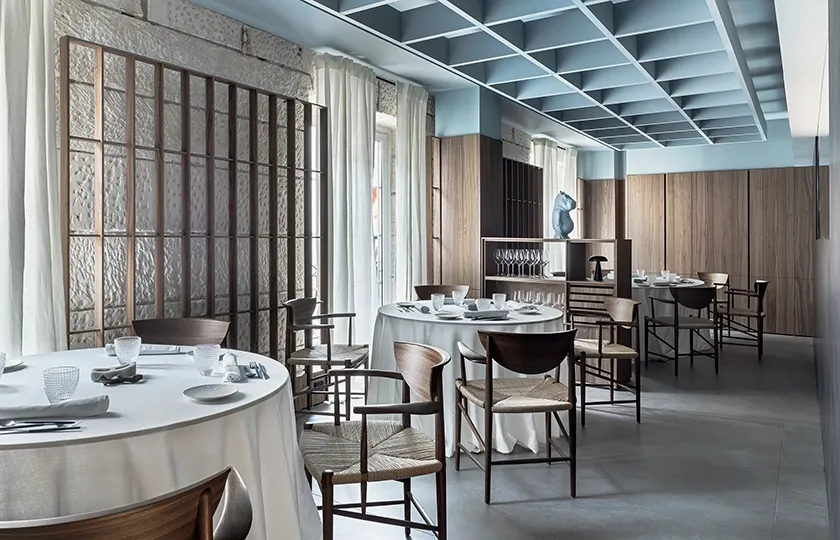
The restaurant, in turn, has two spaces. The main dining room, with four tables and capacity for twenty diners, is very pleasant, bright and decorated in a minimalist style so that nothing distracts attention from the gastronomic offering. There is also the wine cellar, where eighteen hundred bottles of more than four hundred different wines are stored. It is precisely here where the taste experience based on the cultural legacy treasured by the city of Burgos as a crossroads begins. “Burgos is one of the provinces with the most history of roads at a national level for centuries. Not only did the pilgrimage route to Santiago de Compostela pass through here, but also the railway route, the wool route and the fish route that came from the Bay of Biscay to Madrid. It has always been said that Burgos is the sea of Castile and where the best fish in Castile and León was eaten”, Ricardo explains as a source of inspiration for creating the Camino tasting menu.
A sublime menu
The Camino Tasting Menu, both in its short version of fourteen courses and in the long version of eighteen, is inspired by the pilgrims and their stories. “Without doubt the pilgrims’ route to Santiago has influenced the cuisines of the regions through which it passes, different visions of cooking, bringing different products or preparations and taking hundreds of gastronomic experiences from one place to another. We have all been enriched”, points out the chef. And it is this idea that Temiño reflects in his menu, created from the cultural exchange over the centuries due to the diversity of the pilgrims’ origins, without forgetting the gastronomic contributions made by travellers arriving via other routes. In short, he showcases the traditional recipes and flavours of Burgos without closing the door to other influences from outside, but always creating from that harmony capable of taking the diner into a dreamlike state through the palate.
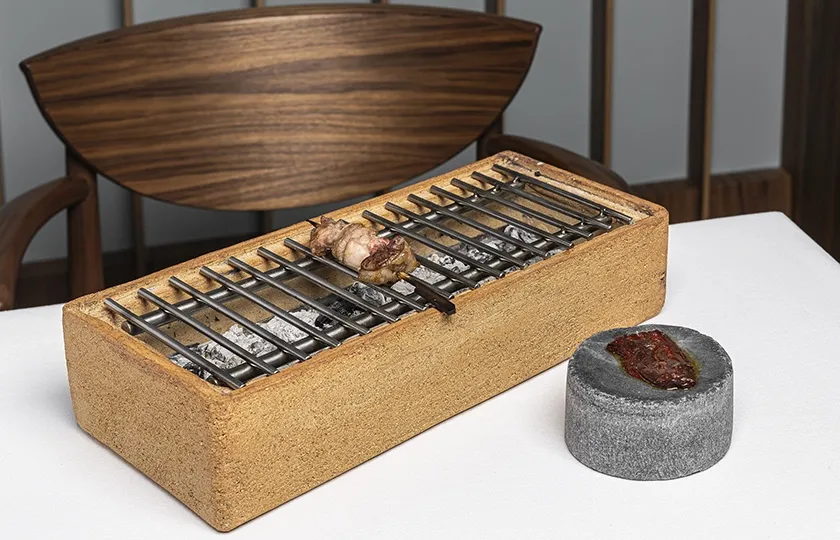
The festival begins in the bodega with an exquisite pincho of suckling lamb from the region of Las Merindades, organically reared, cooked with vine shoots and made with sweetbreads, kidneys and dried and fried peppers, all accompanied by a cocktail of Sherry and Palo Cortado.
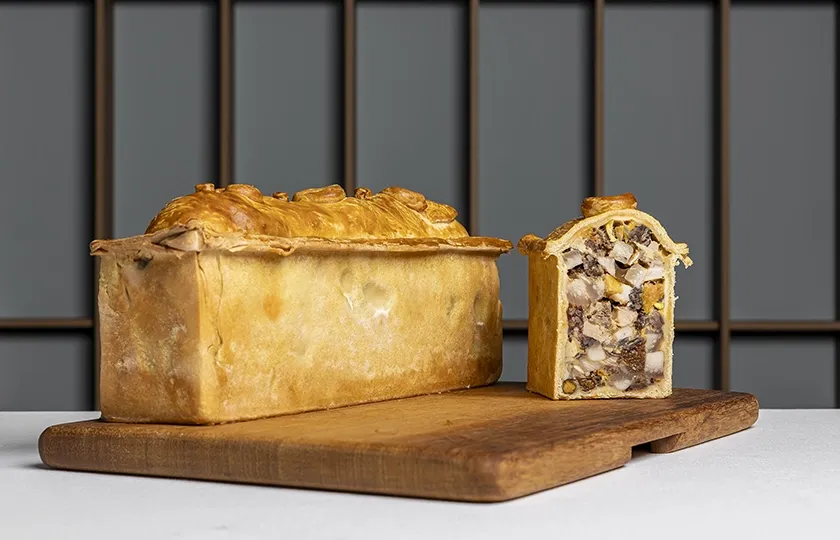
In the next course, it is the turn of the pâté en croûte, a delicacy based on the knowledge acquired by the chef during the time he spent with Paul Bocuse, but adding his personal touch with a nod to his homeland. “We have revived an ancient system of cooking and preserving food that I learnt in France, but here we do it with a Castilian flavour: blood sausage, pork products, pistachios, dried apricots…” Ricardo points out, accompanying it with a reduction of demiglace made with pork bones and homemade pickles that help cleanse the fatty morsel of pâté.
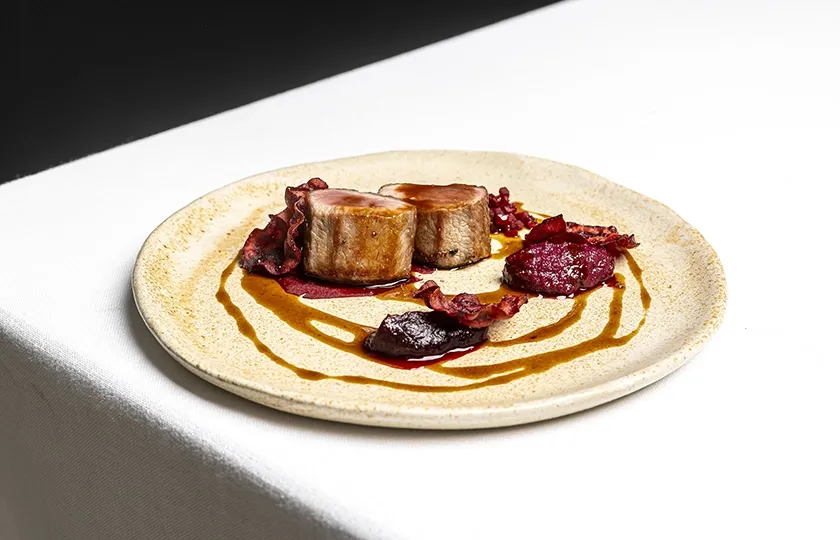
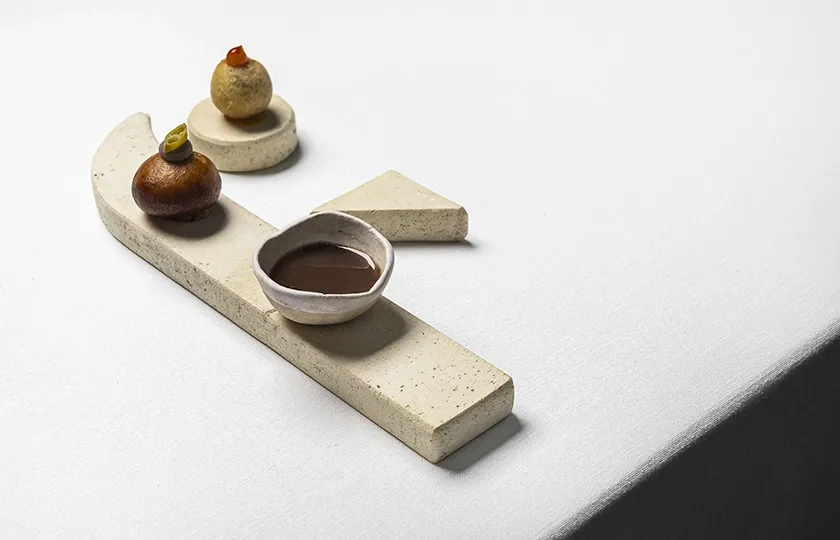
The gastronomic experience continues in the serene main dining room, where before the parade of authentic delicacies begins, the attention is drawn to the limestone crockery from the Hontoria Quarry, the same quarry that provided the raw material for the construction of Burgos Cathedral and the façade of the restaurant itself. It is an elegant and welcoming restaurant, with nods to the past and to that road, a touch of humour in the form of hippos, the chef’s favourite animals, which decorate and break with the sobriety of the place, combining with the blue ceiling in allusion to the immense sky that accompanies the pilgrim.
The menu continues with a homage to traditional tapas from Burgos, but with a personal touch. So we find their own version of the cojonudo, a fritter with Iberian bacon, bean and pepper cream, and the cojonuda, a panipuri with black pudding cream, egg yolk and fried lace. The meal is completed with bao frito stuffed with rotten pot with its broth, a traditional stew made with Ibeas red beans, buttery and fine, and the sacraments of the slaughter. Nor can we forget the trout, so characteristic of the province.
Little by little the main courses arrive, such as the delicious glazed fennel marked on the grill with two reductions: a beurre blanc made with white wine, butter and shallots, and a demi-glace made with the toasted fennel skins. To finish, fennel buds, a hint of noisette butter and a few drops of fermented fennel that add a bitter, liquorice note. According to Ricardo, his cuisine is very Castilian, but with an important French influence that is evident in the use of butters, cooking methods and the way the meat is seared.
The tear pea is another delicacy made with scarlet shrimp, osetra caviar, the shellfish’s own broth and a pesto base with peas and toasted pistachios, but no less exquisite is the Cantabrian lobster in a tartlet with sea urchin duxelle, a marine jewel that connects northern Spain with refinement; the suckling lamb sequences, an ode to Castilian lamb presented in several stages; the morsels such as the matured Galician Blonde beef or the cloud of Peña Amaya cheese, one of the most important and identifying enclaves of the province from a historical point of view, not forgetting the matured cod and the tripe and caviar.
The Castilian soup is one of the most fun dishes with its three spheres of different textures representing the main ingredients of this traditional recipe: ham broth, garlic cream and egg yolk, with its corresponding picada (a mixture of ground spices).
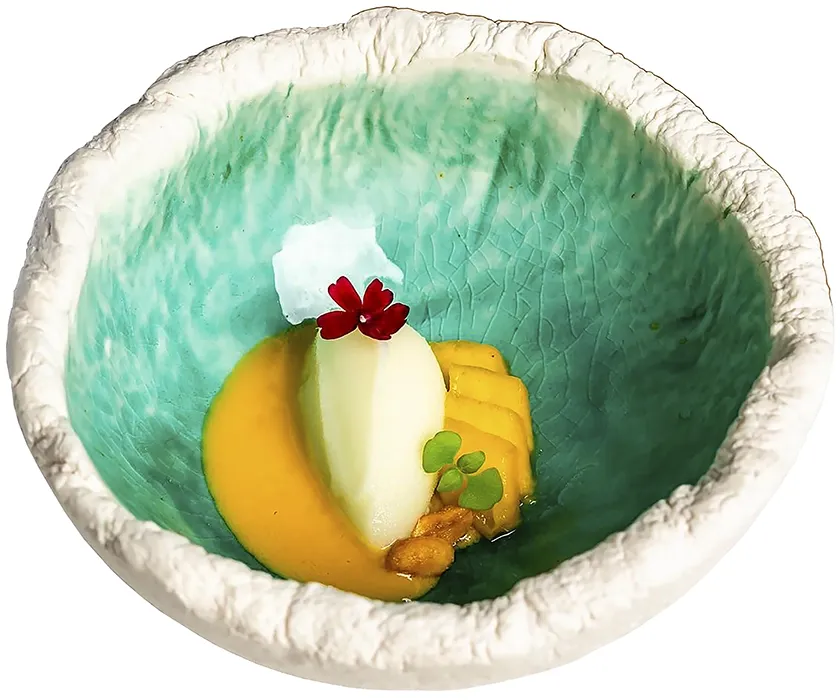
The ‘journey’ of contrasts proposed by the Camino tasting menu ends with an exotic twist of mango soup and green curry with passion fruit, galangal, ginger, celery and lime ice cream, candied mango, caramelised of Briviesca peanuts and basil leaves. Nor can we fail to mention a reinterpretation of the popular “Postre del abuelo” (Grandfather’s Dessert), a canutillo with fresh Burgos cream cheese, cheese ice cream, walnut crumble, fake walnuts made with walnut praline and a coating of cocoa butter, honeycomb and honey gel.
The passion that the owners have put into this project, together with the unwavering commitment and expertise of the whole team, take the gastronomic experience to a higher level, that touch of excellence that fully justifies the well-deserved Michelin Star.
“The fact that this extra recognition has come so soon, when we have practically just finished opening this area, is a source of pride,” says Ricardo.