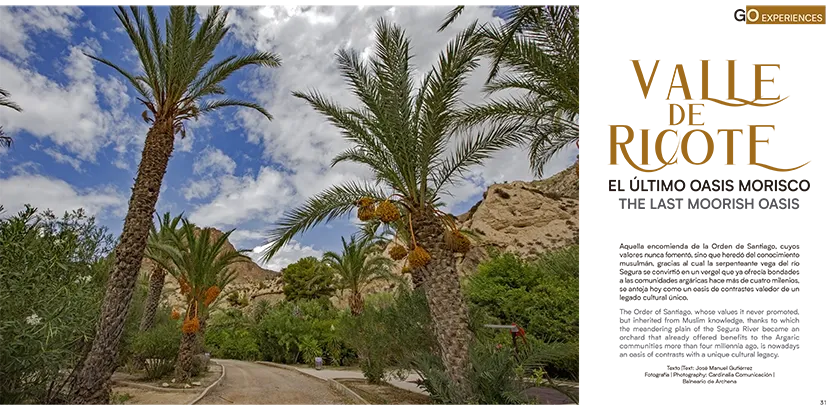
The Order of Santiago, whose values it never promoted, but inherited from Muslim knowledge, thanks to which the meandering plain of the Segura River became an orchard that already offered benefits to the Argaric communities more than four millennia ago, is nowadays an oasis of contrasts with a unique cultural legacy.
We are used to hearing that the Spanish geography is very rich in contrasts and biodiversity, but we are nevertheless surprised when we come across truly genuine scenery, both culturally and environmentally.
This is what we perceive as we look out over the beginning of the middle course of the Segura river in the Region of Murcia, just where nature seems to want to give a blow to the ground and form the vertiginous gorge known as the Almadenes canyon, a Protected Natural Area in the municipality of Cieza with vertical walls that reach a height of one hundred metres above the Segura riverbed that runs along the bottom.
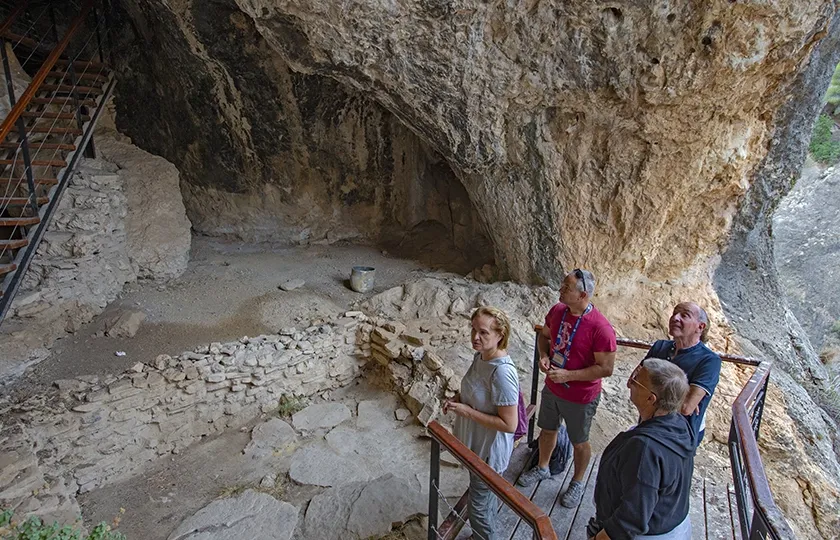
In addition to the undisputed karst beauty of the site, the capricious nature has led to the formation of hundreds of caves, chasms and natural shelters. Many of them have been used as shelters by Neolithic man, and cave paintings are very abundant.
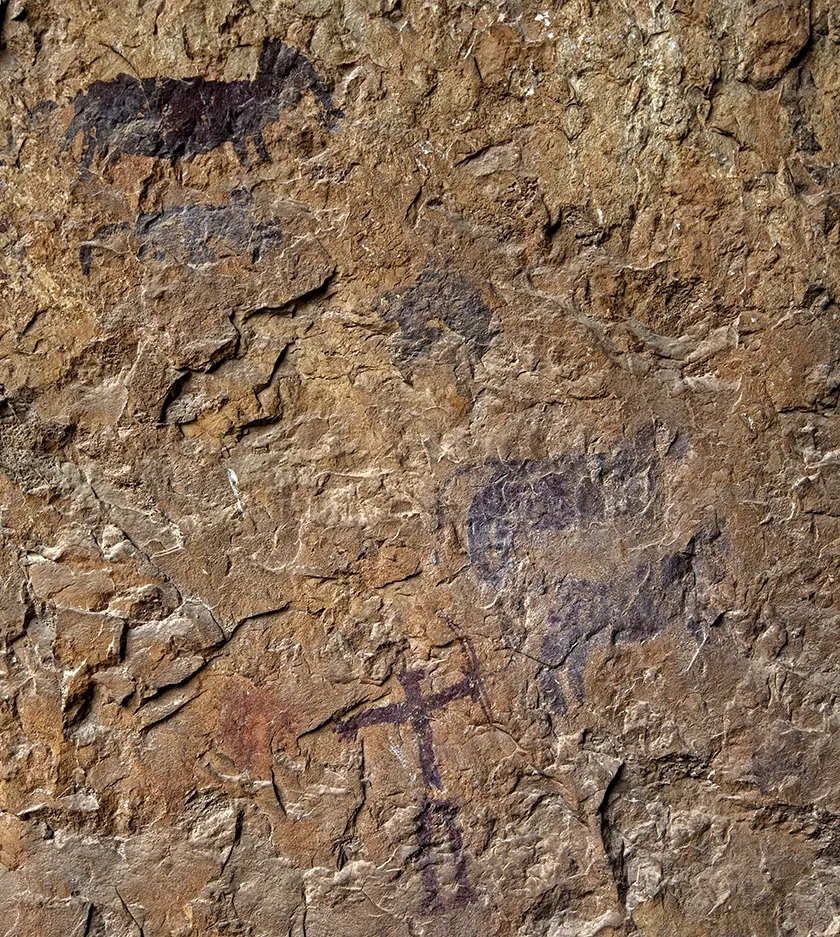
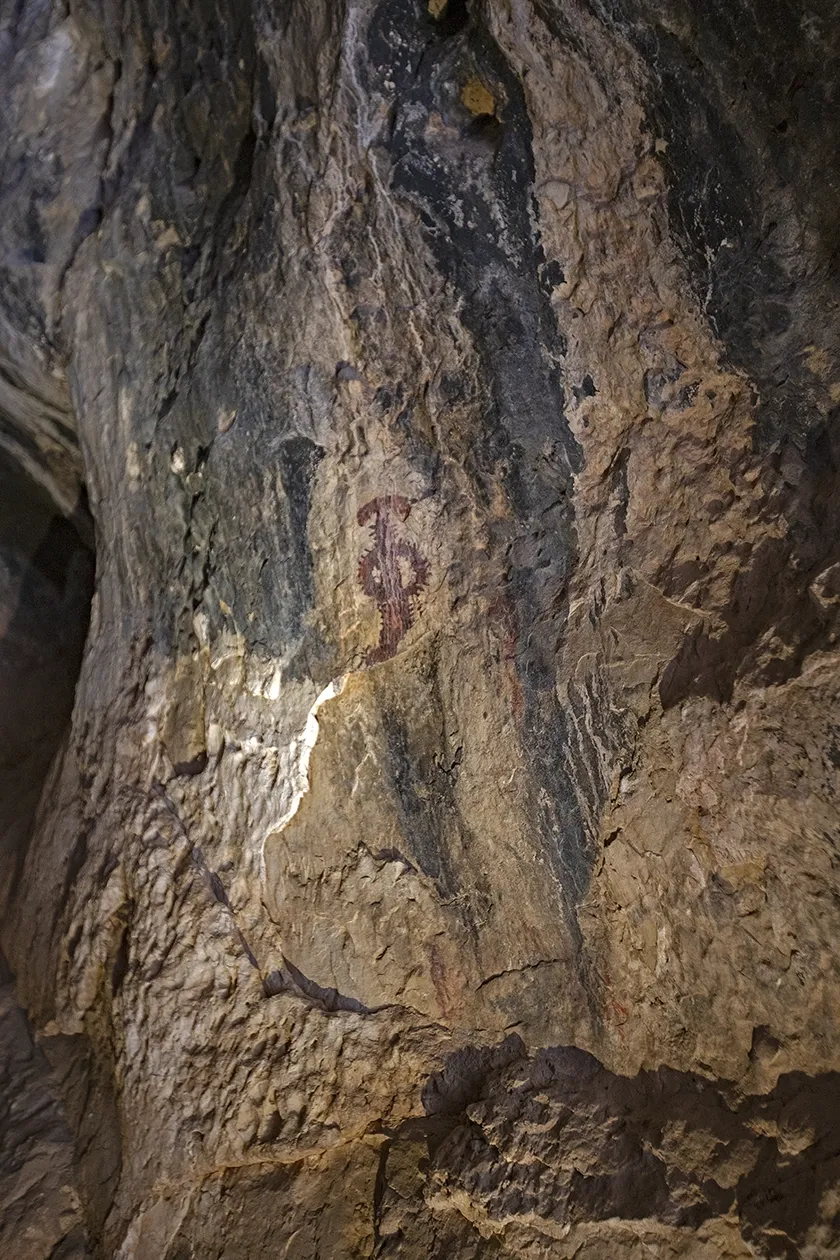
Particularly noteworthy is the cave-chasm of La Serreta, located on a natural balcony of the canyon and practically inaccessible from it, which is accessed through another entrance located on the upper plain on the left side of the gorge. There are three aspects that make this archaeological site special. On the one hand, its location, from where you can admire the Almadenes canyon in all its splendour. Another singularity is the existence inside the cave of the remains of a small Roman house, the only example of a similar type documented in the Iberian Peninsula. And lastly and most importantly, there are two excellently preserved panels of cave paintings, depicting everything from deities to complete hunting scenes.
Such is the cultural and historical value of the Serreta paintings that they are included in the list of Rock Art of the Mediterranean Arc of the Iberian Peninsula, declared a UNESCO World Heritage Site in 1998.
Beyond the controversy over whether or not Cieza belongs to the Ricote valley, which we are not going to go into, what is certain is that nature does not understand borders imposed by human interests, just as it is certain that the Segura river expands along the banks that irrigate the fertile plain once it leaves the Almadenes canyon, so it could well be understood that this gorge is the gateway to the oasis that exemplifies the Ricote valley.
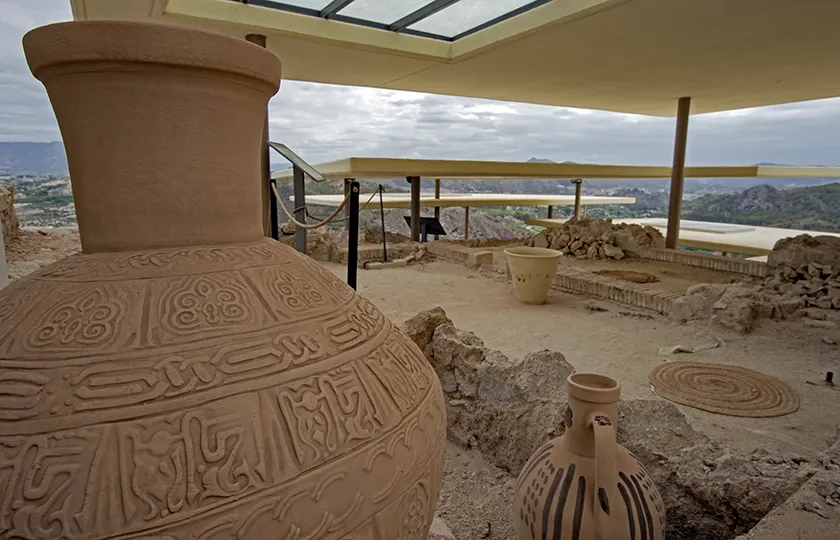
Not far from here there is another culturally and historically very valuable enclave, from which the certainty of where the territory in question begins becomes even stronger. Very close to the town centre of Cieza, very rich in historical and cultural heritage such as its museums or its Holy Week, declared of International Tourist Interest, and the 15th century castle, on a south-facing slope of the hill from which there is an immense panoramic view of the orchard that irrigates the Segura river and some villages of the Ricote valley, the Islamic site of Medina Siyasa is the best example of the urban development, building typologies, decorative elements and social structures of the Andalusian cities of the 12th and 13th centuries. This walled city, which once had an estimated population of four thousand inhabitants, has the particularity of having reached the present day without having undergone any kind of restoration and in an acceptable state of conservation, so that every wall, every stone or every plasterwork is original. Medina Siyasa, whose understanding is didactically expanded in the Siyasa Museum, is an open-air history book that looks out over the Ricote Valley.
An oasis in the heart of the Murcia region
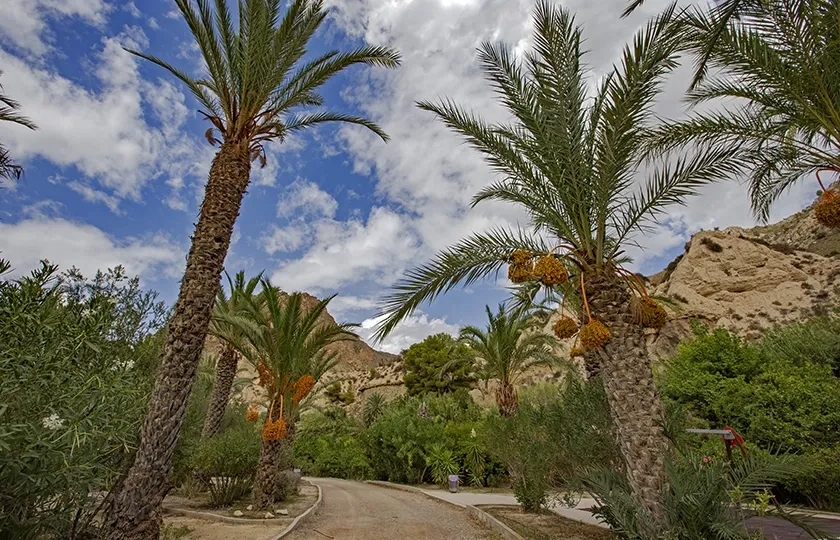
Downriver, a riverbank unfolds, anchored in the Arab heritage, of which it preserves, among many other vestiges, the complex and efficient system of irrigation canals. Thus, after centuries of wisdom, a lush orchard has developed, a sea of fruit, vegetables and greens that coexist with groves of poplars, willows and palm trees, giving life to a unique ecosystem, whose panoramic view, delimited by steep mountains with a desert-like appearance, takes us back to the memory of distant lands.
But no, we are in the heart of the Region of Murcia, in a place that flourished with the arrival of the Muslims, who understood the sensitivity of this land and made it productive, thus favouring, between the 8th and 13th centuries, the settlement of the population and the rooting of their culture. This imprint is also visible today in the urban layout of some villages, in many words and in much of the gastronomy, for example.
The expulsion of the Moorish community from the Ricote valley in the 17th century, the last to leave Spain, meant a clear economic and cultural stagnation from which the villages have gradually recovered thanks to the efforts of their people to maintain an ancestral way of life and the love they profess for their land in every sense.
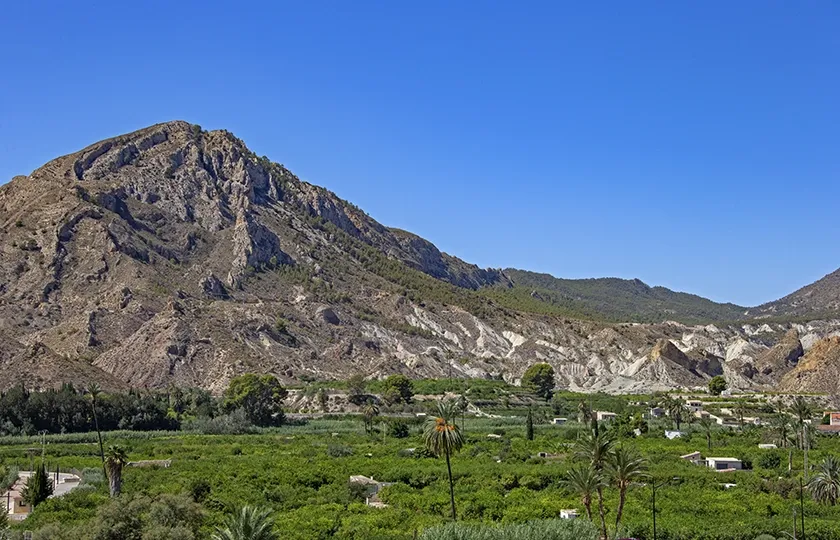
Barely five kilometres separate the gateway to the Ricote Valley from the town of Abarán. Nestled on a natural balcony overlooked by the hermitage of the Santos Médicos, from where you can enjoy a splendid panoramic view of the valley and the Sierra del Oro.
In the lower part of the village there is a very interesting cultural offer in contact with nature. The Route of the Waterwheels is a pleasant path of just over four kilometres, declared a Site of Ethnographic Interest, which takes us to four imposing waterwheels – Noria Grande, de la Hoya de Don García, de Candelón and de la Ñorica – which even today and for centuries have continued to irrigate part of the market gardens, they constitute the largest group of traditional and functional waterwheels in Spain.
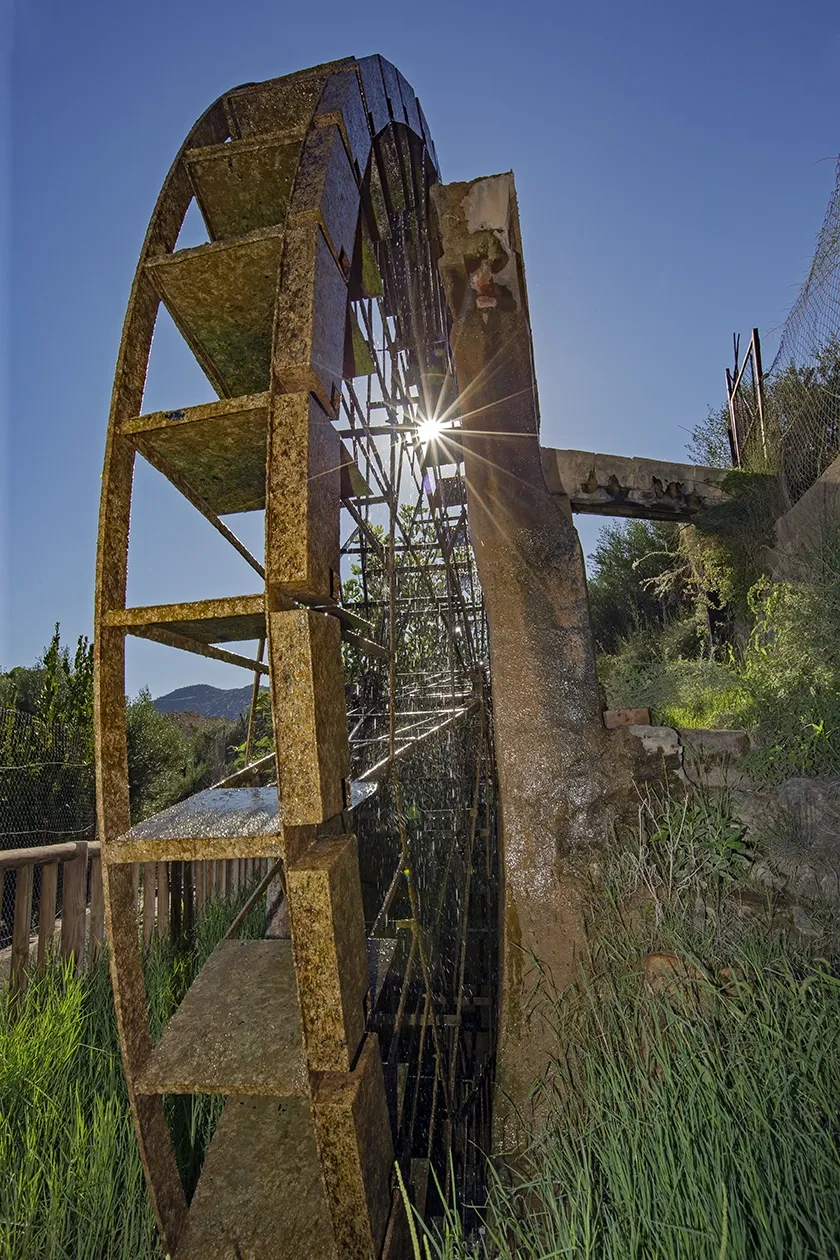
Following the slow flow of the Segura river, we arrive at the pretty village of Blanca, which spreads out its hamlet under the omnipresent silhouette of the 12th century Muslim castle. Curiously, it was formerly called Negra due to the dark colour of the volcanic rock on which it sits.
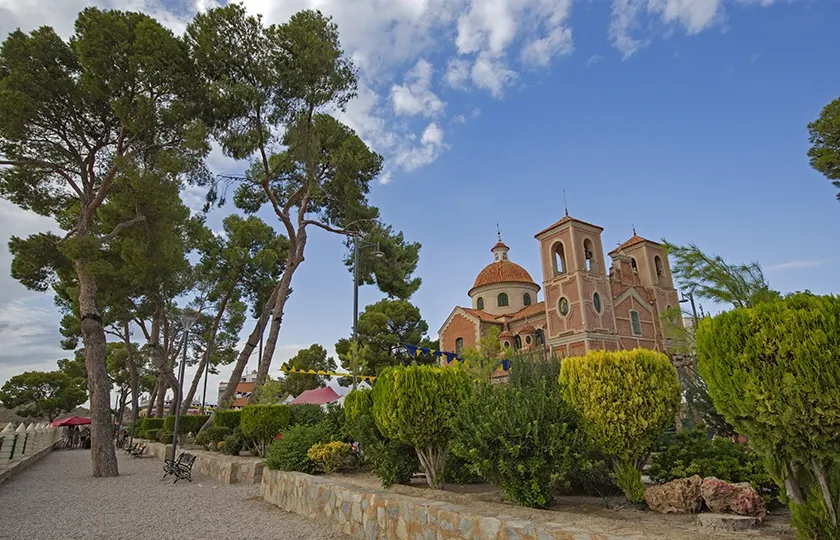
Its charming streets are dotted with interesting and varied examples of civil and religious architecture, but the town is also interesting for the Pedro Cano Foundation, where some of the best works of this local artist are exhibited, for the Interpretation Centre of Light and Water as a didactic exponent of the use of water throughout the history of the municipality and, to round off, nothing better than a walk to the Alto de Bayna viewpoint, a setting with bucolic touches and spectacular views of the valley, ideal for contemplating the birds that inhabit the banks of the river and spectacular sunsets. In Blanca we find another irrigation waterwheel which the anthropologist Julio Caro Baroja defined as follows: “the Blanca waterwheel seems to have an absolutely genuine profile not found in any other waterwheel in Spain”.
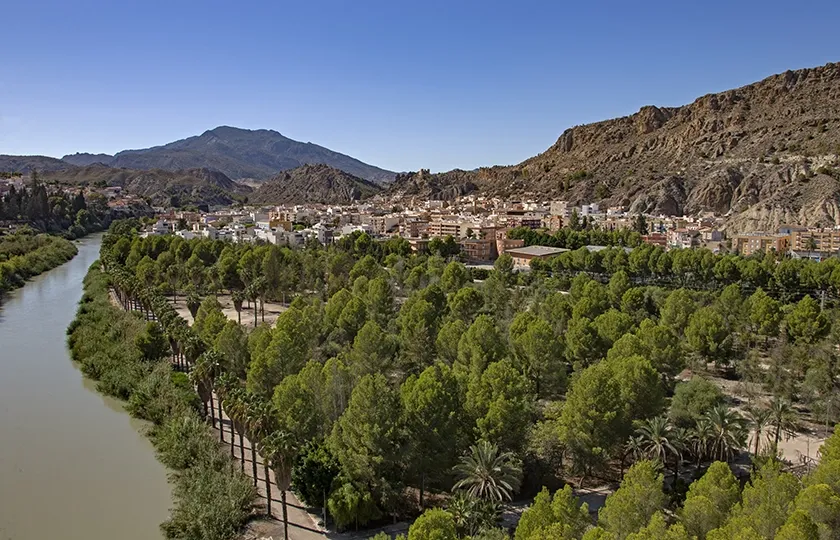
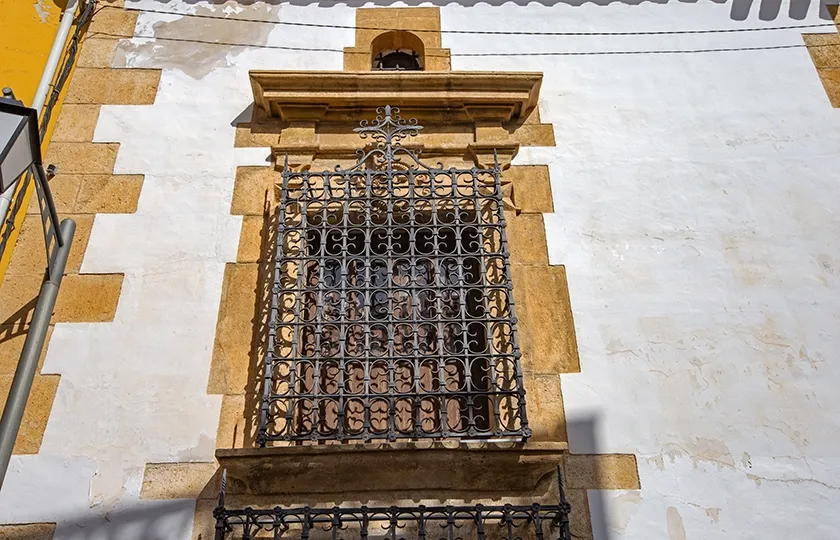
Without losing sight of the waters of the Segura and the whimsical shapes they make thanks to the Ojós weir surrounded by suggestive lemon trees, we approach the only village that is not next to the Segura, but which gives its name to the valley. Ricote, surrounded by a semi-desert landscape in the higher areas and populated by large areas of Aleppo pines, conserves a clear oriental appearance in its narrow streets and corners, in good harmony with buildings built after the Moorish expulsion, such as the church of San Sebastián or the Casa de los Llamas, a magnificent example of Murcian Baroque with beautiful carved grilles.
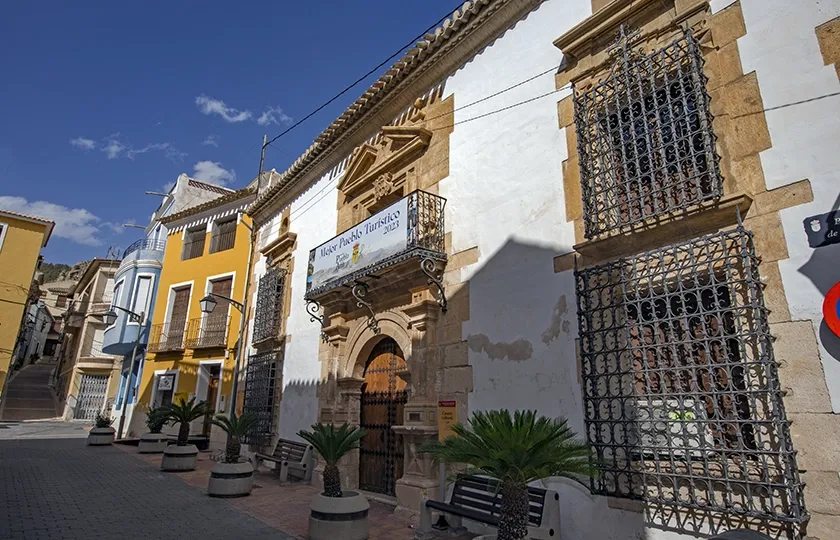
We retrace our steps to return to the banks of the Segura and find the village of Ojós, whose name derives from the Arabic Hosos, meaning orchards. Its charming hamlet clearly shows its origins, as well as offering some surprises, such as the Museum of Nativity Scenes of the World, located in an old 18th century mansion known as the House of the Inquisition, where two hundred and sixty sets from the five continents are exhibited, although the museum’s collection exceeds eight hundred, and the church of San Agustín, reconstructed on the site of a former mosque.
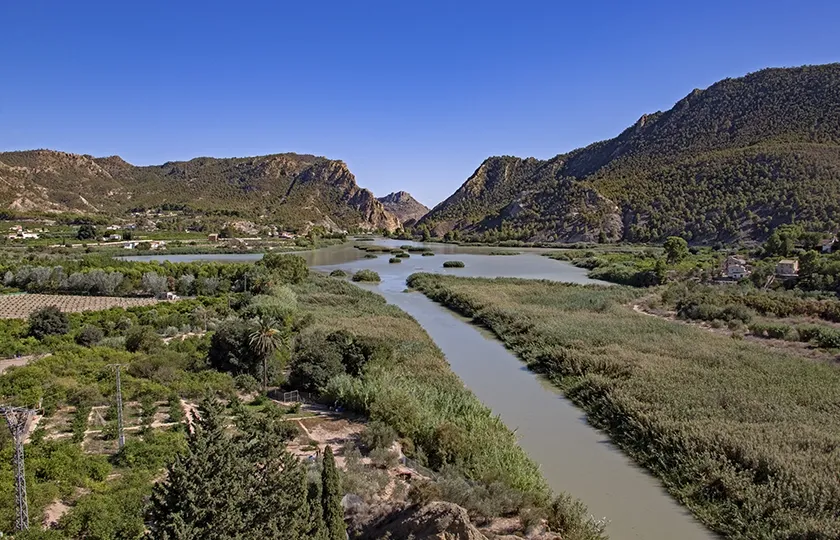
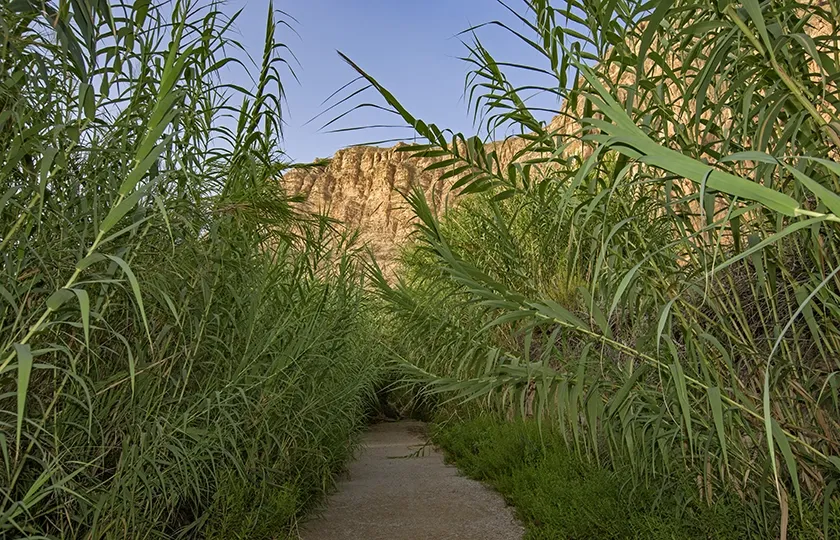
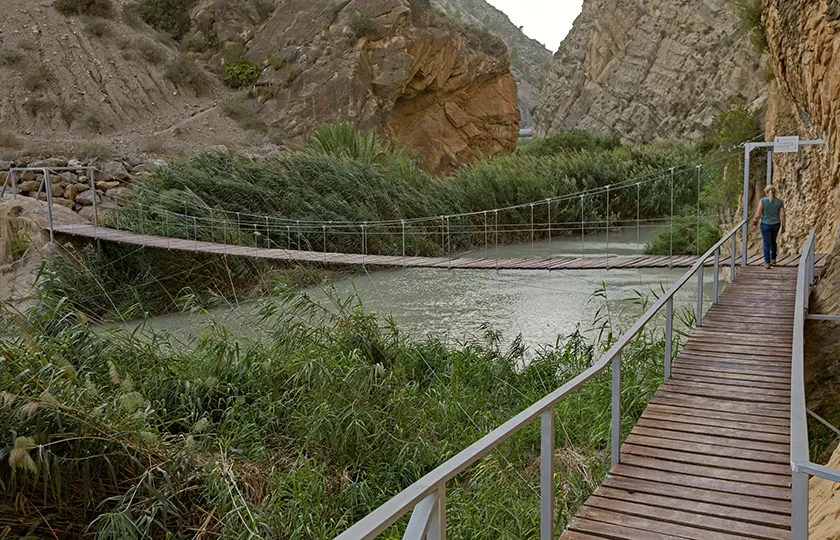
Ojós is surrounded by an evocative landscape of leafy orchards in which the murmur of the river always resounds. Climbing up the right bank you reach the Solvente strait between fruit fields, reed beds and irrigation ditches as old as the village. The site is classified as an Asset of Cultural Interest in the category of Historical Site, as well as forming part of the Natural and Biodiversity Heritage, as it is linked to historical and cultural events and to technical and industrial creations of the past. This place was already mentioned in medieval sources as being a strategic place for controlling the waters of the Segura, specifically in the strait where the current dam stands, which is probably built on top of an older one from the 10th century. A few metres before, an eighty-metre long Tibetan bridge allows you to cross from one bank to the other, although the most intrepid can do so by hanging from the 100-metre zip line that crosses the river.
Downstream, the village of Ulea stretches between the fertile plain at its feet and the aridity of the surrounding mountains, creating a scene of contrasts. Although it was inhabited by the Iberians and Romans, it was the Muslim population that defined its physiognomy, which has survived to the present day, as can be seen in its narrow, stepped streets, its cisterns and fountains, the palm groves that tower above the fruit trees and the peaceful atmosphere that can be breathed.
Our journey is drawing to a close, but first it is necessary to make a stop in Villanueva del río Segura, which is practically next to Archena, the southern gateway to the Ricote valley.
Archena is a city with a very interesting heritage and culture due to its museums, festivals and traditions, but one of its most representative landmarks is the Archena Spa.
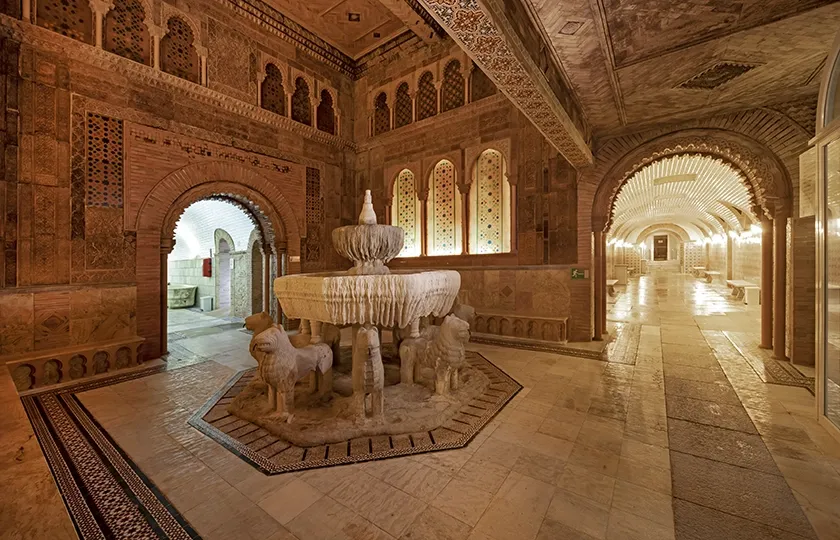
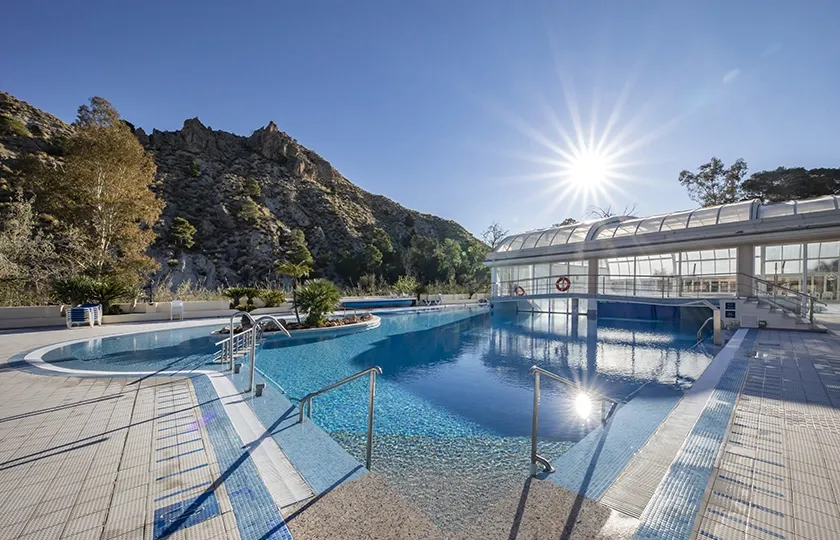
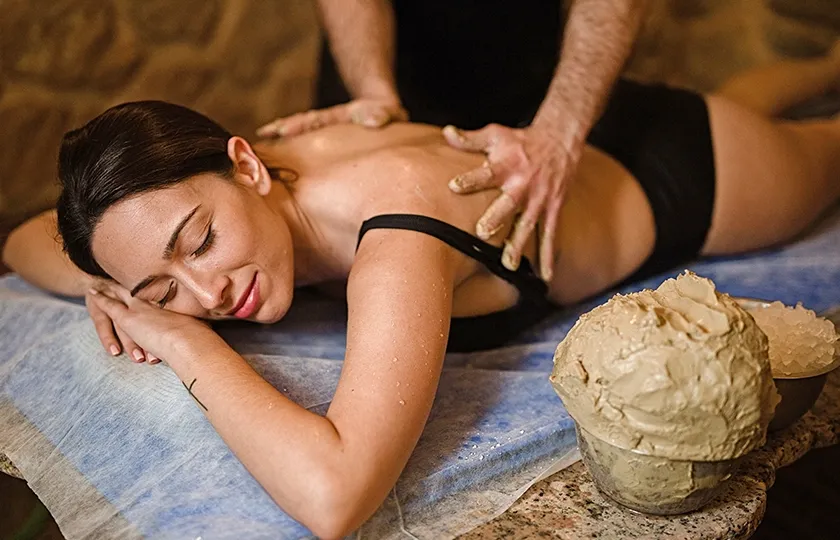
Located in a spot already known by the Iberians and Romans, builders of the first thermal baths, who already enjoyed the properties of its waters and where the palm groves and eucalyptus trees take on a special role, the sulphurous waters with many curative properties spring forth at more than fifty degrees, very close to the sanctuary of the Virgen de la Salud, patron saint of Archena. It is now a modern spa complex and the main tourist attraction in Archena.
The Ricote valley is in itself a genuine universe, an ecosystem steeped in history in which man and nature have learned to coexist and respect each other for centuries and at the same time to be, and at the same time, the custodians of a legacy on which they have based their way of life and from which to look to the future with hope.