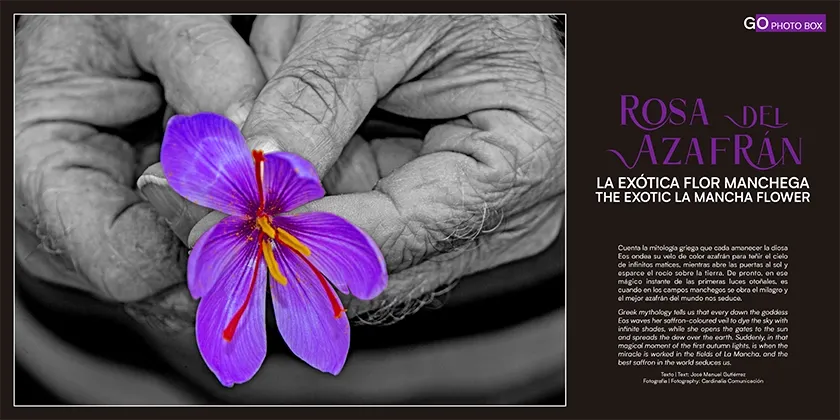
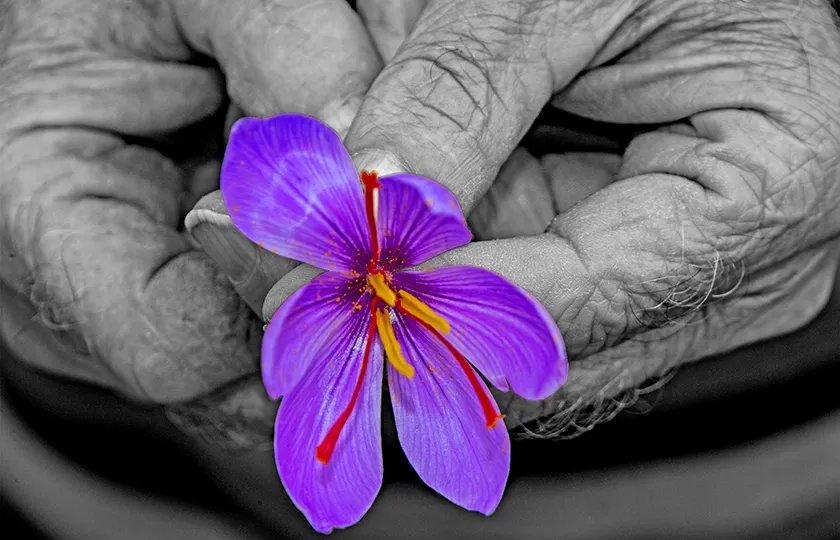
Greek mythology tells us that every dawn the goddess Eos waves her saffron-coloured veil to dye the sky with infinite shades, while she opens the gates to the sun and spreads the dew over the earth. Suddenly, in that magical moment of the first autumn lights, is when the miracle is worked in the fields of La Mancha. and the best saffron in the world seduces us.
It is the oldest known spice. Used for multiple purposes for millennia, it has always been linked to the most cultured and advanced civilisations, which gives it certain exotic connotations.
Assyrians, Babylonians, Egyptians, Greeks, Persians, Romans, Arabs and even as far away as China were seduced by the beauty of the flower and the unique properties of its stigmas, making it the most coveted of spices.
The origin of this plant is said to be in the Anatolian plateaus of present-day Turkey, through which the most important trade routes of antiquity passed. This led to rapid expansion in all directions, so it is not surprising that its benefits are cited in books such as the Old Testament, in King Solomon’s Song of Songs, in an Egyptian medical papyrus from 1500 BC. or in palace frescoes from Minoan Crete more than 3,000 years ago.
It was so precious and valued that its use had socio-cultural connotations, and its trade became an important generator of wealth. It is believed to have reached the Iberian Peninsula more than two thousand years ago thanks to Roman trade, although it was not until the arrival of the Arabs, faithful heirs of the Greek knowledge of the medicinal and culinary qualities of saffron, when this highly prized plant began its definitive expansion in our land during the Caliphate of Cordoba.
The saffron flower was particularly well adapted to the characteristics of the soil and climate of La Mancha and the farmers of the time quickly understood how to grow it. So much so that, without intending to do so, they have made it sustainable to this day, and both have become the true protagonists of this story.
Saffron, Manchegan identity and culture
This spice was fundamental in the economy and in the union of the most humble families, as the cultivation, harvesting and subsequent processing work required the participation of all the members of the family. This remains unchanged today.
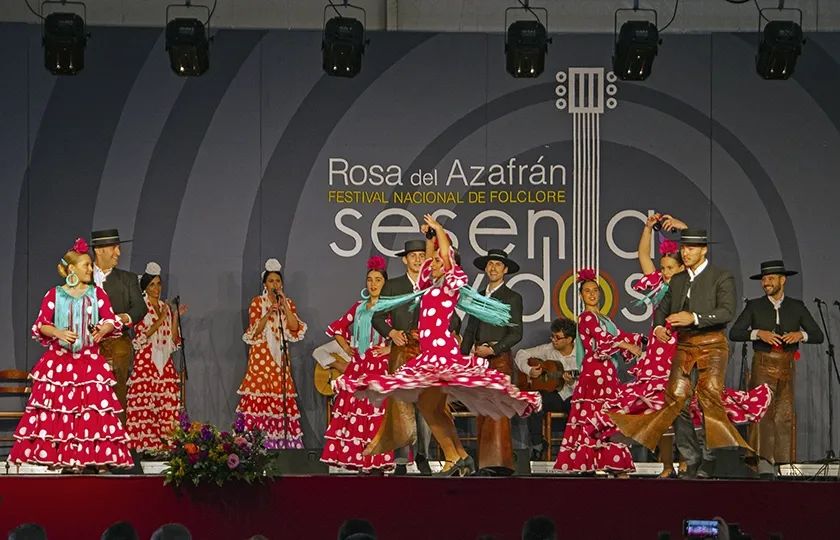
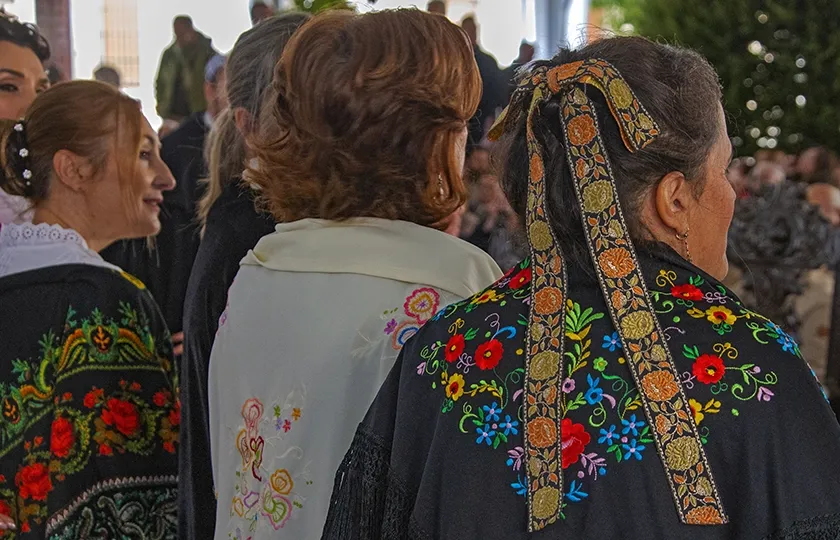
Such is the deep-rootedness of this historical link between La Mancha and saffron that many cultural manifestations have become traditions, such as the survival of its own vocabulary, proverbs, songs and even a jota (Spanish folk song), the celebration of festivals with a markedly popular meaning such as the Rosa del Azafrán in Consuegra or the constant references found in the different ethnographic museums of La Mancha, without forgetting an expression that I repeatedly heard from the elders of Consuegra, Madridejos or Villafranca de los Caballeros: “here saffron has paid for many weddings, many houses and many university studies”.
It is said that the saffron flower is a “flower of a day”, as it is born at first light and dies a few hours later at dusk, but something so ephemeral has served to cement a culture that has survived time and the vicissitudes of history. Centuries have passed and many things have not changed, except for the area devoted to saffron, which has decreased substantially. Su cultivo está documentado desde antiguo en Pedro Muñoz y Campo de Criptana (Ciudad Real), en Lillo, Madridejos, Villacañas, Villanueva de Alcardete, Villafranca de los Caballeros, Cabezamasada y Consuegra (Toledo) y en Motilla del Palancar (Cuenca).
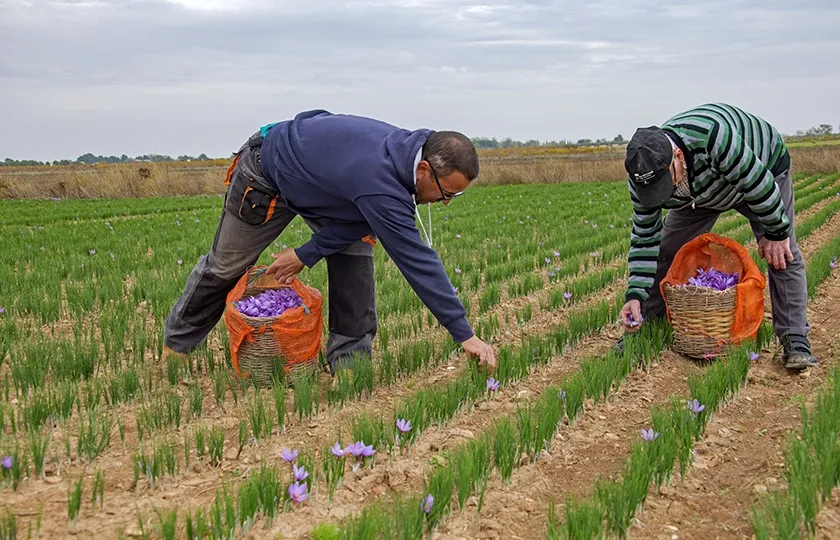
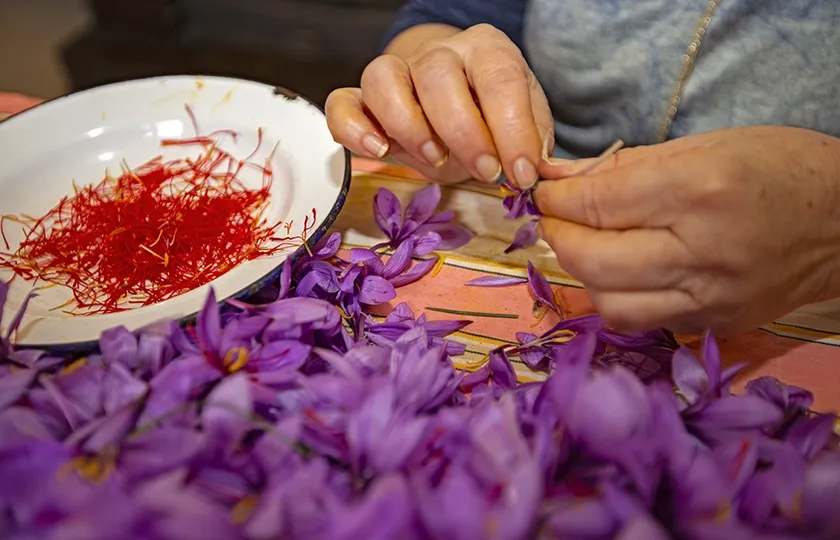
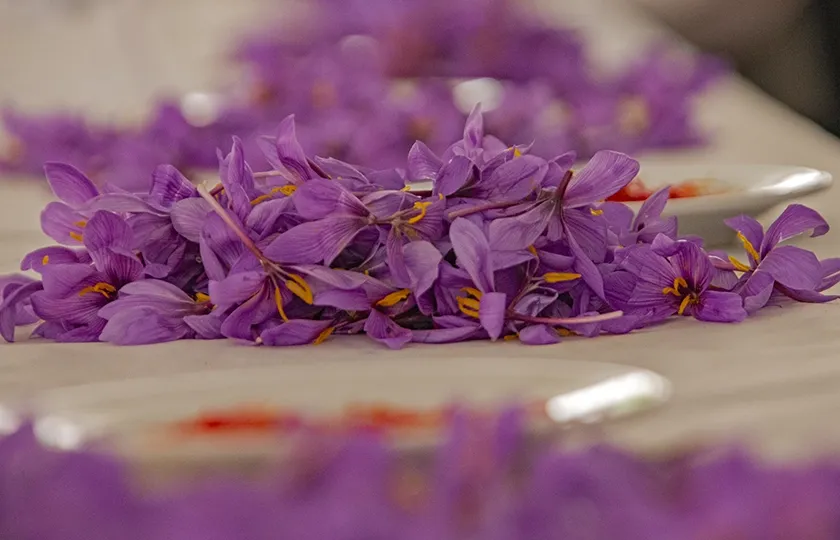
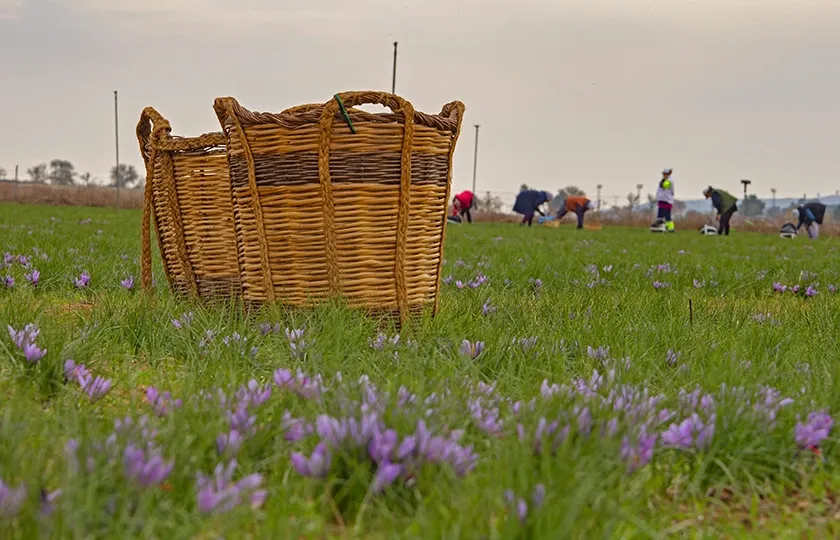
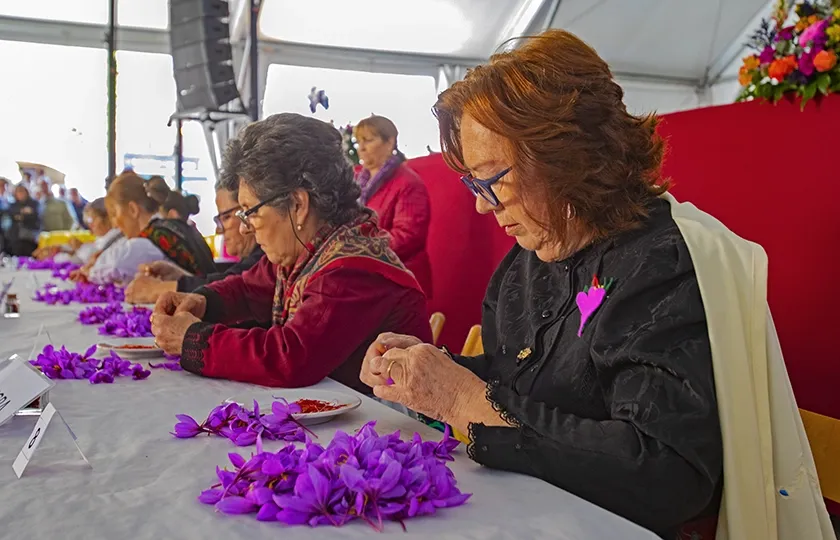
It is mainly in these localities where it is still possible to see whole families bending down penitently and delicately picking the precious flowers. Without wasting time so that they do not wither, they are transported to the houses and, in a kind of ancestral socialisation exercise, the women, because they have more dexterity in their hands and finer fingers, proceed to peel the peelings. as the task of separating the valuable red stigmas from the flower is called here.
Saffron roasting, i.e. subjecting the stigmas to a controlled drying and dehydration process, is carried out with astonishing empirical knowledge and in a traditional way. to guarantee the perfect preservation of the saffron’s properties.
At this point it is important to point out that, although this work is carried out privately and in the farmers’ own homes, everything is controlled in accordance with the guidelines laid down by the Saffron from La Mancha PDO, as without this it is absolutely impossible to market the saffron, This guarantees compliance with all health standards and maximum quality.

Saffron from La Mancha is considered to be the best in the world, with an intense red colour, a mild aroma like that of good perfumes and, thanks to the traditional process of cutting and roasting, the stigma is not mixed with other parts of the flower, unlike other foreign saffron.
Such is the quality of saffron from La Mancha that some of its components, such as safranal, are powerful antioxidants and anticonvulsants, has values of up to one hundred and fifty points higher than other famous saffron from abroad.
If we take into account the quality values of saffron from La Mancha, its cultivation and production in a totally traditional way and the fact that to produce one kilogramme – formerly it was weighed in ounces – an average of two hundred and fifty thousand flowers are needed, it is a complete mistake to think that our saffron is expensive. And if we add to this the ethnographic value it brings to Spanish culture and to the “Spain brand” itself, it would be a good example of solidarity with ourselves to prioritise its consumption over imported products.
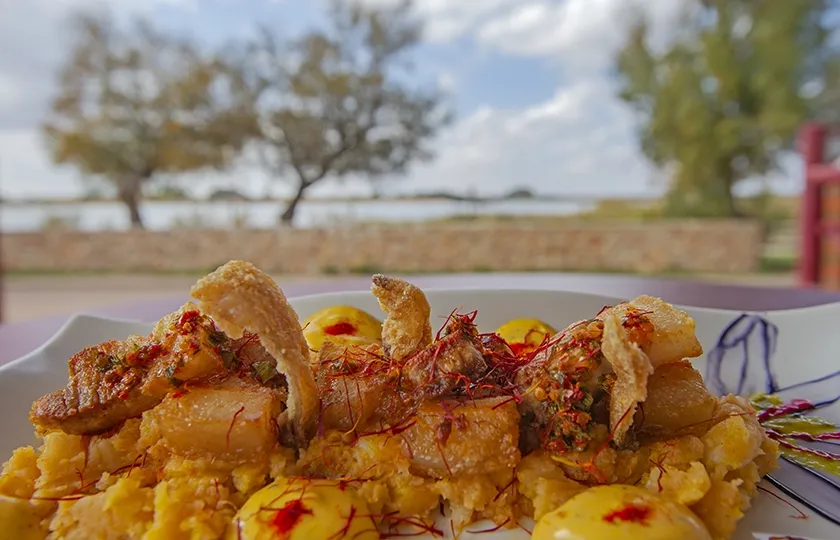
Whether in medicinal, cosmetic or textile uses, the use of saffron has many derivations, although the most universal is in cooking, and tastes are like navels: we all have our own. However, I would like to give well-deserved recognition to the chef of the restaurant La Jorja, located on the shore of the Laguna Grande de Villafranca de los Caballeros, declared a Biosphere Reserve by UNESCO, who delighted us with some incredible “patatas revolconas” with bacon at low temperature, chimichurri and “trufanesa”, all garnished with saffron from La Mancha. But the gastronomic spectacle did not end there and the Aldonza Rice was literally sublime. This is a mellow rice dish with cod, vegetables and a soft touch of saffron from La Mancha. Impossible to forget.
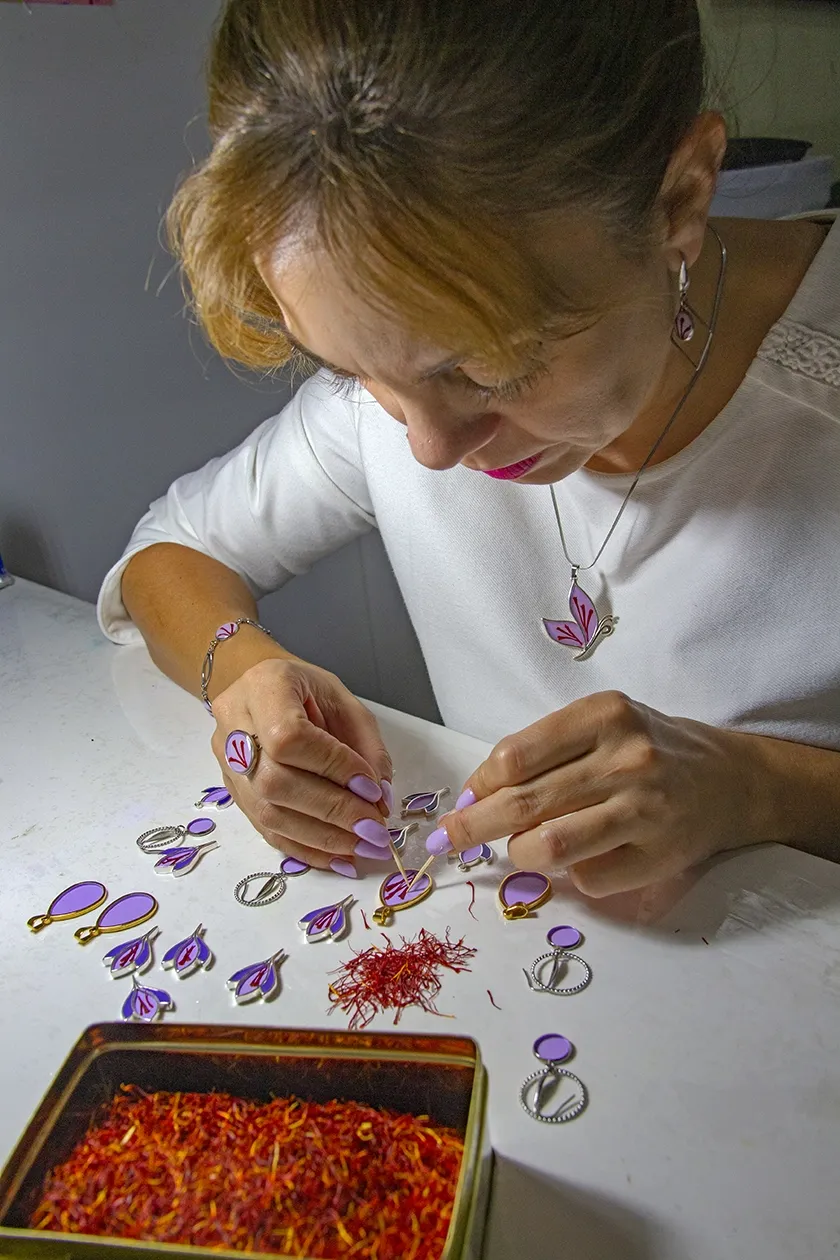
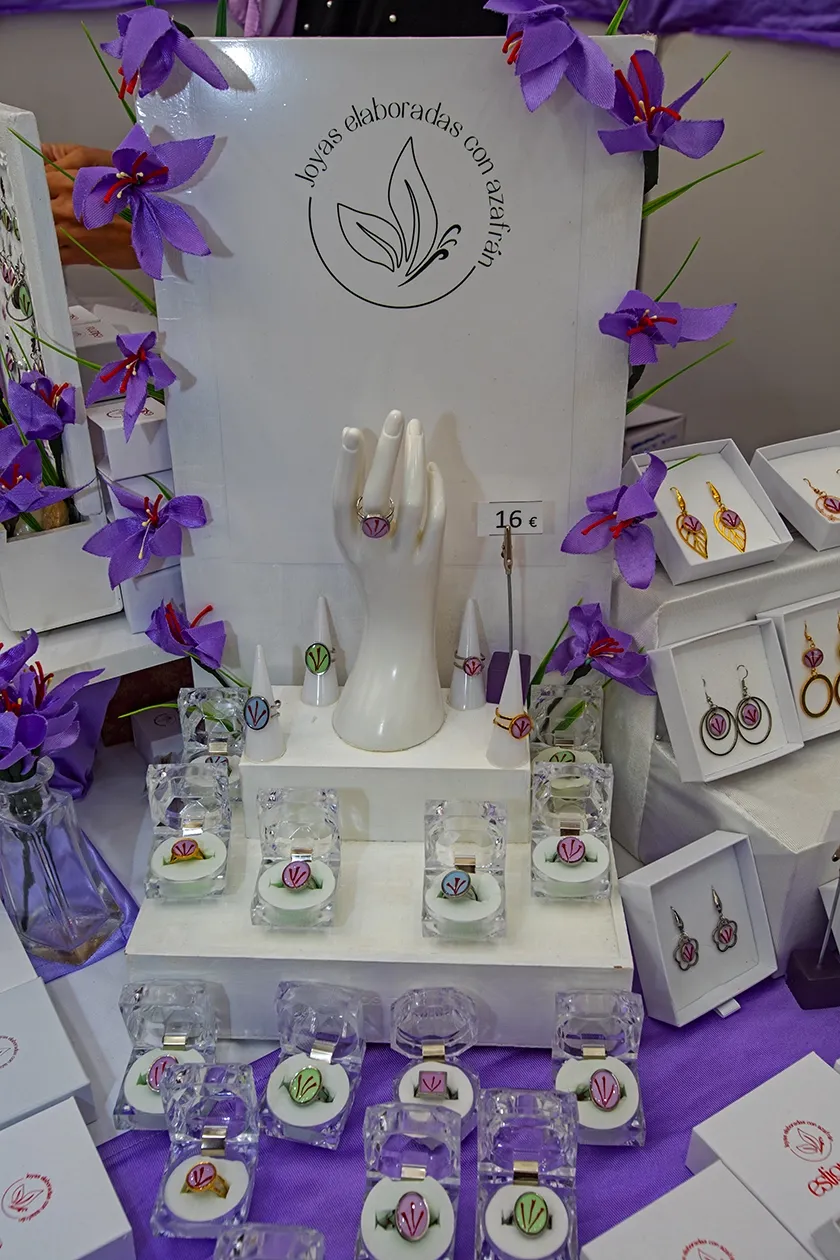
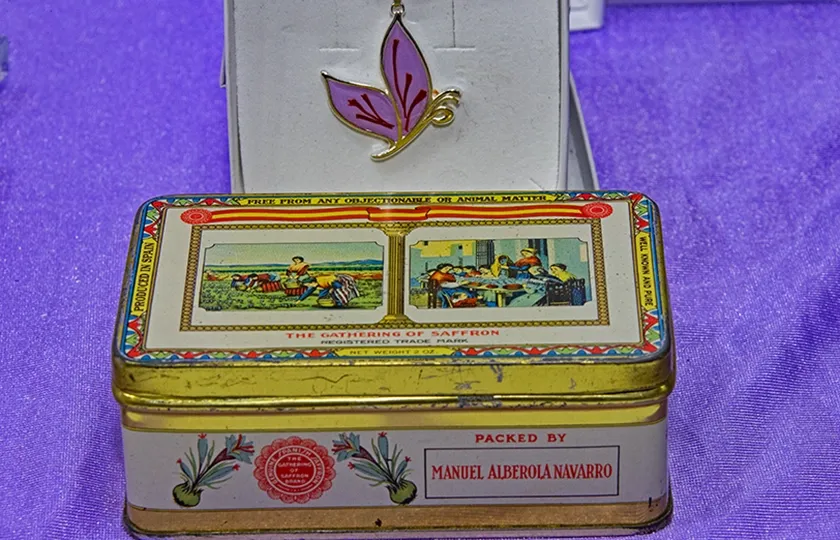
As if that were not enough, saffron from La Mancha has found a new raison of being. Not long ago, the craftswoman from Toledo of Estigma Joyas, entered the scene, a project based in Consuegra in which María del Carmen is putting all her enthusiasm into creating silver jewellery with unique designs in which natural saffron stigmas from La Mancha are incorporated by means of a totally manual enamelling process. The result is original and youthful pieces in which no two are alike.
Although it has been valued for centuries, saffron from La Mancha is much more than a precious spice, it is a cultural symbol whose survival is the responsibility of all Spaniards. It is up to us to ensure their conservation.