In the middle of the Pacific Ocean, on coral reefs sits the Eden that captivated navigators and explorers, painters and writers , and scientists such as those who accompanied Captain James Cook in the 18th century to observe the transit of Venus in front of the sun. The place any god would dream of, as Louis Antoine de Bougainville once said.
With one of the most diverse ecosystems on the planet, Tahiti’s Islands offer the experience of several continents in one destination.
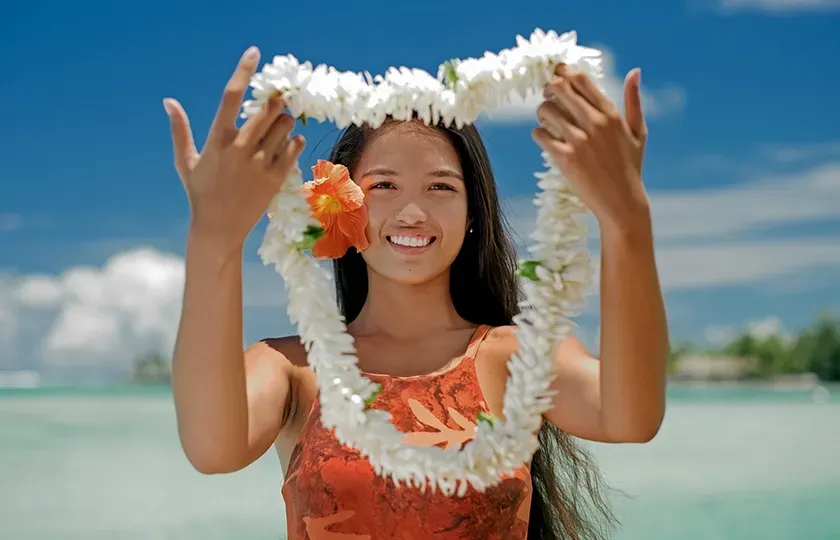
Paradise exists and it is here as the ultimate exponent of all that can be dreamt of. With a warm climate all year round, an excellently preserved cultural tradition and a fascinating biodiversity featuring coral reefs, lush tropical vegetation and waters in every possible shade of blue, this corner of Polynesia always welcomes the traveller with the fragrance of its flowers and the hospitality of its inhabitants to imbue him with the local spirit, inviting him to enjoy its peace, its generous nature that extends from the seabed to the sea floor. to the volcanic peaks and its rich and varied gastronomy.
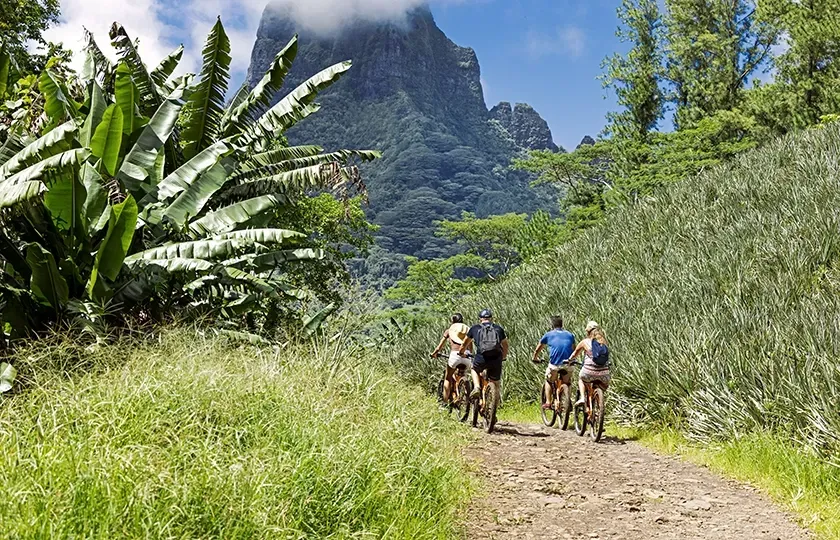
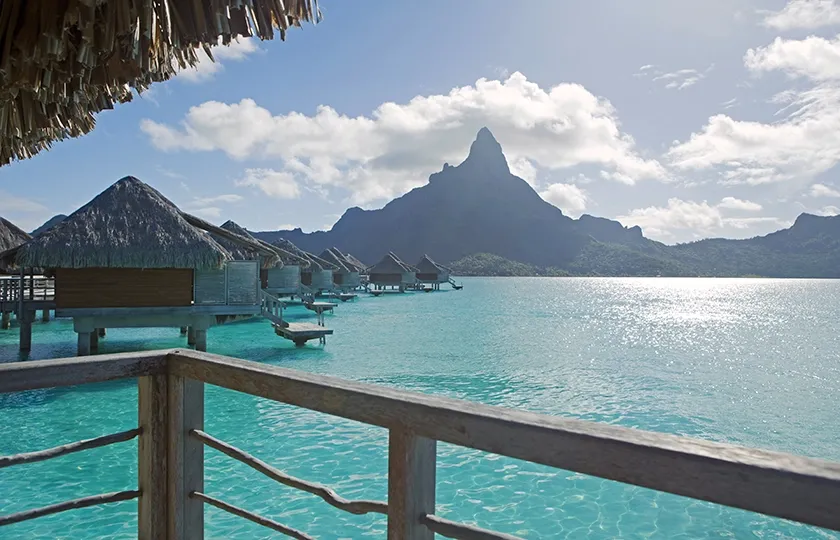
The destination is known worldwide for its white sandy beaches, turquoise lagoons and breathtaking scenery, but it also has an enviable tourist infrastructure with luxury hotels with overwater bungalows, villas, small family hotels, holiday rentals, or even yachts, catamarans, and cruise ships.
This magical atmosphere means that The Islands of Tahiti are all united by Mana, that vital energy and spiritual force that surrounds the daily life of the Polynesians, enveloping everything in a mystical aura, a sensation that can be felt and touched, thus justifying the nickname of the Mana Islands.
The ocean as an inspirational force
The Tahitians’ relationship with the sea is one of genuine respect, as for them it represents the whole cycle of life. The preservation of the marine environment and the diversity of species make the destination an ideal place for water sports. Each island or atoll offers spectacular underwater views.
Undoubtedly, one of Tahiti’s main natural assets and one of its wonders is the coral reefs, essential for the natural balance of the seabed, which are home to more than a thousand species of fish and one hundred and fifty species of coral.
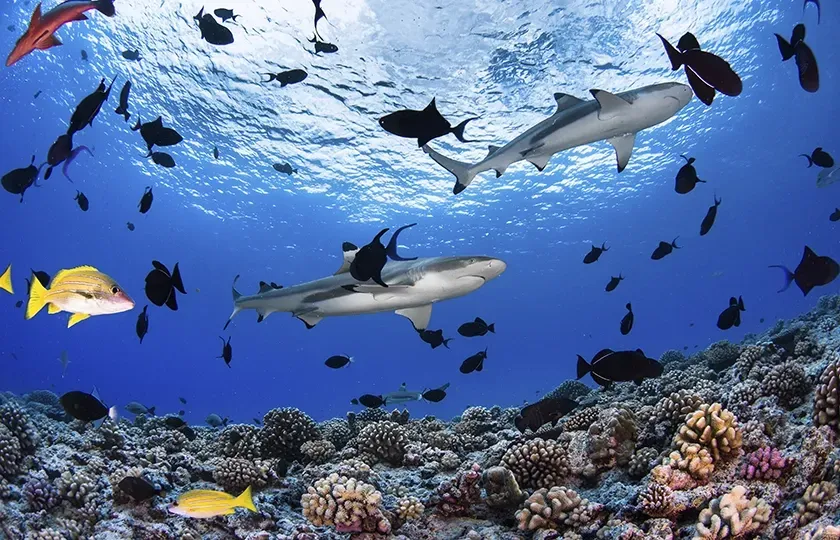
Thanks to them, fantastic lagoons have formed around islands such as Bora Bora, Moorea, Taha’a or Raiatea and a little further away Rangiroa, the second largest coral atoll in the world. The island of Fakarava is a UNESCO World Heritage Site because of the incalculable value of its biosphere, but on any of them, respectful diving is a transformative and unforgettable experience.
Fakarava is the second largest atoll in French Polynesia, declared a UNESCO Biosphere Reserve for its biodiversity. Its phosphorescent corals and warm waters make it an ideal place to contemplate its shoals of fish and its famous “shark walls”, so called because of the number of species that can be distinguished in the same enclave. While there are more than twenty varieties of sharks in the Tahiti Islands, the so-called “grey reef sharks”, the famous “blacktip shark”, the “black dogfish” and the “hammerhead shark” stand out here.
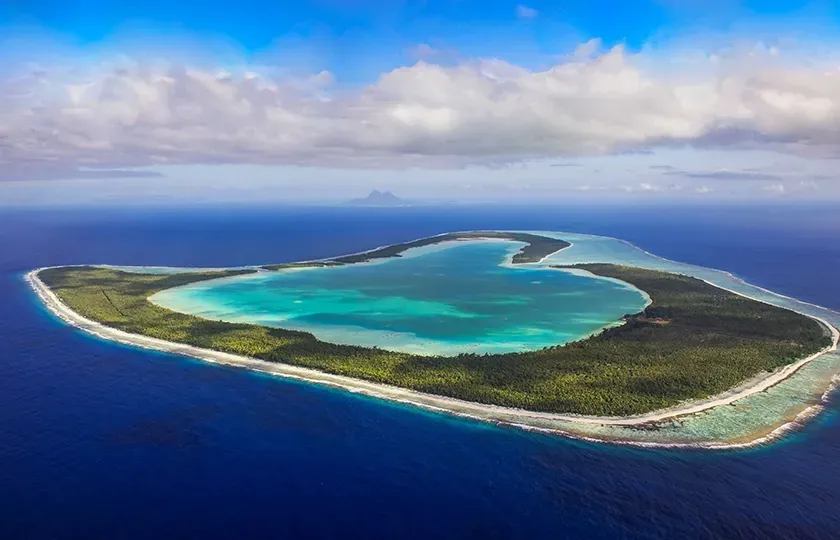
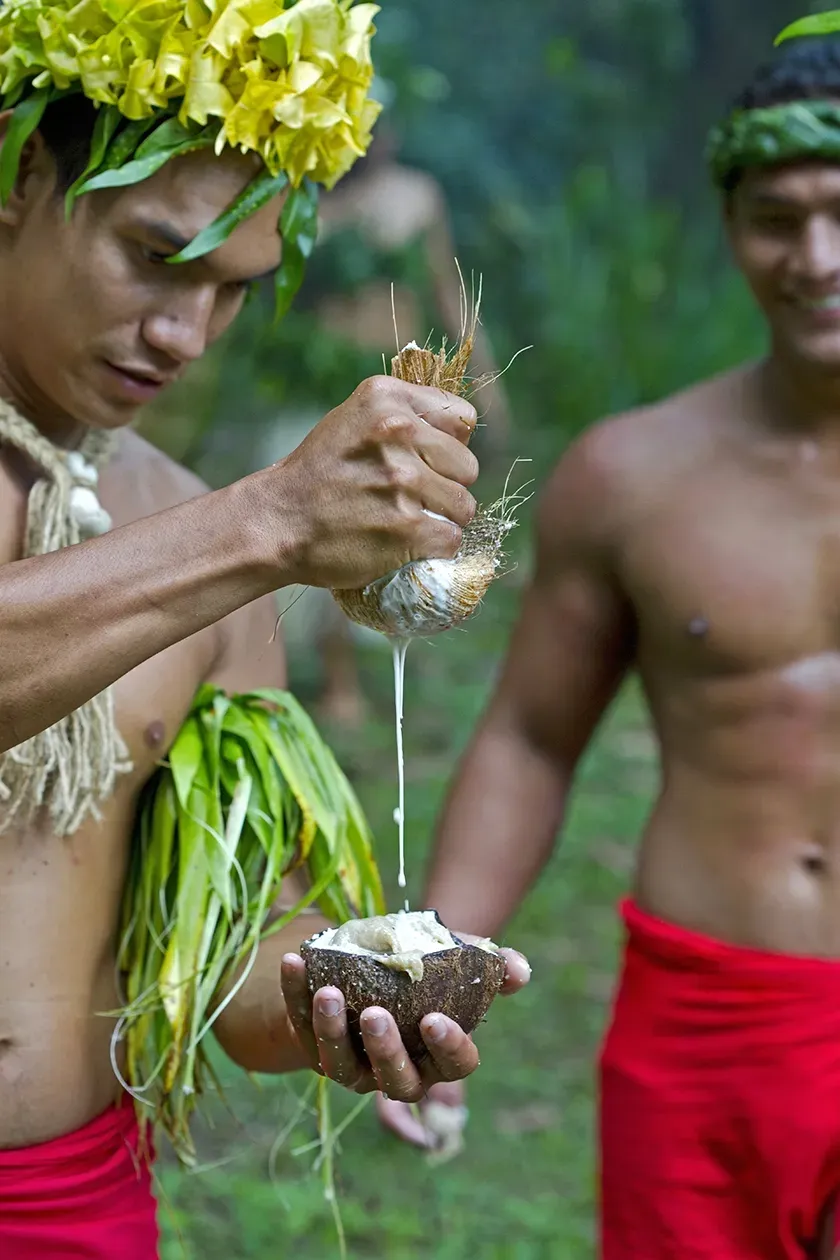
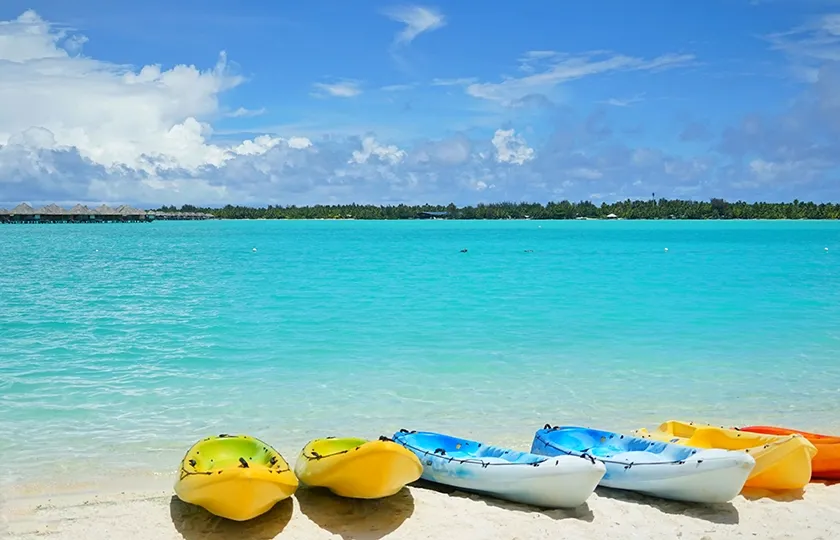
The beaches of Tikehau are exceptionally beautiful. Its bright pink sand, contrasting with the turquoise of the sea, makes the island one of the most photogenic. Relaxing lunches on a “motu” (islet) are another popular activity. Huahine, Taha’a or Maupiti are some of the ideal places for a day of picnicking with a delicious poisson cru (raw fish marinated in coconut milk) and a refreshing coconut juice, sitting at a table with your feet immersed in the clear, warm waters. Canoeing, snorkelling and paddle boarding are also on offer, although the best experience for enjoying the waves is surfing, as the most powerful wave in the world is to be found in the southern part of the islands. The wave at Teahupo’o is not the biggest and rarely exceeds ten metres in height, but it is the biggest challenge for amateurs and professionals because of its strength. and the shallow depth of the coral reef on which it forms.

Strong commitment to ecotourism
Since its beginnings, the Tahiti Islands’ commitment to sustainable tourism and slow tourism has been strengthened by the practices carried out to protect the flora and fauna that coexist with the local community. In fact, French Polynesia has been recognised as the world’s largest marine sanctuary since 2002. The tupuna, ancestors of the mā’ohi people, pioneered the protection and preservation of the natural environment with the application of the rāhui, a temporary ban once imposed by clan chiefs on exploiting a particular territory or even on harvesting certain species for a certain period of time. For example, planting coral on Moorea or Bora Bora, visiting a Turtle Rehabilitation Centre or a visit to the ‘Arioi Center’ to discover the traces of past generations, are initiatives that promote responsible tourism.
A craft tradition unique in the world
The artistic inspiration of the Tahitian Islands awaits around every corner, palpable in the art galleries and in the curio shops where the most extraordinary handicrafts are on offer. The Tahitian pearl is the protagonist, a distinctive and popular jewel cultivated exclusively in the Polynesian lagoons and then worked by local designers who combine mother-of-pearl and other natural materials to create unique pieces.
Among the most sought-after items, the floral sarong worn by men and women for celebrations has become one of the symbols of The Islands of Tahiti, as well as being used as a decorative item.
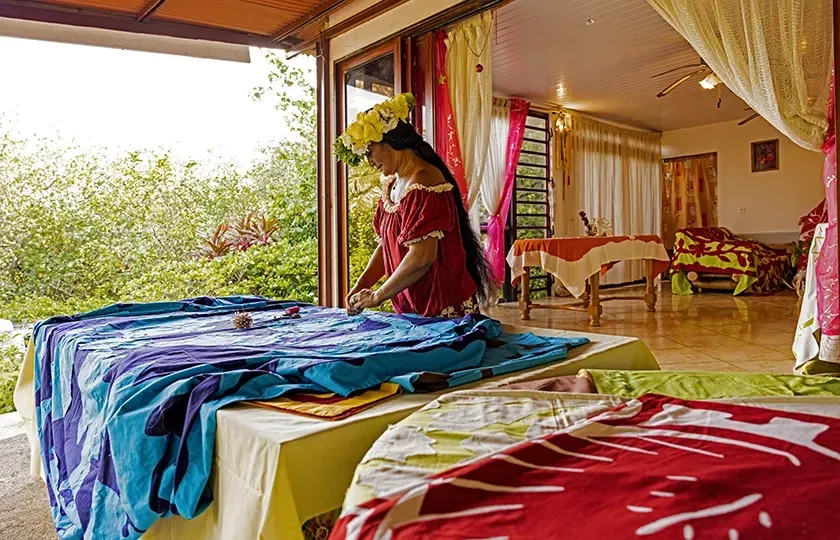
Another testimony to the enormous cultural wealth is basketry, an ancient practice of weaving pandanus leaves into baskets, mats and hats.
The beauty of the Tahitian Islands leaves its mark and triggers the visitor’s creativity. This was the case of the painter Gauguin, who dedicated a series of masterpieces to this paradise, such as “Women of Tahiti” and “Ia Orana Maria”.
Each archipelago has its own specialities, such as monoi oil and hand-painted sarong from the Society Islands; jewellery and decorative objects made of mother-of-pearl and shell from the Tuamotu and Gambier Islands; tapa and sculpture in wood, stone and bone from the Marquesas Islands; basketry and tīfaifai (local patchwork) from the Austral Islands.
Tropical treasures for the palate
Surrounded by breathtaking scenery, you can enjoy another form of cultural immersion through the delicious flavours of traditional Tahitian cuisine, with influences from Chinese and French cuisines. Specialities include delicious starters of chevrettes (Polynesian freshwater prawns), followed by dishes stewed in a traditional oven called ahimā’a. Fish also plays an important role, with the recipe for “Tahitian-style raw fish” being an essential part of any gastronomic tour.
Each archipelago has its own specialities, such as mahimahi (sea bream or dolphinfish) with vanilla sauce in the Society Islands; korori (pearl oyster adductor muscle) or pāhua (soup) with coconut milk and lemon juice in the Tuamotu and Gambier Islands; curried goat cheese in the Marquesas Islands; and remu vine (edible seaweed) in the Austral Islands.
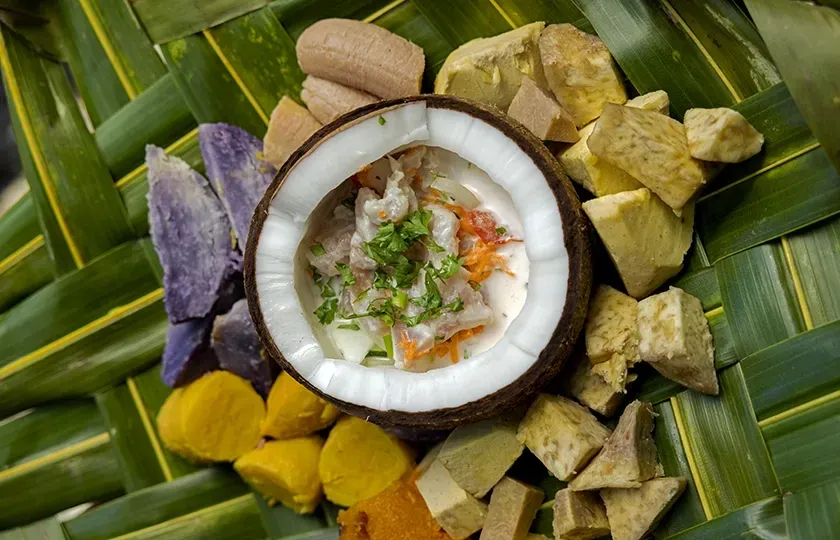
Tahitian cuisine is also known for its wide variety of fruits, including bananas, papayas, mangoes and pineapples. There are also atypical local products and experiences, such as local wine produced in the Pacific’s only vineyard on the island of Rangiroa. Harvested for the first time in 2000, this atoll is home to the world’s only vineyard located on a motu in the middle of a lagoon, where magnificent white and rosé wines are produced with a special flavour due to its unique grapes.
In addition, Rangiroa has several hectares of sugar cane for the production of a fine organic white rum, a delight for any palate.
Purifying yourself by walking on coals
Polynesians have preserved the legacy of their Ma’ohi ancestors, who passed down countless legends about gods, men and warriors, This has given rise to multiple cultural manifestations in which music, dance and art continue to be the main protagonists.
One of the most emblematic of this millenary culture is Umu ti, a ritual consisting of walking on volcanic embers and stones with the aim of obtaining protection during the matari’i raro, that is, the dry season associated with terrible famines.
Nowadays, however, its celebration has a symbolic character in which all attendees are invited to participate. The walk over the coals is not only an act of courage and bravery, but also purifies the soul and the body, connecting them with the Mana of the Tahitian Islands.
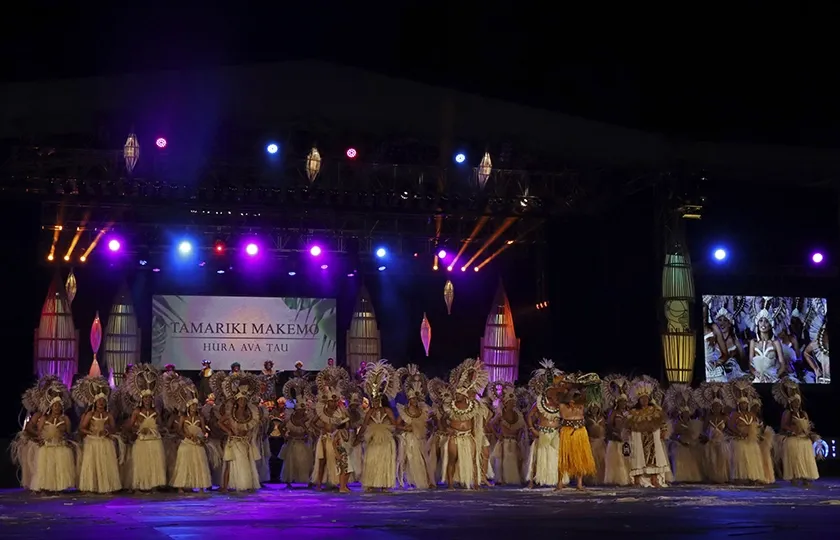
For over sixty years, the Umu tí celebration has marked the beginning of the traditional Heiva i Tahiti festival, a colourful event in which traditional songs, music and dances fill every corner.
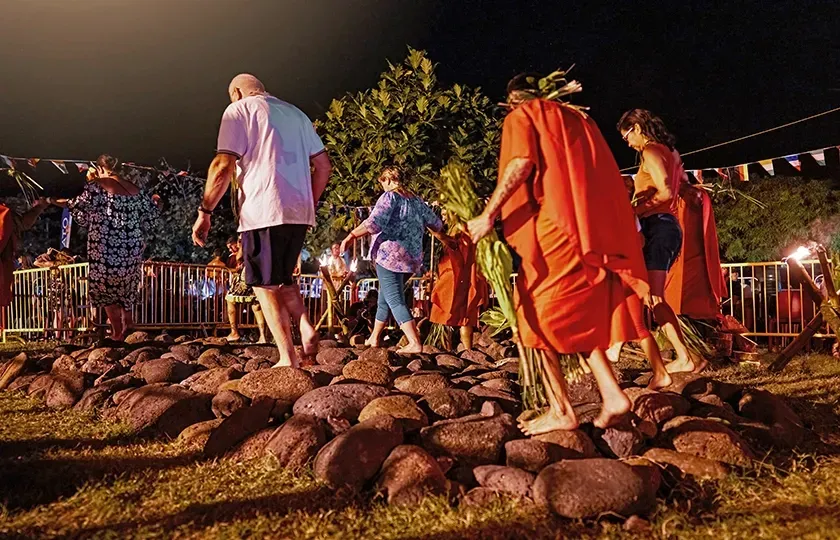
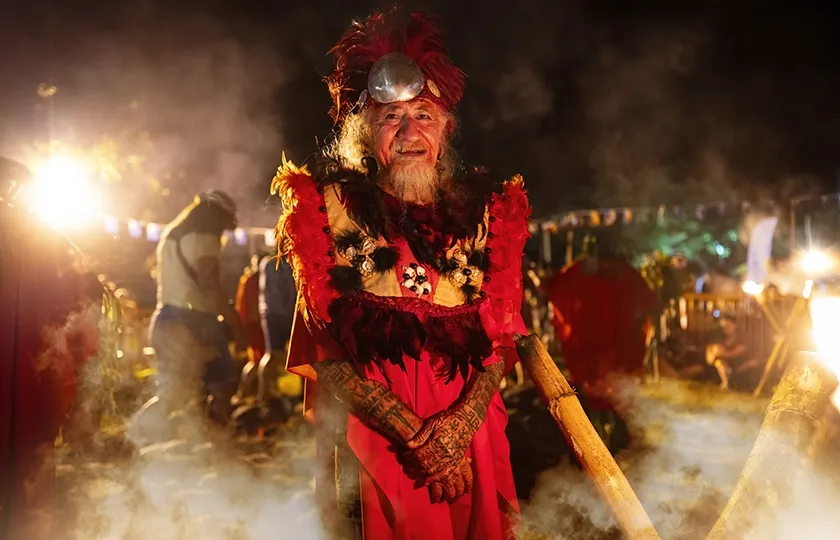
As now, the ceremony was supervised by the tahua (high priest), beginning with the preparation of the ahimā’a (oven). However, in ancient times they baked tubers in order to preserve them for the difficult months ahead. This was preceded by a walk over the coals. Its purpose was to verify the presence of the gods during the ritual. If the tahua managed to resist the heat of the stones, it meant that the gods had granted it the necessary Mana to cook the Tī and, therefore, and would therefore guarantee its preservation during the dry months.
The rite is orchestrated by a tahua (high priest), who remains isolated in the mountain for a period of time in order to prepare himself spiritually. Afterwards, he supervises the setting up of an ahimā’a, a traditional Tahitian oven dug into the ground. This oven is filled with dry wood, coconut trees and volcanic stones and burns for one or two days, until the stones are red-hot. After a series of prayers, chants and traditional dances to sanctify the rite and the space, the tahua invites those present to walk on the stones as an act of purification of the soul and body. The walk over the embers is preceded by a dance, followed by the blessing of the stones that are swept with auti leaves, a sacred plant to which the Ma’ohi culture attributes magical powers.
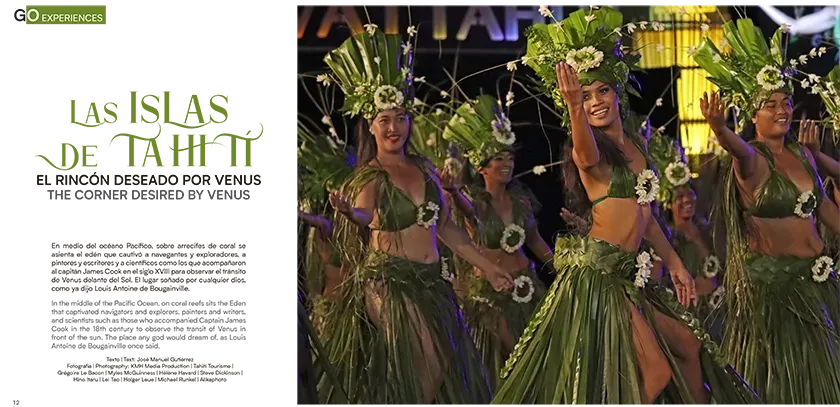
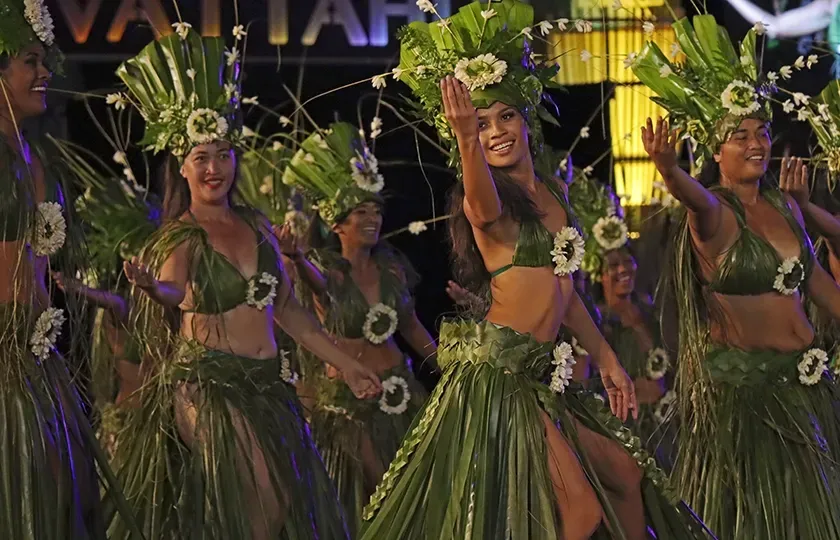
El Umu tí, además de un acto de purificación, es un evento de diversión con música y comida tradicional polinesia que marca el inicio del Heiva i Tahití. Visitors can also enjoy the traditional Tahitian Ori Tahiti dance in traditional Tahitian costumes and vibrate to the rhythm of singing, drumming and the sound of conch shells.
Intangible heritage to the rhythm of music and dance
Culture, one of the pillars of The Islands of Tahiti, is often manifested in music and dance. An example of this is the Heiva i Tahiti, a renowned event that has been held since 1881 during the month of July in the city of Papeete. This festival is one of the oldest in the world and is reborn with the aim of reinforcing the tradition of the archipelagos.
The origin of the name Heiva (hei, to gather and va, community) reveals its purpose: to bring the Tahitian community together around its enormous cultural heritage, consolidating it into a vibrant showcase through dance and music competitions.
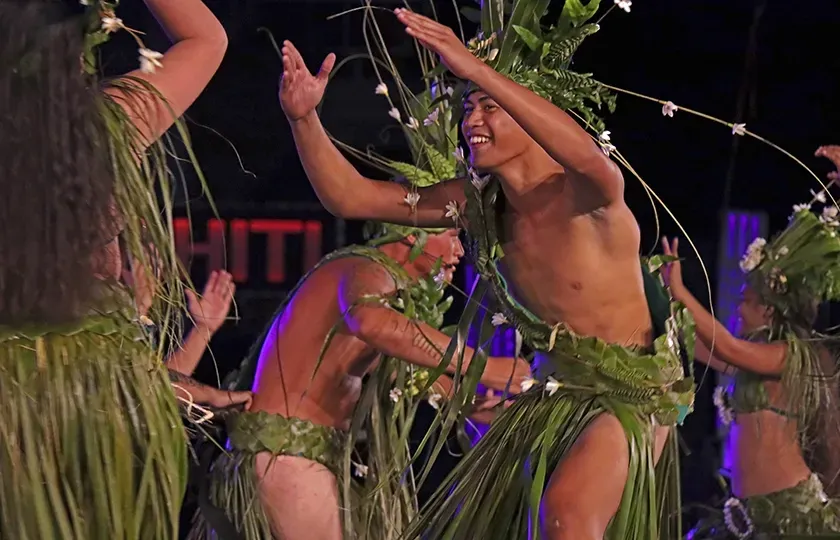
Performances by Tahitian artists in costumes adorned with natural materials such as feathers, shells and fibres celebrate the legends, history and way of life that the people of Tahiti have passed down from generation to generation.
In addition to this, the festival offers sporting competitions such as traditional canoe races and popular events such as stone lifting.
Heiva i Tahiti draws meaning from the sounds of instruments such as drums, accompanied by chants and melodies, as well as highlighting the value of craftsmanship with competitions and exhibitions of tattoos and weavings.
The islands of Tahiti greet every traveller with the promise of a brave new world, almost in its purest form, where peace revolves around the simplicity of life and the friendliness of the people.