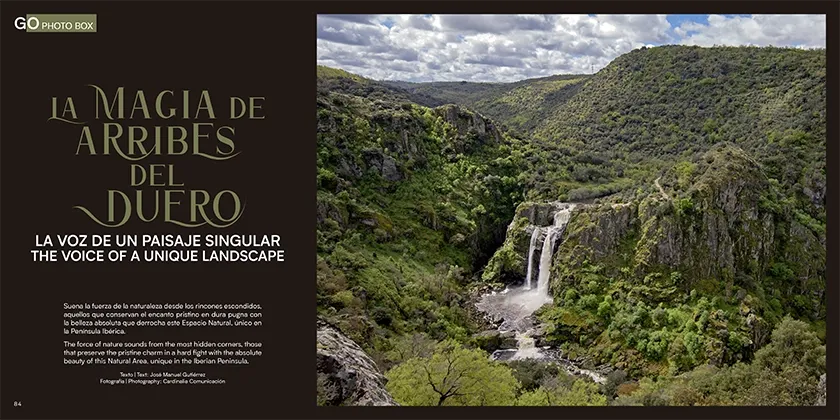
The force of nature sounds from the most hidden corners, those that preserve the pristine charm in a hard fight with the absolute beauty of this Natural Area, unique in the Iberian Peninsula.
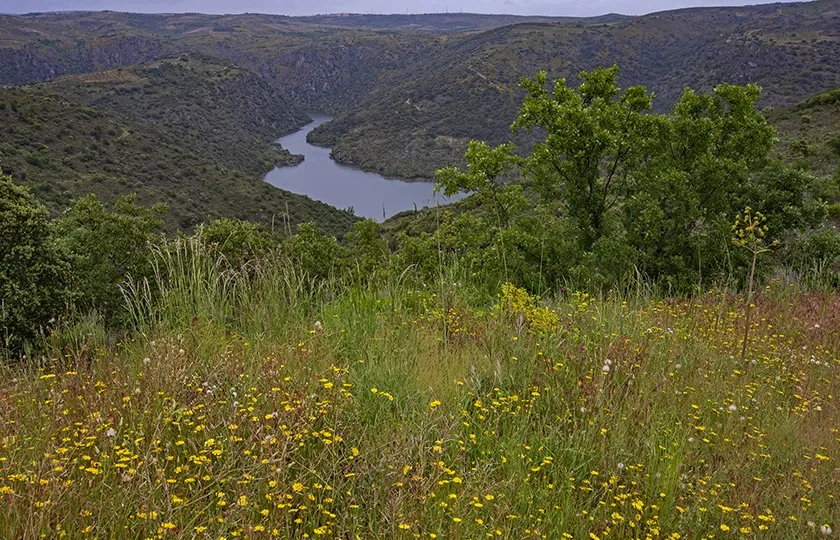
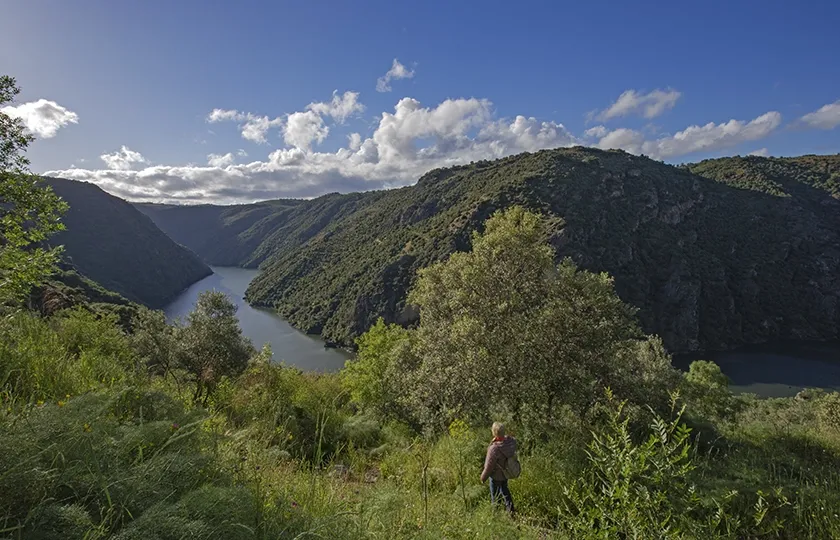
The west of the province of Salamanca is shaped by the Duero River, which, encased in canyons up to two hundred metres deep, defines the border with Portugal in a granitic territory with a clearly Atlantic climate. and full of unique corners, spectacular waterfalls and an overflowing biodiversity.
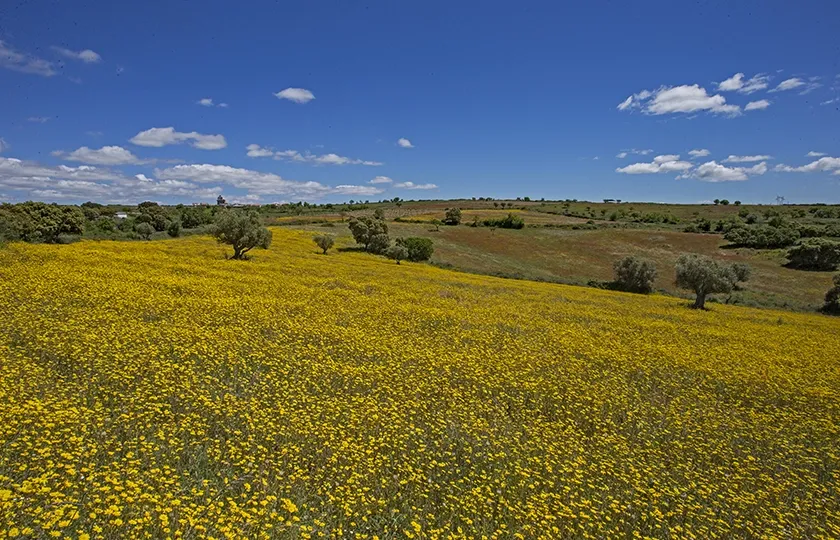
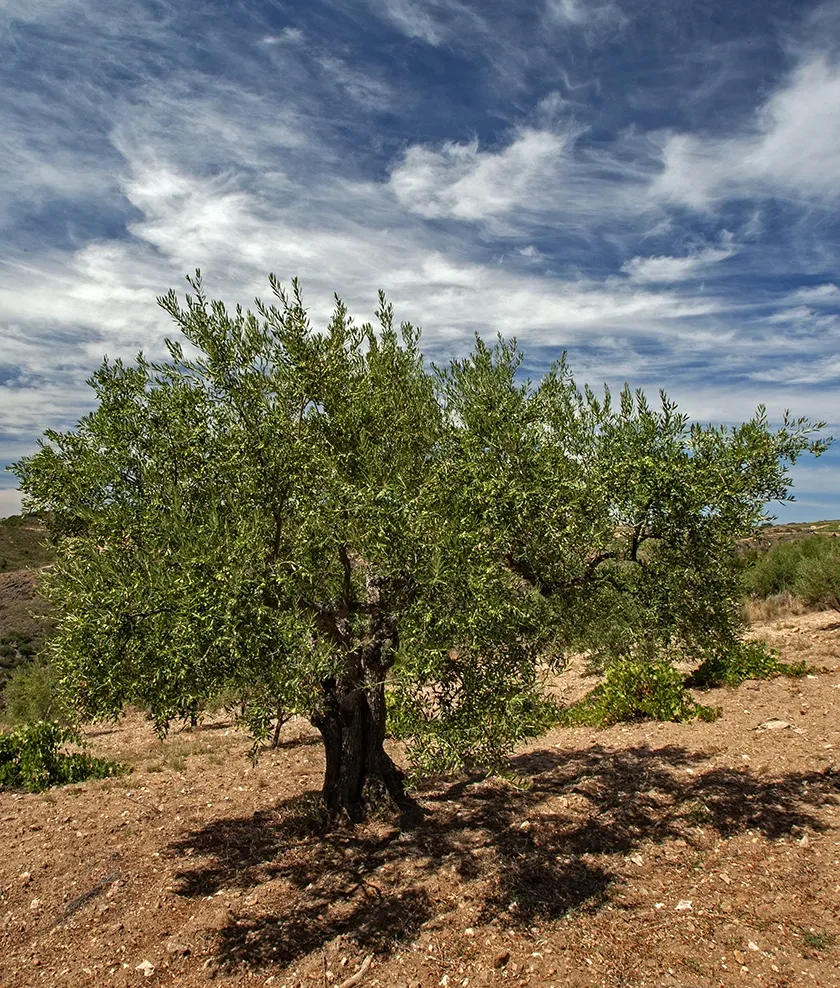
The mild climate, without frosts or extreme temperatures, favours the proliferation of all kinds of plants such as vineyards, olive trees, orange trees, holm oaks, cork oaks and gall oaks, among others.
This generous ecosystem also favours the rich faunal heritage, so it is easy to contemplate the flight of griffon vultures and eagles, the elusive black stork or eagle owl, without forgetting the many mammals, amphibians and fish that give value to the Arribes del Duero Natural Park.

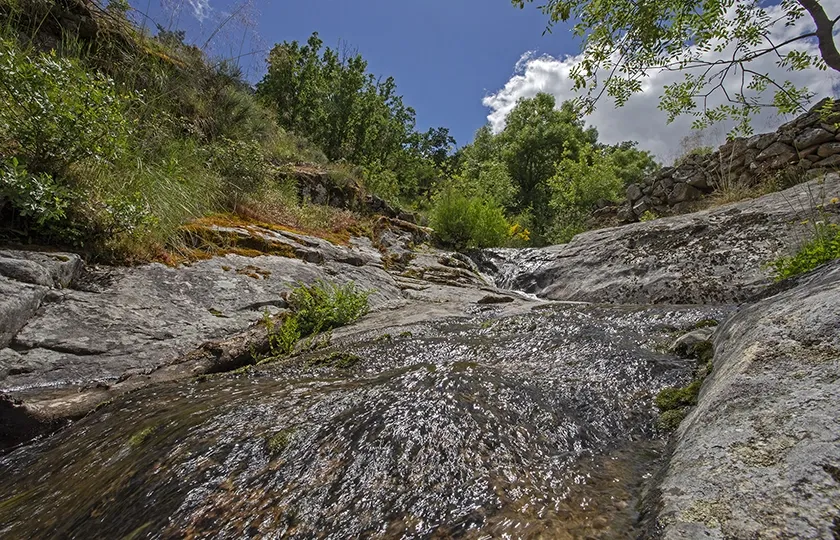
Nothing eclipses the astonishment that this marvellous ecosystem awakens, but beyond the obvious there are many corners that captivate with their natural explosion and in years like this, in which the weather has been generous with rainfall, the sound and visual spectacle takes on a special dimension. We would like to pay tribute to him with this selection of the waterfalls that have most captured our senses.
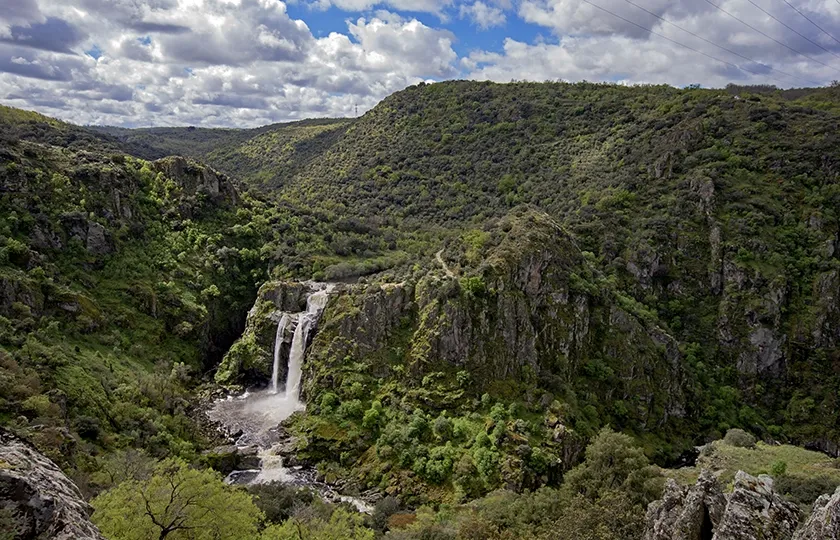
Well of Smoke
“It is one of the beautiful waterfalls, this one that can be seen between those rough cliffs. The major waterfall is divided into two bodies, due to the protrusion of the rock, and it disappears in a backwater from where the steam of water pulverised by the blow rises, which has earned the place the name of Los Humos… the centuries of centuries that the water must have needed to excavate such a gorge and reduce such waterfalls!”. This is how Unamuno, after his second visit to this marvellous spot, described this natural spectacle in his work “Through the Lands of Spain and Portugal”.
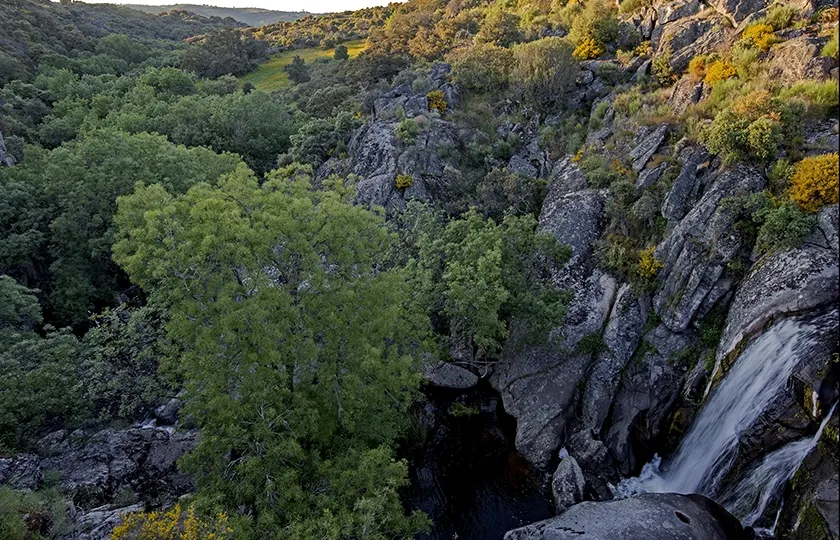
It is the river Uces, on its wild journey in search of the Duero, that encounters the vertiginous cut produced by a geological fault, precipitating the course of the water in a fall of more than fifty metres. In an almost whimsical way, one of the most beautiful scenes of our country is staged, right between the towns of Masueco and Pereña de la Ribera.
Airón Well
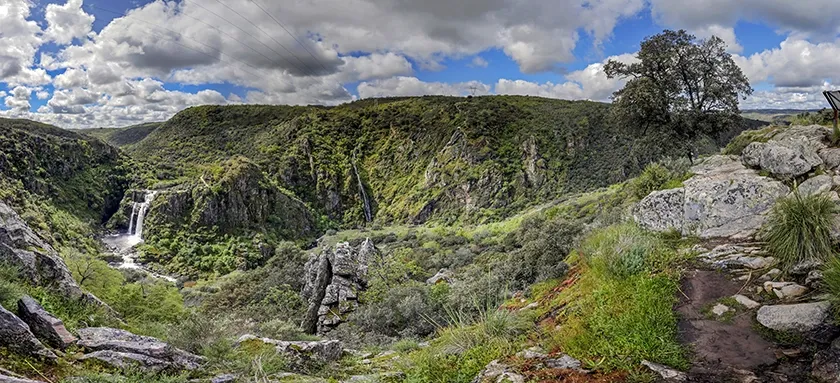
The Arroyo de los Cuernos stream, very near the point where it flows into the Duero River, descends in a series of steps, dropping approximately twenty meters, in a charming setting. At its bottom, erosion has carved a cave from which the waterfall can be seen from behind. This is the origin of its name, Airón, a pre-Roman deity associated with the underworld, possessing a dual nature: on one hand, he was the god of water, nature, and life, and on the other, the god of death. But this is mythology, and what this corner of Salamanca represents today is a pristine ecosystem and a display of breathtaking beauty.
The pleasant path here from Pereña de la Ribera, in the heart of the Arribes del Duero Natural Park, winds through a landscape of exceptional beauty, where each season has its own distinct colors and aromas. And, of course, this is often under the watchful gaze of the dozens of griffon vultures that dominate the sky.
Piñero Waterfall
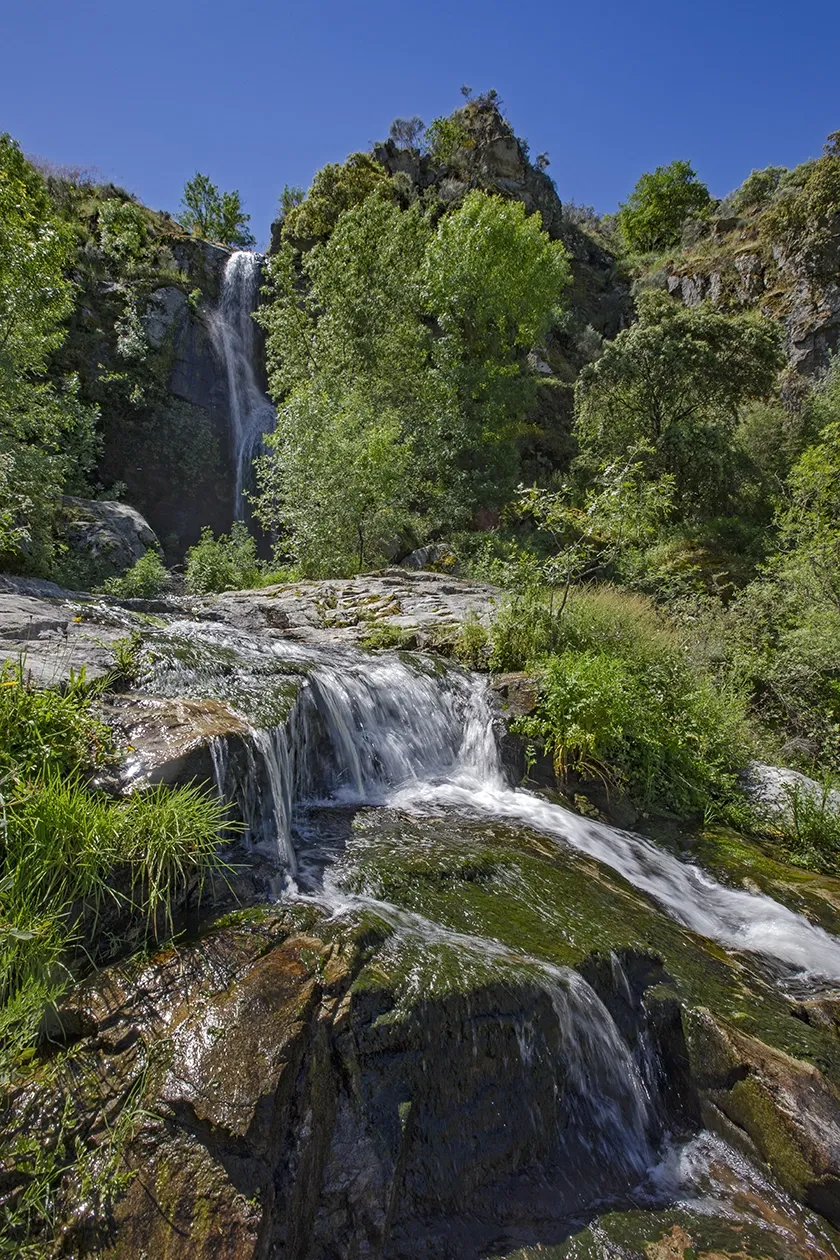
Although less known than the previous ones and more modest in its water supply, its fifteen-metre waterfall recreates a fairy-tale setting, followed by the plastic play of another eight metres in which the water plays among the gratine rocks.
So magical is the place that it even has its own cave. Along a rocky path, where the droplets of water in suspension and the sound of the stream crashing against the cliff bed are capable of recreating dreamlike moments, you reach the cavity just behind the waterfall, where you can enjoy the curtain of water as a backdrop framing the beautiful valley through which the stream flows.
Getting here, either from Masueco or from Corporario, through olive groves, rockrose fields or holm oak groves, is a real spectacle of biodiversity that serves as a backdrop to the sensory feast that is about to begin.
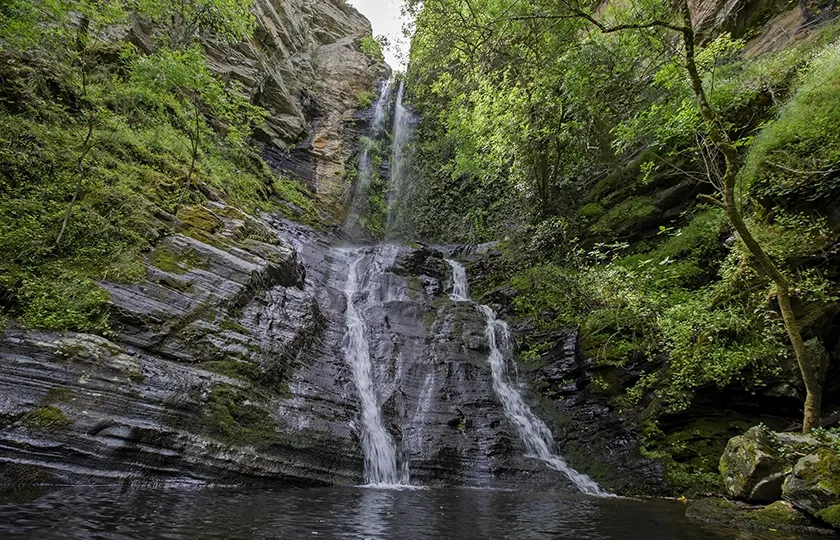
Whirlpool or Rupurupay Waterfall
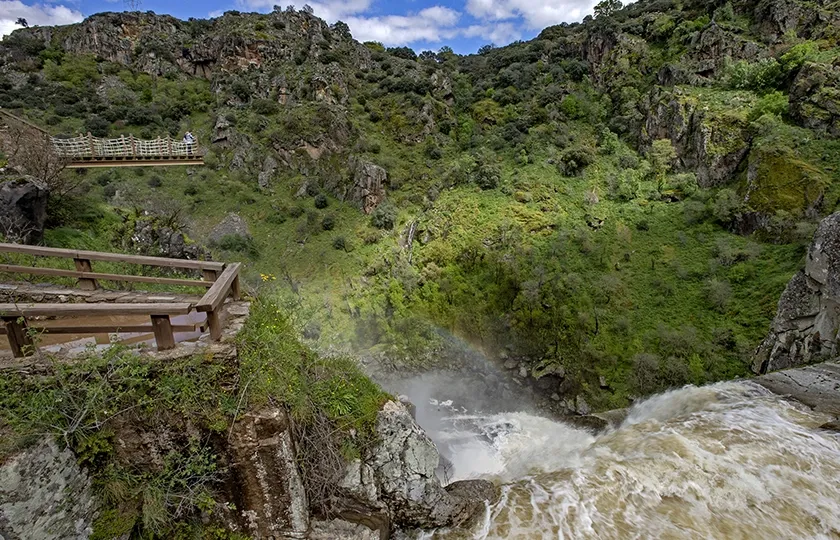
Travelling from Aldeadávila de la Ribera along one of the paths once used by smugglers on their raids to neighbouring Portugal, on a natural balcony with spectacular views of the Duero canyon, the Valdelosmaderos stream opens up in the form of a waterfall with a fall of some twenty metres.
In addition to the indisputable beauty of this natural hideaway and the high ecological value, the magnificent panoramic views of the sculptural work that the Douro has carved over thousands of years, forming some of the deepest gorges in the natural park, form a set of sensations impossible to forget, in which the dream of other times when people risked their lives crossing the great river to earn their livelihood is intermingled.
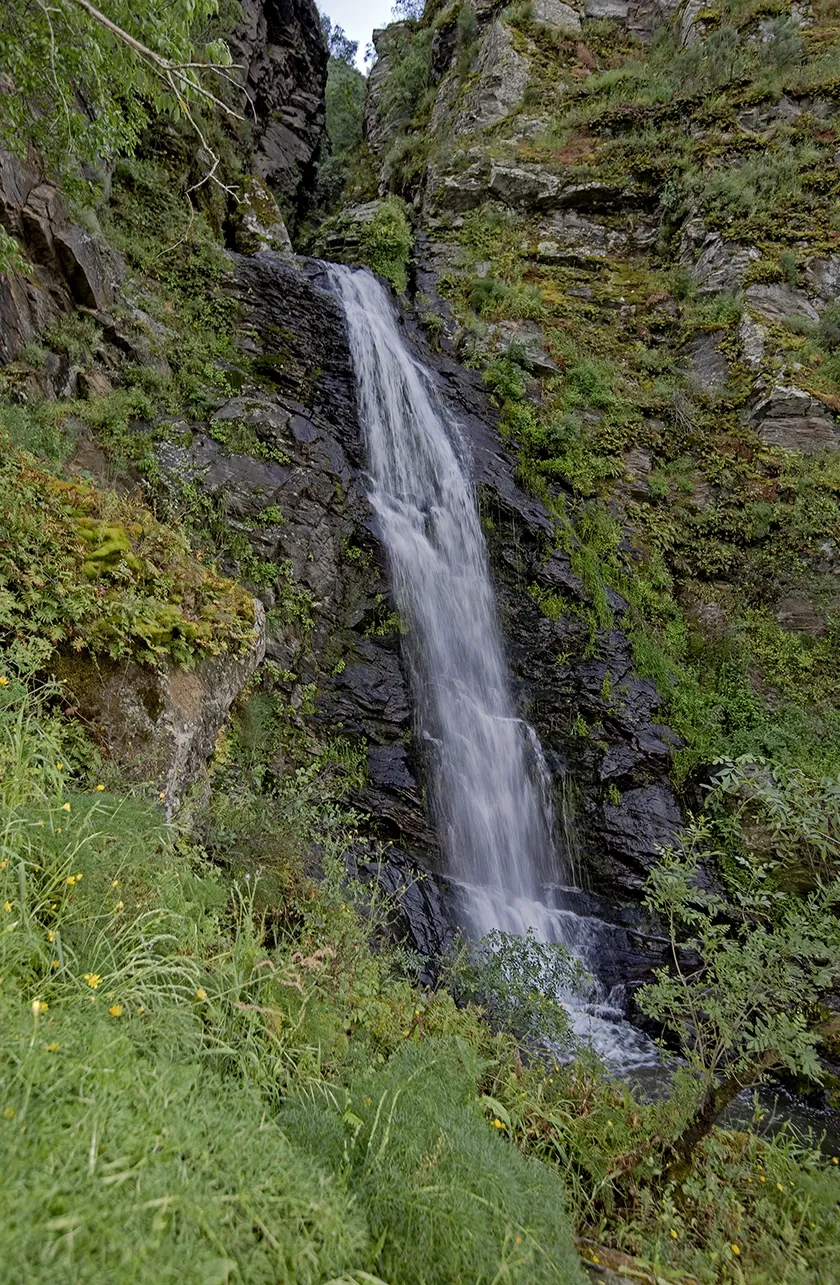
The Desgaldadero
Undoubtedly the most unknown waterfall in the Arribes del Duero Natural Park, despite its more than sixty metres of drop caressing the rock and the spectacular scenery.
Thanks to the contribution of the Ribera de Villarino stream, which in this case seeks to flow into the river Tormes, the waters rush down the hillside in small waterfalls in a marvellous play of shapes and sounds that blend into the luxuriant Mediterranean forest.
The undeniable beauty of the natural setting of the waterfall, as the final reward of the route, is enhanced by the bucolic access path that can be reached from Villarino de los Aires. A haven of peace that is enriched by the remains of ancient constructions such as the Guasalvas corrals and stone huts, witnesses of other times dedicated to livestock and agriculture.
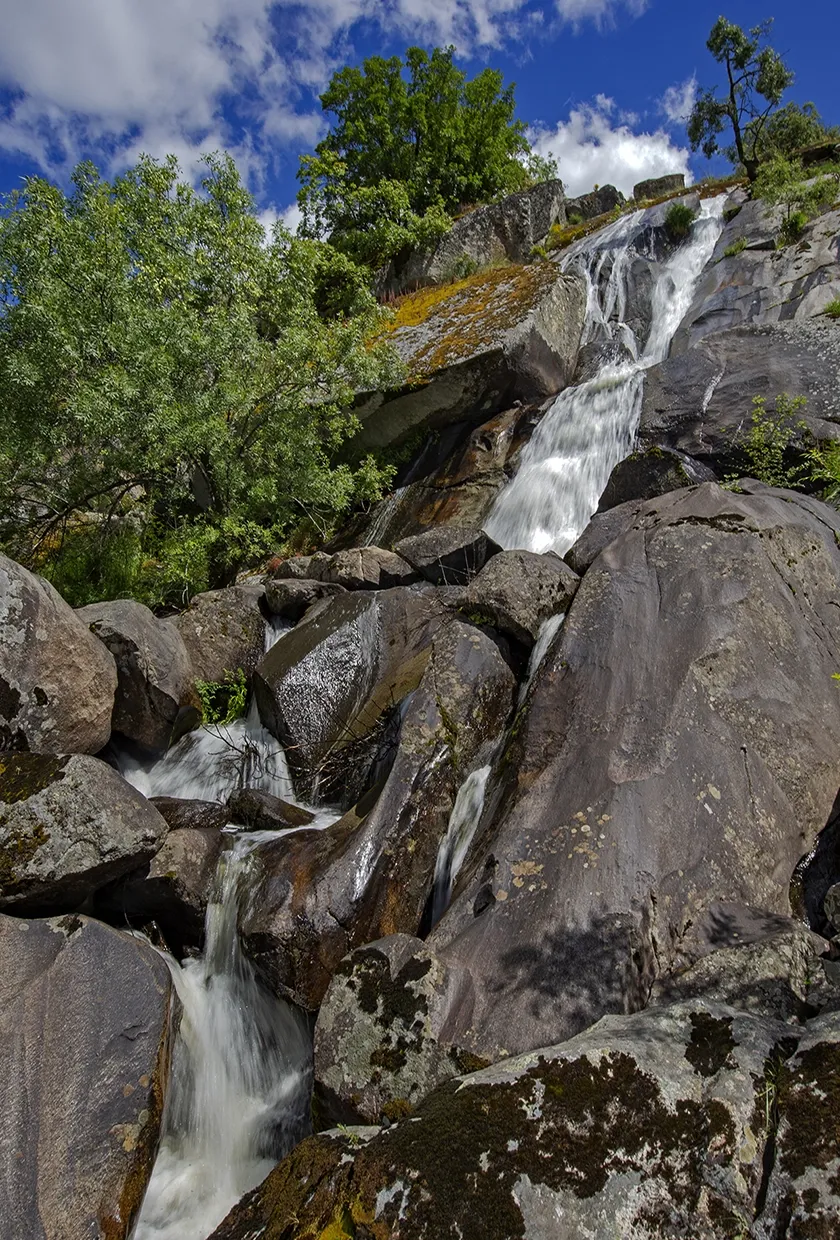
Camaces Cachón
As a whim within the singularities of the Arribes del Duero Natural Park, this waterfall of around fifty metres prefers to be almost hidden between blocks of granite, as if it wanted to preserve its beauty from the eyes of the curious, something difficult to achieve at times of high flow due to the thunderous sound of the water as it rushes down.
Before flowing into the river Huebra, the Camaces river crosses a significant difference in height in the municipality of Hinojosa de Duero, visible from the viewpoint next to the road that connects Saucelle and Lumbrales via the La Molinera pass.
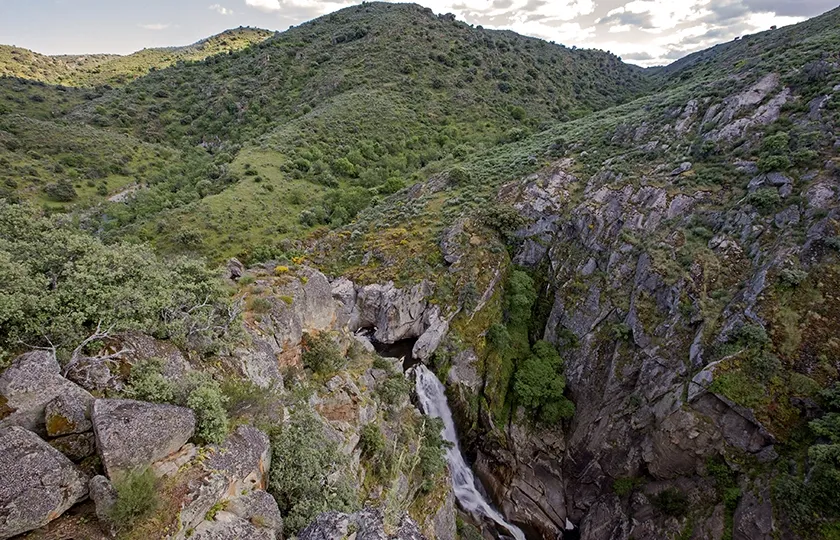
Diabla Cachón
Tradition has it that the name of this beautiful and unknown spot in Salamanca comes from the fact that it is the place where a wolf used to raise her litters.
The course of the river Morgáez, reminiscent of mills, a tributary of the Águeda and very close to the town of Sobradillo, gives life to a unique natural setting full of serenity and beauty. In the middle of a riverside forest, the river flows placidly until it reaches what is known in geology as a giant marmite to describe a large stone pool, just before plunging into a short, but beautiful, drop winding through the rocks.
Culturally, the river Morgáez was the setting for an important flour-making tradition, and in the 19th century there were already nine mills that provided services to nearby towns in Spain and Portugal, which speaks of economic exchanges and the sharing of ways of life.