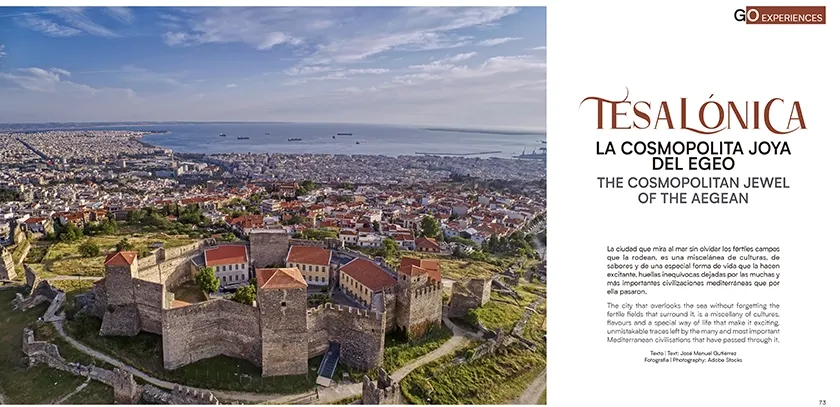

The city that overlooks the sea without forgetting the fertile fields that surround it, is a miscellany of cultures, flavours and a special way of life that make it exciting, unmistakable traces left by the many and most important Mediterranean civilisations that have passed through it.
The country’s second largest city after Athens, whose name is closely linked to one of history’s myths, Alexander the Great, bears the same name as its sister city Thessaloniki, whose husband King Cassander of Macedonia founded it in 315 BC. Its strategic geographical location, straddling the East and West, made its port on the Aegean Sea the most important economic and commercial centre of the Balkan Peninsula for more than 2,300 years.
After the Hellenistic period, it became part of the Roman Empire in 148 BC and then the Byzantine Empire, before becoming Ottoman until the beginning of the 20th century after the First Balkan War, when it was absorbed by Greece. In the midst of this turbulent and at the same time enriching cultural history, in the 15th century it welcomed an important Jewish community from Spain after the expulsion decreed by the Catholic Monarchs.
All this legacy, part of which is part of the UNESCO World Heritage Site, is reflected in the coexistence of monuments from all periods. A stroll through it is a master class in history that takes on a special dimension when we approach its gastronomy as a cultural heritage of the people who nurtured its past, its vibrant nightlife, its leisurely way of life and, above all, the friendly nature of its people, making Thessaloniki an unforgettable experiential whole.
A cultural mosaic
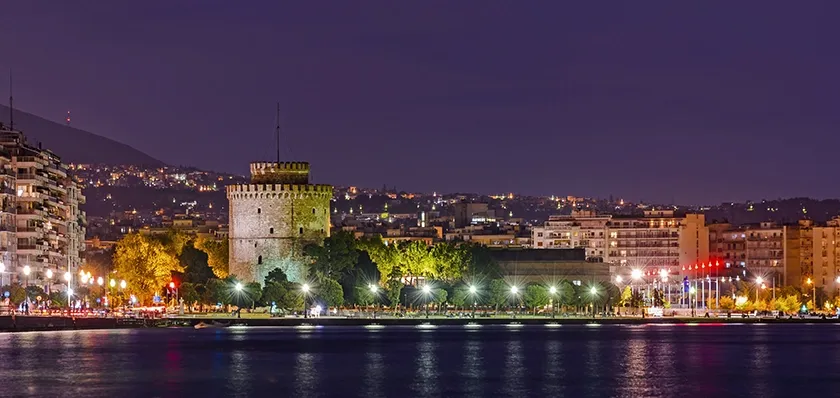
The White Tower of Thessaloniki is one of the city’s landmarks. Erected in front of the sea, It was built in the Ottoman period during the sultanate of Suleiman the Magnificent on top of a 12th-century Byzantine one.
For centuries it formed part of the city wall and served both as a defensive fort and as a prison where atrocities were committed. As a sign of purification, when it passed into the hands of Greece, The tower was painted white, and although this colour has now disappeared, it still retains its name and symbolism.
It houses the Museum of Byzantine Culture. Its eleven rooms display sculptures, frescoes, mosaics, icons, inscriptions, family heirlooms, books and elements of Byzantine daily life, with a special focus on the events of all kinds that caused it to flourish in Greece, not forgetting those that led to the fall of Constantinople in 1453.
From its thirty-four-metre high battlements, Mount Olympus can be seen on clear days.
A few metres away is the Ladadika quarter, or historic port, which was once one of the most important trading centres in the Aegean Sea, mainly for olive oil. This corner of the city was once home to the Jewish community, today it has been declared a site of Cultural Interest since 1985.
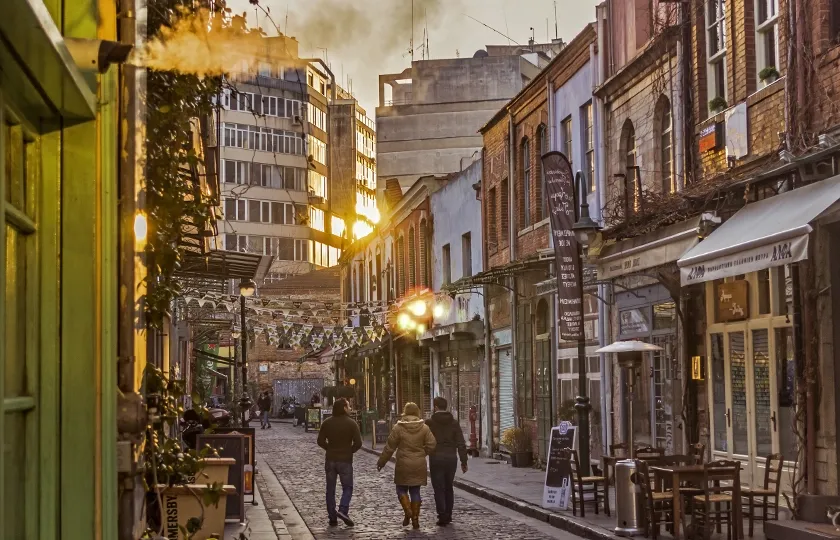
After the devastating fire of 1917 that destroyed most of the centre of Thessaloniki, Ladadika is a reminder of what it once was. The historic buildings were saved from the flames and at the end of the 20th century a thorough restoration was undertaken without losing the historical identity of the town. The result is a suggestive network of pedestrian streets with 19th century buildings, old warehouses converted into traditional shops, bars, restaurants, typical taverns, such as the ouzeries, where ouzo (a strong liqueur) and mezes (starters to share which, as in all Greek cuisine, cheese is always present) are served, as well as clubs that make the neighbourhood the epicentre of the city’s entertainment without losing its original beauty.
Thessaloniki is a university city, and this has been decisive in making its nightlife famous, especially in some streets, such as Proxenou Koromila, Mitropoleos, Ermou or Valaoritou, where the offer of bars, restaurants, taverns and pubs ranges from the most traditional to the most modern. Emporiou Square and Egiptou Street concentrate much of the nightlife in the always lively Ladadika district.
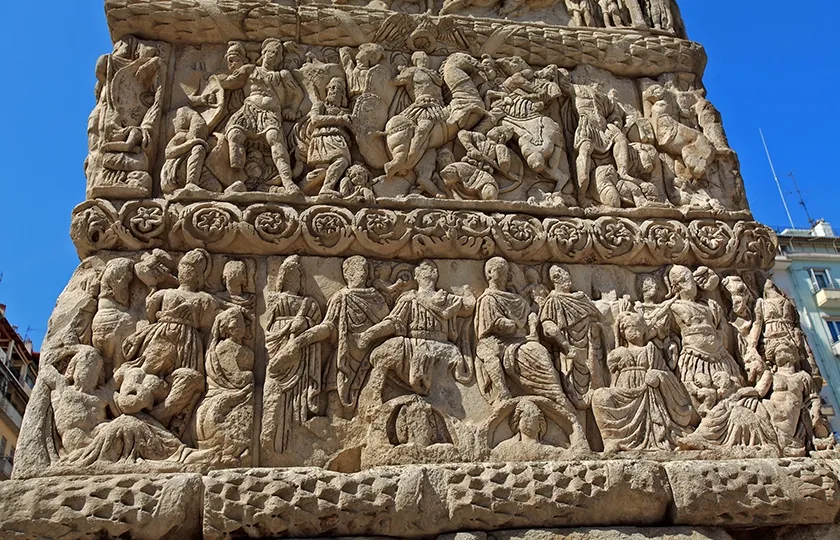
In the centre of the city stands the Triumphal Arch of Galerius, one of Thessaloniki’s most emblematic monuments. Commissioned by the Roman Emperor Caesar Galerius in the 4th century to commemorate his victory over the Persians, it is popularly known as “Kamara” for being part of the majestic Roman palaces that once stood here.
The reliefs on its sides are an interesting source of historical information as they narrate the exploits of the Roman troops under the Emperor’s command in the conquest of Persia.
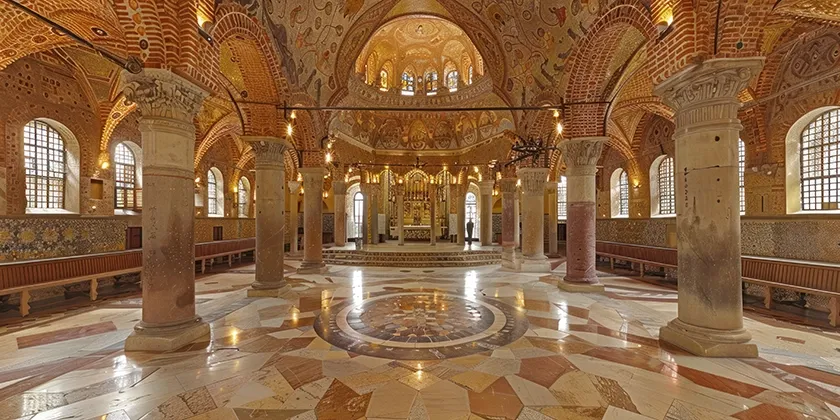
Just over a hundred metres away is the Greek Orthodox Church of St. George, better known as the Rotunda because of its circular shape. Today it is one of the fifteen monuments of Thessaloniki declared a UNESCO World Heritage Site, although there is some controversy about the purpose of its construction in the 4th century. Some theories suggest that it may have been a temple dedicated to Zeus, other mythological deities or even the mausoleum of the emperor Galerius himself, although he was never buried here.
It is surprisingly similar to the Pantheon in Rome, but in any case it is a unique monument in Greece. At thirty metres high and almost twenty-five metres in diameter, it preserves large mosaics, hagiographies, i.e. biographical compositions of the saints, and an interesting history, having been a temple of three religions, from a place of ceremonies for Roman gods to a mosque of which the minaret remains, as well as a Christian temple. This very important church from the early Christian period has also been a museum and since 2015 it has been a cultural space of the utmost importance.
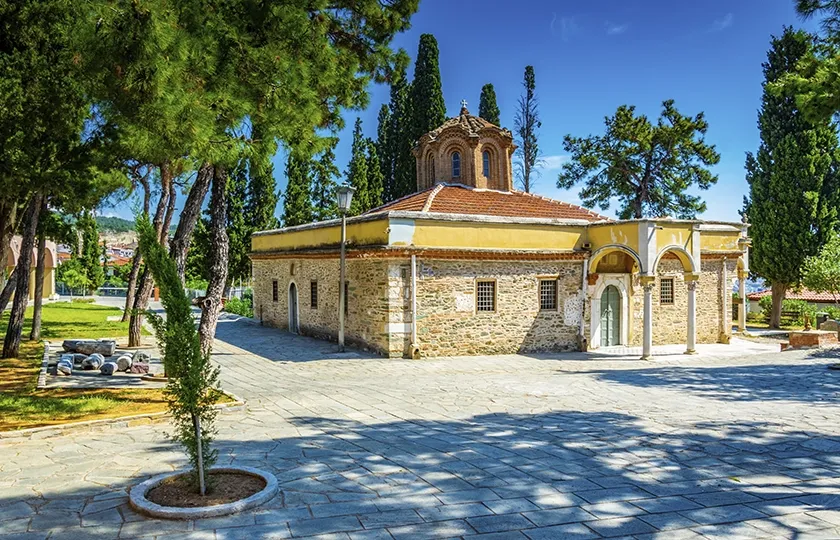
Without leaving the historic centre, the church of San Demetrio was renovated in the 7th century after a fire, and is now one of the best examples of early Christian architecture. The interior contains interesting capitals from the primitive 5th-century basilica built on the site of an earlier Roman baths, although the most significant are the six mosaics dating from the 5th-9th centuries, both for their artistic and historical importance and for the information they provide on the costumes of the period.
In the basement of the church is the crypt where Saint Demetrius, patron saint of the city, was martyred along with some of his faithful in 303. This space is believed to coincide with the site of the ancient baths, today converted into an exhibition space with objects found during the restoration process.
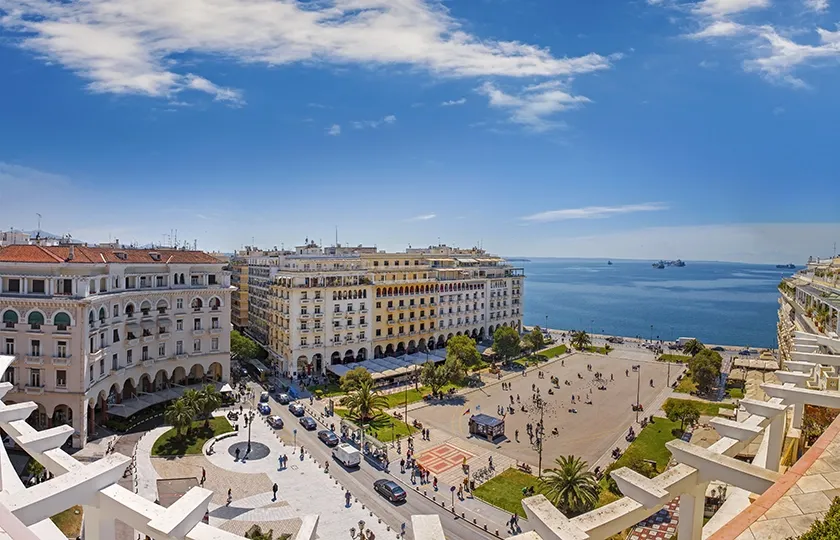
Along the waterfront of cosmopolitan Thessaloniki, so full of influences from East and West, Aristotle Square, designed by French architect Ernest Hébrard in 1918 after the terrifying fire, is the epitome of the city’s latest design with colonnades and cafés surrounded by grand mansions now converted into shops and hotels. Very lively day and night, It is a meeting point with a beautiful view of the Thermaic Gulf, where major cultural events take place.
Ano Poli, also known as the upper part of the city, was the only neighbourhood to escape the fire that ravaged Thessaloniki in 1917. Within its walls you will find an interesting Ottoman legacy with beautiful wooden houses flanking the winding cobbled streets, where it is also possible to admire beautiful mansions of Macedonian architecture, flower-filled courtyards, traditional cafes and tavernas where you can sample authentic local delicacies.
On the walk up to the highest point, from where it is possible to see some of the most beautiful sunsets on the planet, there is a string of monuments and churches, several of them UNESCO World Heritage Sites, such as St. Catherine’s Church, the Orthodox monastery of Vlatadon built in the 14th century, the church of St. Nicholas Orfanos or that of Hosios David, the Taxiarchs temple, the 15th century Alatza Imaret mosque and the mausoleum of Musa Baba with its peculiar octagonal plan. On this tour we will follow the Roman-Byzantine walls of Thessaloniki to the northwest end of the acropolis, where the Eptapyrgio Fortress stands with Byzantine and Ottoman architecture and the Triangle Tower, the historic 15th century artillery construction erected at the height of the Turkish occupation to reinforce the walls. The entire walled complex is also listed as a UNESCO World Heritage Site.
The Sephardic footprint
With the expulsion of the Spanish Jews decreed by the Catholic Monarchs in 1492, the Sephardic community of Thessaloniki experienced a very important growth and its economic activity was decisive for the recovery and prosperity of the city thanks to trade and industry, reaching its peak in the 18th and 19th centuries. They were welcomed and invited by the Sultan and integrated so well that they called the city “The Mother of Israel”. Despite the bloody purge carried out by the Nazis, the Jewish presence is still alive today in numerous synagogues, the Jewish Museum, some mansions and several restaurants and taverns, for the Sephardic culinary tradition is also part of the local gastronomy.
There are many restaurants where Sephardic dishes such as burekitas, which are meatballs stuffed with aubergine or other ingredients, meatballs in walnut sauce or boiled eggs, boiled in water flavoured with spices, have been added to the menu.
Culture as a sign of identity
Since the 20th century Thessaloniki has been experiencing a new renaissance among beautiful misty sunsets, spice stalls, bazaar taverns, traces of Byzantium and the grandeur of the Ottoman era, surviving among modern buildings covered with street art, defining the city’s blend of historicity and urban culture.
Its important academic and university community, together with the diversity of festivals and dozens of museums, imbue the atmosphere with an air of scholarship that might well recall the Romantic idea of classical Greece.
Although all the city’s museums are special, the Archaeological Museum has a genuine thematic magnetism. Sus ocho secciones hacen un completo repaso histórico a través de la prehistoria, el nacimiento de las ciudades, el reino de Macedonia desde el siglo VII a. C. to Late Antiquity, the history of the city of Thessaloniki, the gold of the Macedonians, an open-air section dedicated to the period between the 2nd and 4th centuries, another section dedicated to the stone monuments of the Roman period and, finally, one entitled “Macedonia: from fragments to pixels”, a suggestive proposal to immerse oneself in the history of Macedonia through new technologies with digital representations of masterpieces and virtual journeys through time and space.
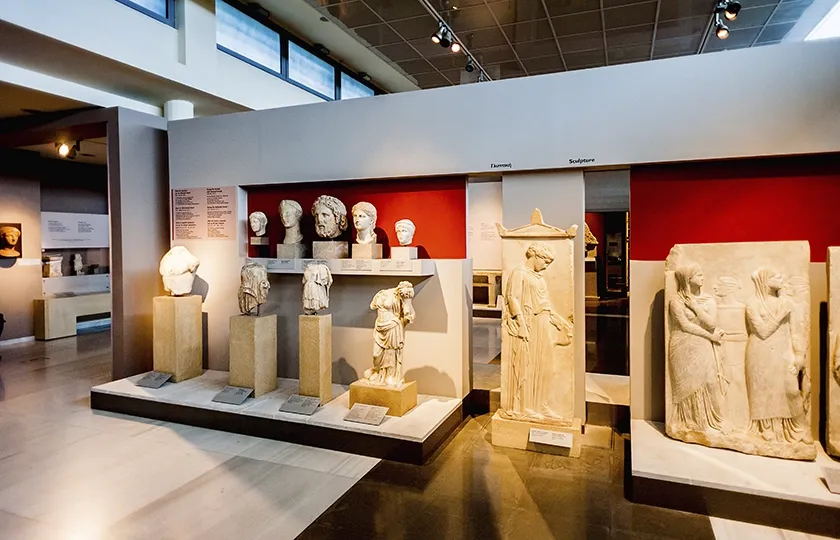
The Thessaloniki Water Supply Museum, open to the public in the former pumping station of the Municipal Water Supply Company built in 1890, preserves all the original machines and installations, as well as photographs, plans and archival documents that tell the story of the city’s water supply since Ottoman times. Through its exhibitions and informative programmes, seeks to raise awareness of environmental issues related to water and sustainability.
In 1994, the Museum of Byzantine Culture was inaugurated. The eleven permanent exhibition spaces contain authentic artefacts, mainly found in Thessaloniki, but also from different parts of Macedonia. Tens of thousands of objects cover a chronological spectrum from the 2nd to the 20th century AD.
The Sephardic legacy also has its own space thanks to the Jewish Museum of Thessaloniki, which exhibits commemorative objects and inscriptions found in the Jewish necropolis, a historical review of the Sephardic community in the city from the 3rd century BC to the Second World War and a section dedicated to the Holocaust as a tribute to the 49,000 Jews deported from here to concentration camps, most of whom did not return.
Greece’s only Film Museum is located in the port of Thessaloniki and was founded in 1997, the same year that the city became the European Capital of Culture. The Museum presents the history of Greek cinema, from its origins in the early 20th century to the present day.
Its collections include giant handmade posters, sketches, lithographs, watercolours, Greek and foreign films, documentaries, trailers, archival material, projectors from other eras, tools, reels and a long etcetera. The Museum is also a film archive with a collection of more than eight thousand books and magazines on the Seventh Art.
The Museum of Photography, the Olympic Museum, the Museum of Contemporary Art, the Museum of Ethnology and Folk Life of Macedonia and Thrace are just a small sample of the city’s magnificent museum heritage, through which it is possible to immerse oneself in the Macedonian essence.
Thessaloniki’s cultural offer does not lack important festivals such as the annual International Film Festival, which focuses on new and emerging directors, a panorama of Greek cinema, a vision of the Balkan countries and several retrospectives of filmmakers.
The Thessaloniki Biennial of Contemporary Art is another important event on the European cultural calendar. With a critical approach to reality and a historical vision of the individual and the world through the works of artists who come from all over the world for each edition, alternative points of view on how to face progress.
From early September to mid-November, the annual Dimitria festival is a traditional event that brings together a wide variety of music, dance and theatre performances. The origin dates back to when the empire was ruled by the Byzantines. Over time the traditions have remained intact and today it is a reference point for theatre, opera, dance, music, plastic arts and literature. It is also a way of promoting the traditions of Hellenic culture through carnivals, classical theatre and cuisine. The past and the present merge under one name, offering magnificent performances in commemoration of Saint Demetrius.
From the garden and the sea to the plate
The natural environment surrounding Thessaloniki, both inland and at sea, is one of the most fertile and bountiful in Greece, with an enviable variety and quality. Enjoyment of a good meal here is an inseparable part of the culture.
That blessing is savoured in the starters: dolmades (vine leaves stuffed with meat, rice, vegetables and yoghurt sauce); horiatiki, a salad that is a festival of vegetables; taramosalata (cod roe sauce); grilled aubergines with feta cheese; bekri or drunken pork (stewed with red wine and tomato).
Soutzoukakia, brought to Thessaloniki by Greeks forced to leave Turkey a century ago, are elongated meatballs, spiced with garlic, cumin, parsley and sometimes oregano or a hint of cinnamon, served with tomato sauce and often accompanied by rice and boukovo, chopped, spicy dried peppers. Rare is the tavern or restaurant where they are not served.
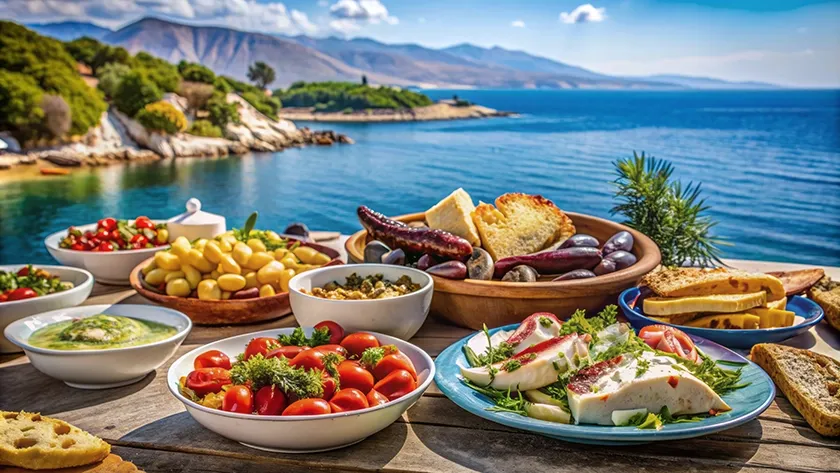
Meats feature in some of the most popular dishes such as lamb chops (paidakia), tigania (fried pork), keftedakia (meatballs) and souvlaki (meat on a skewer), among many other suggestions.
Thessaloniki has a strong connection with the sea and its seafood is truly exceptional, as are the endless options for preparation, whether grilled in a simple taverna or grilled or more creative dishes served in fine restaurants.
You can’t leave Thessaloniki without trying ouzo, an aperitif flavoured with anise or fennel seeds that is produced exclusively in Greece, or a Greek wine that pairs perfectly with seafood or meat, depending on your preference.
In this little nod to Thessaloniki’s exquisite gastronomy, you can’t miss its fresh produce markets, such as the popular Kapani, the one in Athonos Square or the Agora Modiano, the city’s central food market, which has been extensively renovated, but retains almost all of the avant-garde architecture of Jewish architect Eli Modiano.
Thessaloniki is much more than a beautiful and vibrant city of the Mediterranean basin, it is part of the essence of history, it is cosmopolitan and yet traditional in perfect harmony, it is the whole concentrated in a melting pot of peoples and cultures. What more could you ask for?