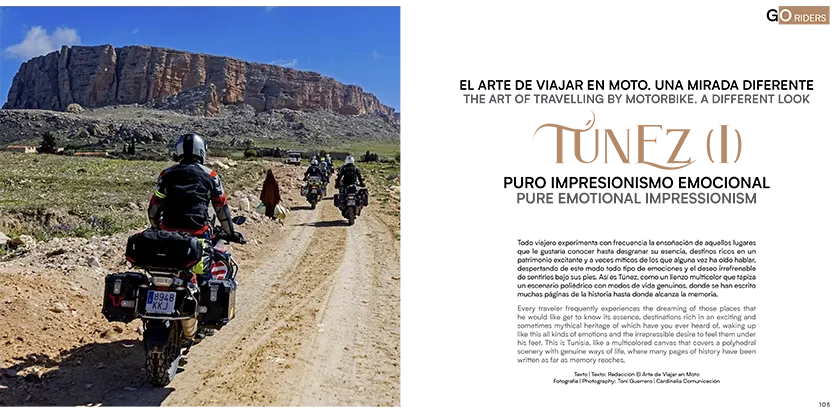
Every traveler frequently experiences the dreaming of those places that he would like get to know its essence, destinations rich in an exciting and sometimes mythical heritage of which have you ever heard of, waking up like this all kinds of emotions and the irrepressible desire to feel them under his feet.
This is Tunisia, like a multicolored canvas that covers a polyhedral scenery with genuine ways of life, where many pages of history have been written as far as memory reaches.
It was a cool March evening when the ferry that transported us from Genoa opened its warehouses loading dock at La Goulette, the main Tunisia sea port and the frenzy broke out. Passengers ready for disembarkation awaited patients the moment to step on solid ground, while in the bowels of the ship the hoarse sound of hundreds of engines invaded the Carthaginian twilight.
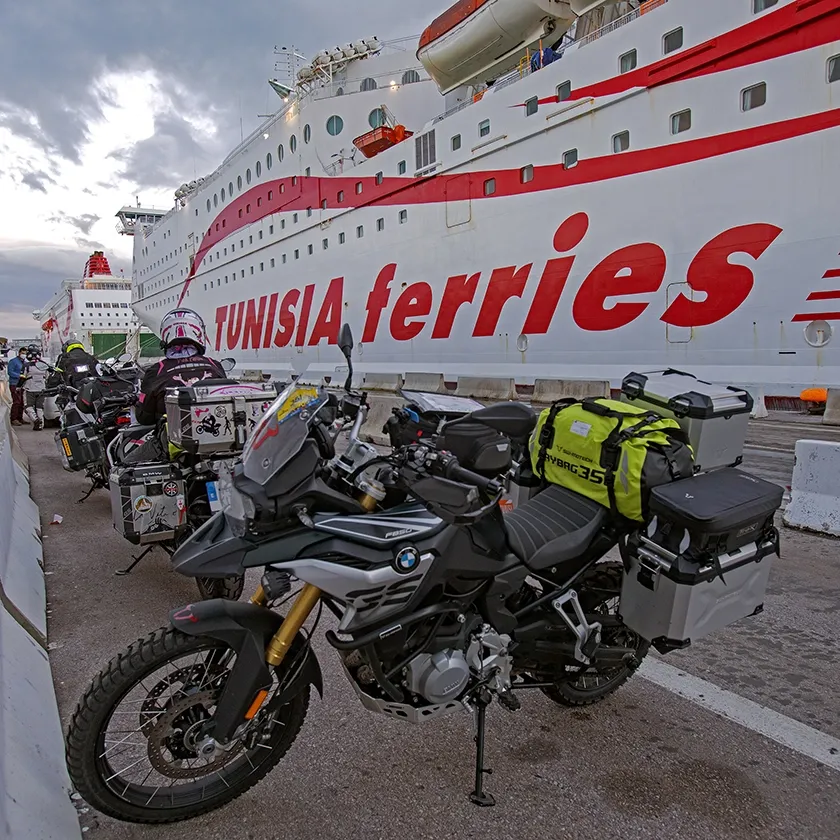
Trucks, vans, cars, 4X4 and our motorcycles, almost in perfect formation, they left the ship with different destinations and motives, some with satisfaction to see near the end of the trip and others, such as us, with a vibrant heart to see already very near the beginning of the exciting route that has brought you here.
Stepping on African soil is always a moment exciting and this time the excitement grows exponentially. Like a torrent of sensations different in which the desire to know is mixed a new territory full of surprises, the passion for do it on a motorcycle, the desire to abandon ourselves to magic of the desert or the encounter with scenes of legend that history and cinema immortalized, form the nuances of that reflective melting pot that assails us while the customs procedures of our caravan.
Already at the spectacular Residence hotel the deserved and restful rest, but not before enjoy an exquisite dinner in which we had the opportunity to taste the rich and varied Tunisian gastronomy.
The Granary of Rome
With the first rays of sun, craving the preamble to a magnificent spring day, we we are ready to discover and enjoy the north of Tunisia, the green and fertile territory full of Heritage sites of Humanity and high-value ecosystems that once nurtured an Empire, which meant to be also known as “the Granary of Rome” and in the that left Phoenician, Roman and even Moorish footprints expelled from Spain in the 16th century.
Dare to discover this orchard between mountains and its virgin beaches guarded by incredible cliffs, or to shrink yourself in front of landscapes of beauty extreme and live the adventure of amazement that they reel off the cultural wonders, it is an experience impossible to forget.
Touring the north of Tunis on a motorcycle is an experience exclusive, an inexhaustible source of inspiration continues that surrounds us in an atmosphere fast-paced that makes the pupils vibrate with its magic light.
Little by little our engines are catching temperature between the hectic traffic of the capital Tunisian, until we head to our first destination in the hills of the Medjerda valley. Following the layout of the old imperial road that linked the cities of Carthage with the Algerian Tébessa we arrived to an emblematic city with reminiscences Spanish: Testour. Here came the Moors expelled from Castile and Aragon in 1609, founding the most important Andalusian city in Tunisia and where Spanish was spoken for a century and a half.
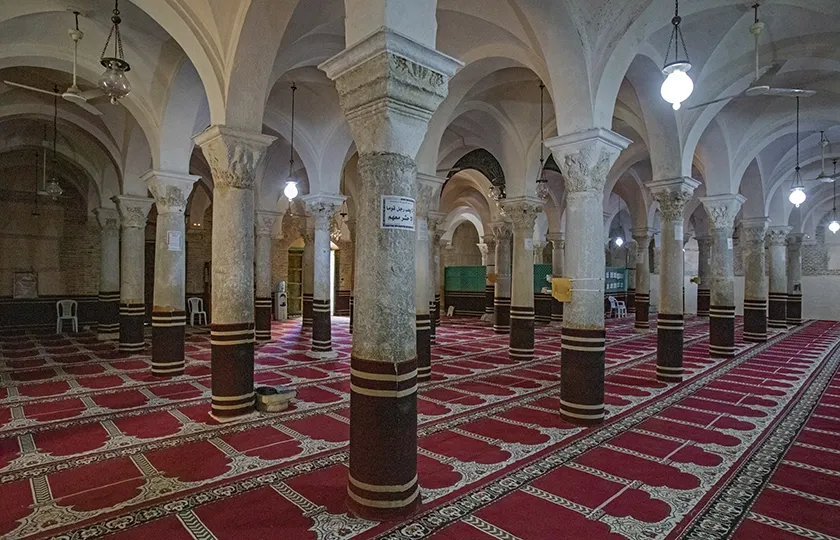
From that time it conserves testimonies very significant of the Andalusian legacy in the neighborhoods of Rhiba, Tagarine and Hara, but it is in the Great Mosque -the unique in the Muslim
world with a watch and whose needles rotate in the opposite direction, looking for the symbolis of looking at the happy Andalusian past- where find the most significant elements of the Hispanic heritage. From the two octagonal towers of Aragonese style up to the inspiration domes Renaissance, not forgetting the two Stars of David representative of the coexistence between Muslims and Jews, references to the origin of the founders are constant.
Another cultural contribution of the heritage of the Moors arriving from Spain we found her in the “aljaimada”, a type of literature written in different languages Spanish romances in Arabic characters.
Beyond the fascinating story of Testour, what captivated us from the moment of arrival was the
warmth and kindness of its people. Undoubtedly see a caravan of eighteen motorcycles arrive breaking everyday sounds is always a pole of eye-catching and curiosity became palpable.
It was to stop and that became a endearing improvised motor fair with children climbing the saddles, the youths making themselves selfies and, across the street, the men conversing without losing detail of the moment.
With a threatening stormy sky and how picturesque the cafe full of people, everything invited to experience the feeling of sharing a moment with locals, the same ones who looked at us attentively
and that they kindly made us a place to chat and taste the exquisite tea and artisan sweets. The moment was especially pleasant and full of authenticity.
At the end of the day we fall into the clutches of one impressive rainstorm, despite which nothing stops our desire to continue traveling this green paradise down winding roads full of charm. An effort that is fully seen rewarded by climbing the hill surrounded by olive trees and presided over by the Dougga Archaeological Site.
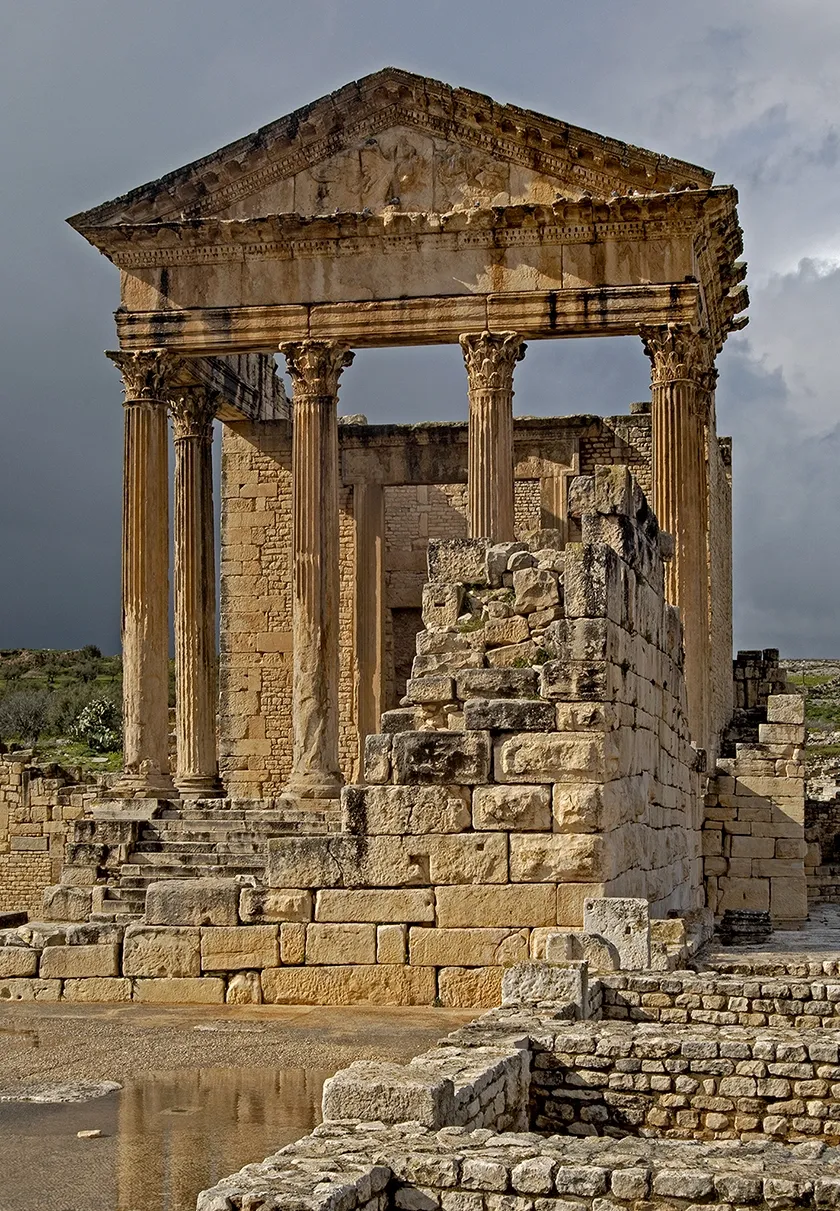
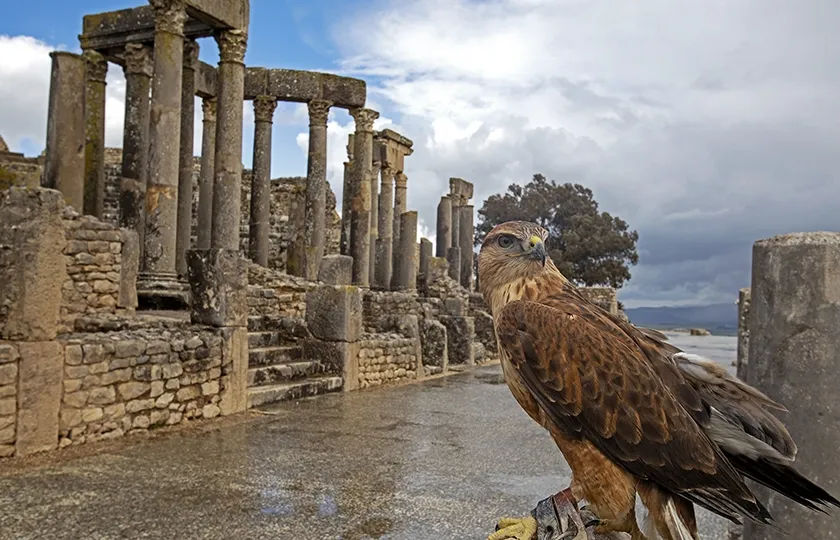
Declared a World Heritage Site by the UNESCO, it was a Berber settlement, Punic, Roman and Byzantine and one of the best cities preserved from North Africa. Dougga is like a outdoor history book whose origins lie in go back to the second millennium BC, proudly preserving monuments so spectacular like the Libyan-Punic mausoleum, the Capitol dedicated to the triad Jupiter, Juno and Minerva, the Roman theater or the baths, in addition to the layout indigenous urban Numidians than the Romans they respected. This feature and the exceptional condition conservation make this heritage treasure illustrate splendidly what life was like everyday at that time.
We continue our journey towards the north coast of Tunisia, a scene of magnificent beaches like Sidi Ali the Mekki, picturesque villages like Bizerte, enclaves singular like Cap Angela also known for being the northernmost point of Africa or suggestive coves like Cap Negro heading to Tabarka, where we expect a well-deserved rest at the incredible hotel La Cigale, an exceptional resort with wonderful views of the Mediterranean, golf course, spa and everything you need for anunforgettable stay. The forces are restored, a radiant sun stretches us to continue enjoying the motorcycle trip between almost insulting lush forests and landscapes of a truly amazing luminous green.
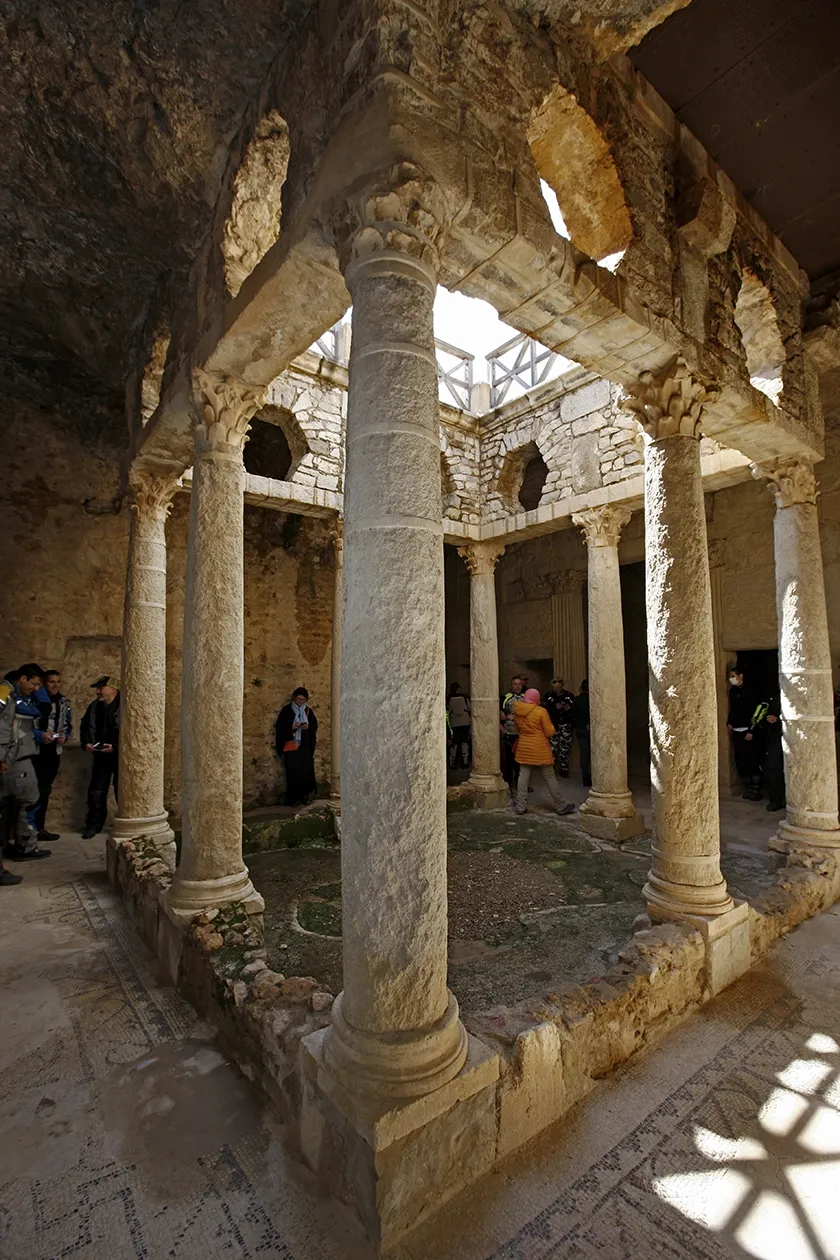
We travel in a southerly direction almost in parallel with the Algerian border to Bulla Regia, ancient city located at the crossroads where the roads that linked Carthage with Hippo Regius, the current Annaba, and the one that led to the sea from the Sahel. The monumentality of the Romanized African city is given by the use of marble and by the existence magnificent buildings such as the capitol, the temple of Apollo, the amphitheater or the theater, but what has given universal fame to Bulla Regia are the houses underground equipped with all the comforts of the era and the virtuous mosaics that adorn them. On total there are a score of houses excavated, standing out for its originality and for the richness of materials the “House of hunting”, the “House of the Anfítrite” and the “Treasure House”, but all of them denote the refinement and philanthropy of the society of the epoch.
After a reflective moment at sunrise, we set off for the heart of Berber country in search of the most authentic aspects of their culture and way of life. The arid landscape of mountains, plains, and craggy peaks is home to the distinctive architecture of the Ksour, beehive-like structures carved into the rock. These fortified granaries, such as the Ksar Ouled Dabbab, now a luxury hotel, were once meeting points for nomads who stored their goods there to protect them from raiders.
Everything indicates that it was a rich and prosperous city thanks to its strategic location and the fertility of the land, prompting a flourishing wheat trade and oil, reaching the category of cologne honorary in the time of the Emperor Hadrian and his inhabitants full Roman citizenship.
Bulla Regia is one of those magical places that they unleash the imagination. Just walk it listening to the subtle sounds of the wind between the walls to transport us to the imperial age and to the reverie of the caravans of arrived merchants from everywhere, to recreate in our imaginary scenes of costumbristas, even romantic, of the feverish daily activity.
Every kilometer traveled on Tunisian soil means an intense immersion in the essence of this fascinating country. Little by little the fertile landscape of the north starring the Atlas Mountains gives way to extensive plains whose color informs us that we approach the longed-for desert, while the typology of the towns is becoming more pragmatic.
The exit of each curve means a point above the adrenaline level to feel closer to the next destiny and new surprises. Suddenly a deep gash in the rock tells us about settlements troglodytes as a prelude to what awaits us few kilometers. As if from an urban waterfall in any case, El Kef displays an irresistible magnetism. Presided over by the Ottoman fortress of the s. XVII, which was the provisional capital of Tunisia during the Second World War today is a haven of peace. Walking through the secluded streets of its medina is a lesson in tolerance through their religious testimonies, since as soon as we see a church consecrated to Saint Peter, such as Roman baths, Jewish synagogues or the impressive mausoleum of Sidi Bou Makhlouf with its octagonal minaret decorated with green tile emerald.
We go back to the road in search of new emotions, those that emanate from unusual places and genuine. So we head southwest, crossing almost infinite plains until, suddenly, a immense stone mass of almost thirteen hundred meters high breaks the horizon awakening the desire to know what’s there.
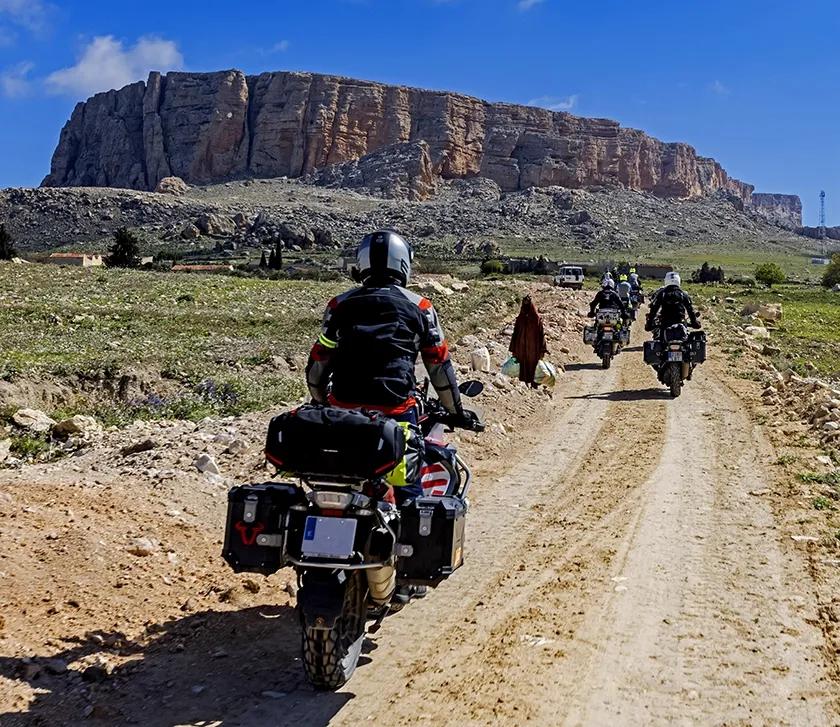
Jugurtha’s Table is a challenging mountain tubular, a natural fortress so named in honor to the Numidian king Jugurtha, who tookjm refuge here to resist the Roman general Mario during a decisive battle in the history of North Africa and the Roman Empire (107-105 BC).
From the top you can enjoy a magnificent 360 degree panoramic over vast cereal fields and gentle hills, but it is also a history lesson thanks to the vestiges that it preserves as dolmens, an arch Byzantine, a small mosque, deposits excavated in the rock, caverns and prehistoric tombs.
It’s hard to resist the traveling desire looking south from the Jugurtha Tablet, especially knowing that there is the longed-for desert of wonderful sunrises, epic stories, mysteries and legends and suggestive Berber lands.
www.calameo.com/revista-go-travel_el-arte-de-viajar-en-moto