A city that is an architectural gem, a route that takes us to the Mostviertel and is sure to leave a lasting impression, and two beautifully crafted places of worship of outstanding historical importance. This is what we have in store for you in Central Europe.
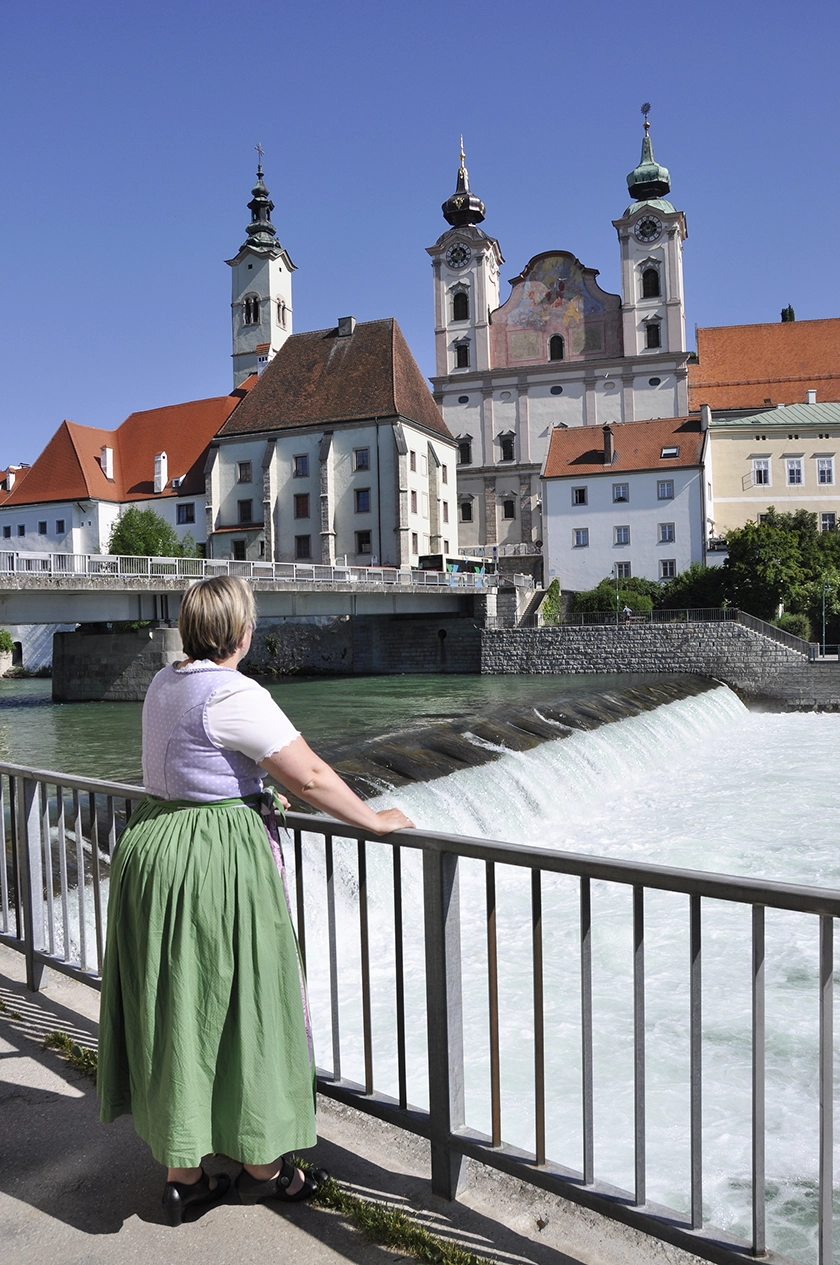
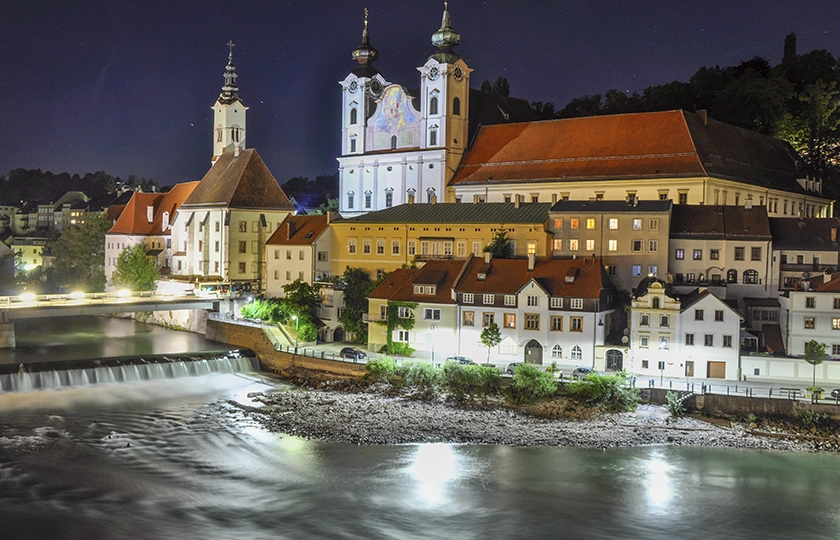
Situated at the confluence of the rivers Enns and Steyr, this beautiful town, with its cobbled streets, Baroque houses – all built in perfect harmony – Gothic and Baroque churches, and the remains of a castle to be found at Schloss Lamberg, is a must-see on any holiday or short break in Austria.
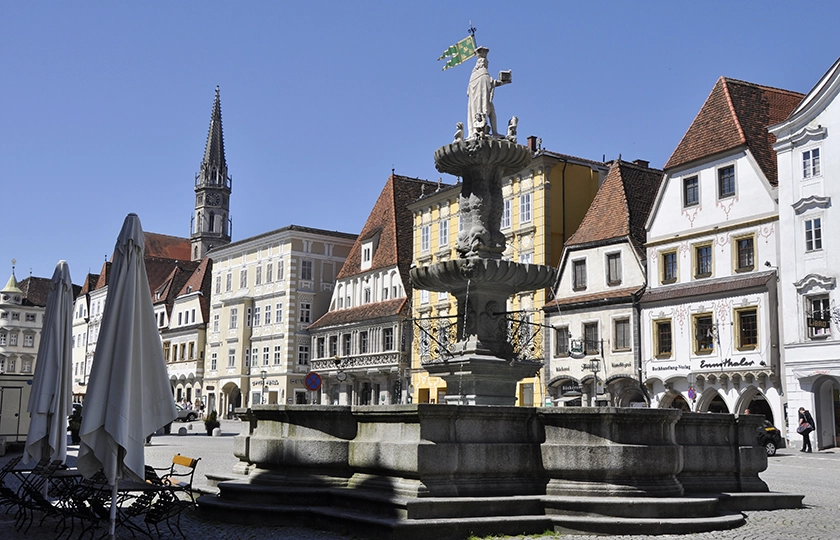
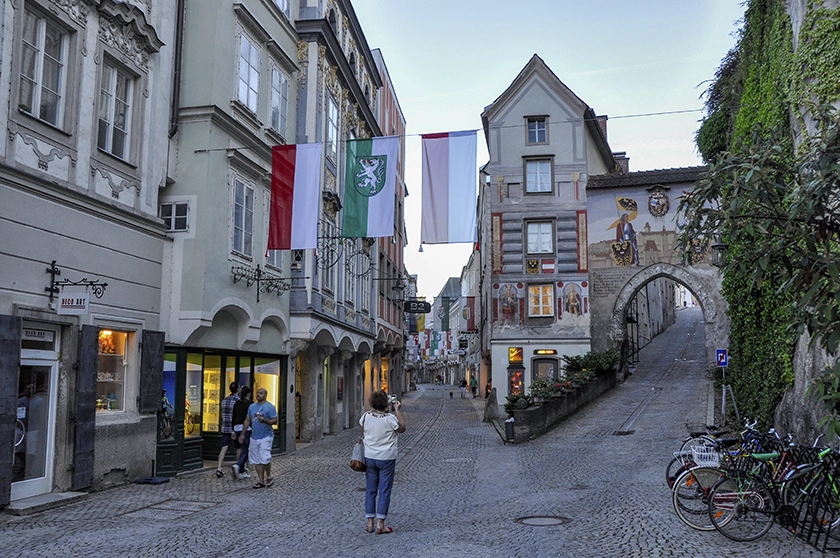
Situated in the Traunviertel region (Upper Austria) and at the heart of the Austrian Romantic Route between Salzburg and Vienna, Steyr is steeped in over a thousand years of history. Its narrow streets lead us to one of the most beautiful squares in Europe, Stadtplatz, where buildings in various architectural styles – such as Rococo, Renaissance, Baroque and Gothic – coexist harmoniously; the Gothic style is represented by the oldest house, known as the Bummerlhaus, which is the city’s symbol.
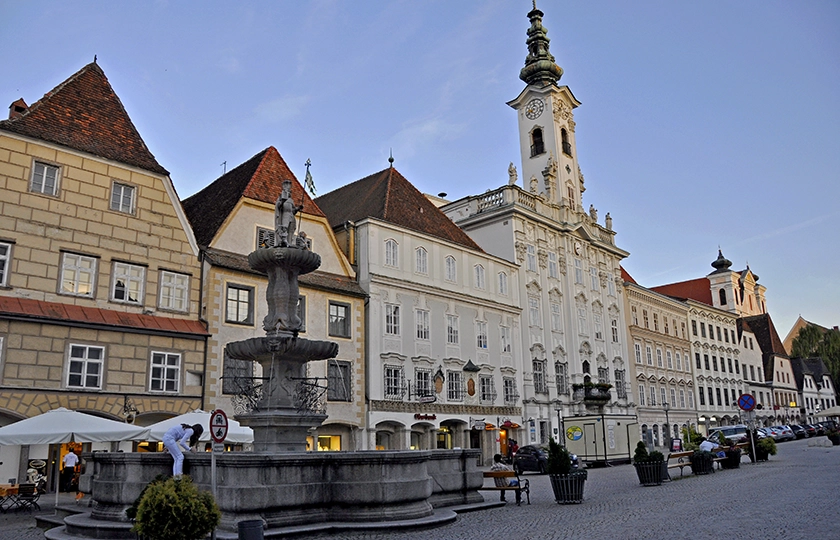
Such is the beauty of Steyr that the great Schubert described it as “an incredibly charming place”. Incidentally, the Austrian composer lived in the town, and the house where he lived is just a few metres from the square.
The waters of the rivers Enns and Steyr, which flow through the town, were used to transport iron; it was precisely this trade and the crafts associated with it that brought prosperity and wealth to the people of Steyr.
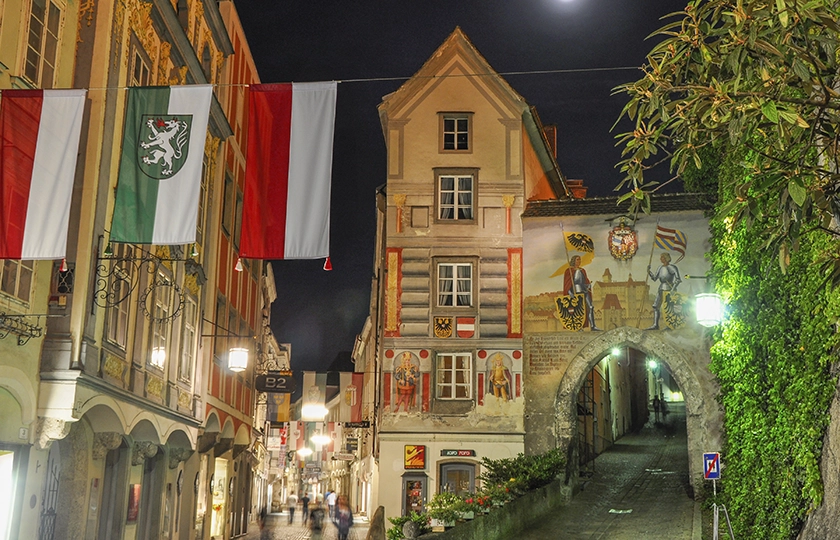
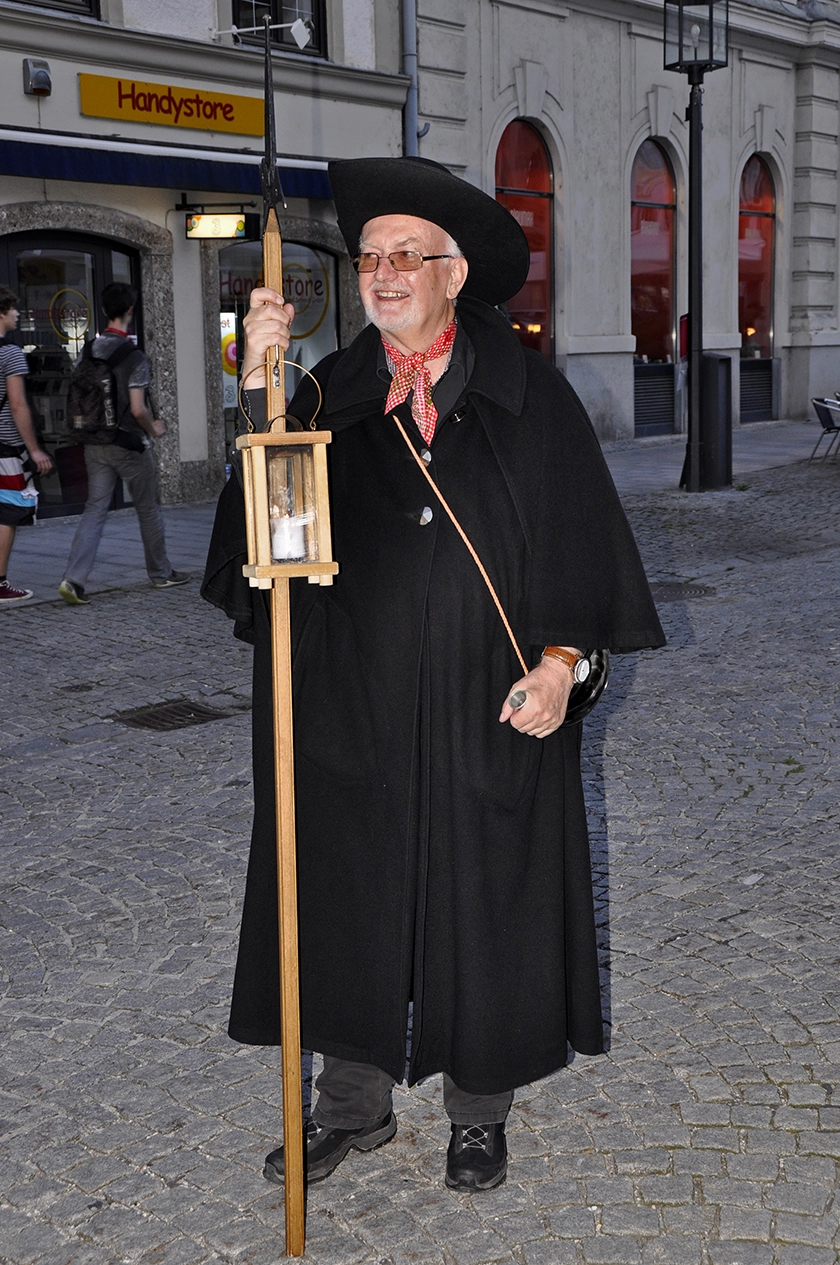
The bourgeois houses from different periods and in various styles, Lamberg Castle, which was built on the foundations of ‘Styraburg’ and to which the town owes its foundation in the year 890, the numerous guided tours – from the highest tower to the deepest cellar – the small shops and the many cafés, inns and restaurants, some of which offer unforgettable views of the river and where you can enjoy delicious local specialities, all shape the urban landscape of Steyr, inviting visitors to stroll through its streets and squares at a leisurely pace so as not to miss a single detail and to visit the city’s museums, which tell stories and recount its past.
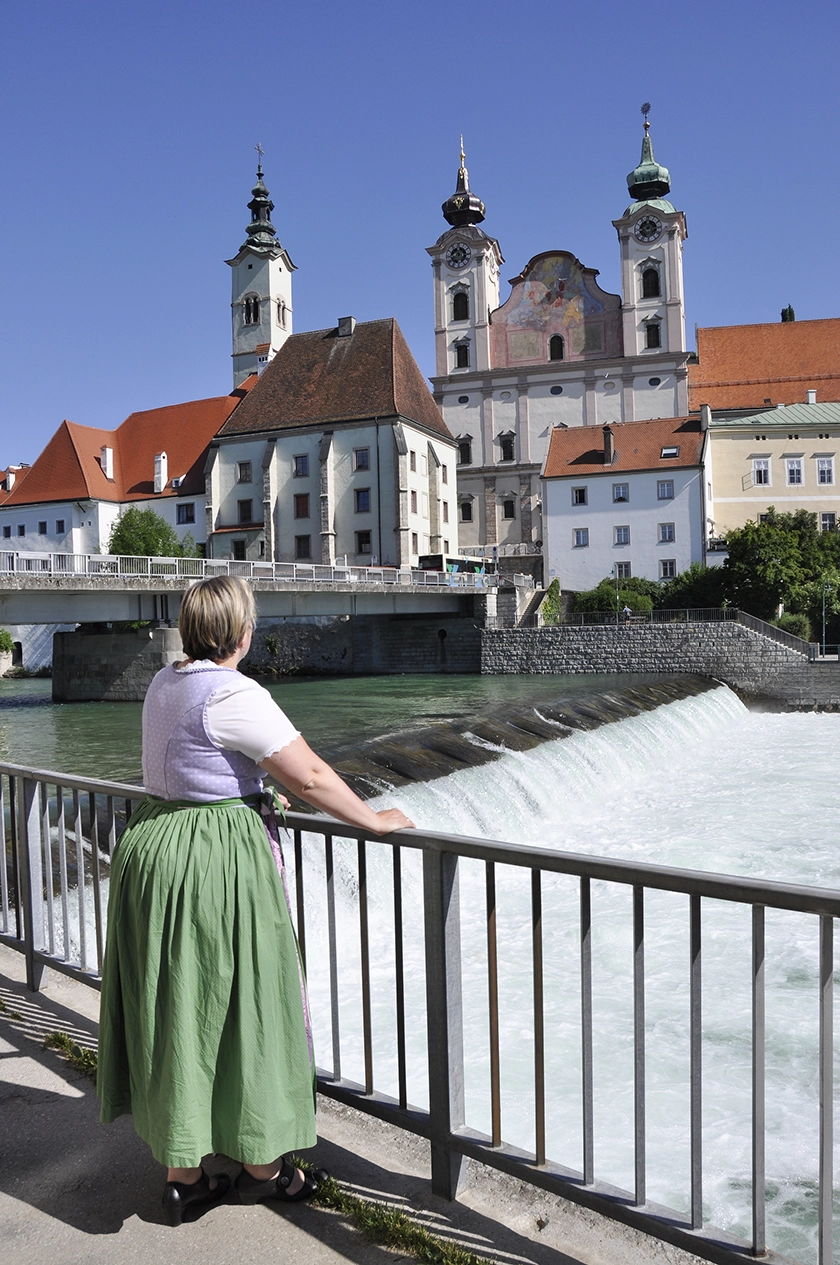
Hiking trails and cycle paths set off from the town’s historic centre, running alongside the rivers and taking us to beautiful spots where nature reveals itself to us in all its splendour. A clear example of this can be found in the Kalkalpen National Park, with its vast beech forests, which are listed as a UNESCO Natural Heritage Site. Whether you’re hiking, cycling or mountain biking, you’ll be able to enjoy incredible outdoor experiences against the stunning backdrop of the magnificent panoramic views that this part of Upper Austria offers travellers.

Now that we’re counting down the days until Christmas, Styer reveals its most enchanting side during Advent. The old town and the Wallfahrtskirche Christkindl, the Church of the Infant Jesus – a famous Baroque shrine situated in the Christkindl district – come together to form Christkindlstadt Steyr, or the ‘City of the Infant Jesus’, as it is traditionally said that the Infant Jesus ‘lives’ here. The places not to be missed at this special time of year are the pilgrimage church of the Infant Jesus, where a small wax figure of the Infant Jesus has been venerated since the 17th century; the Christmas Post Office, situated next to the church, where every year millions of letters and Christmas wishes from children all over the world are stamped with a special Christmas postmark; the Christmas markets on the Stadtplatz and the Promenade; and the Steyrer Kripperl, one of the last remaining traditional rod-puppet theatres in Europe and designated as Intangible Cultural Heritage by UNESCO.
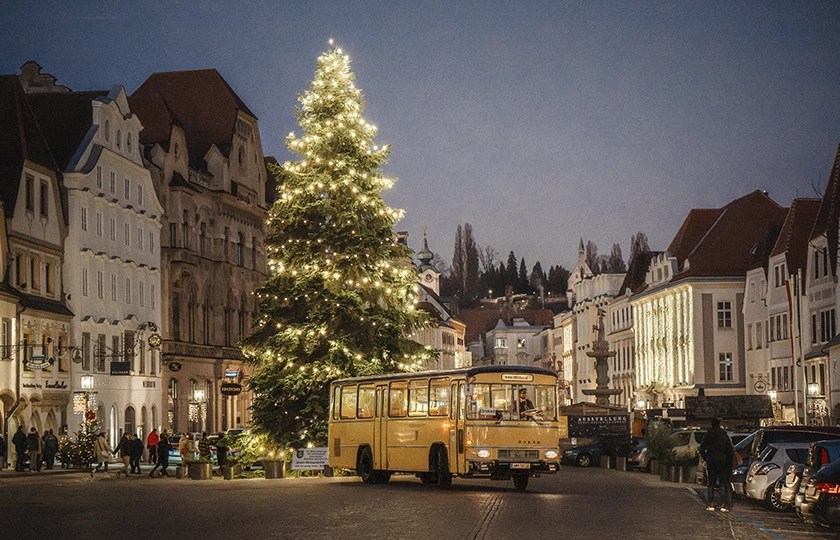
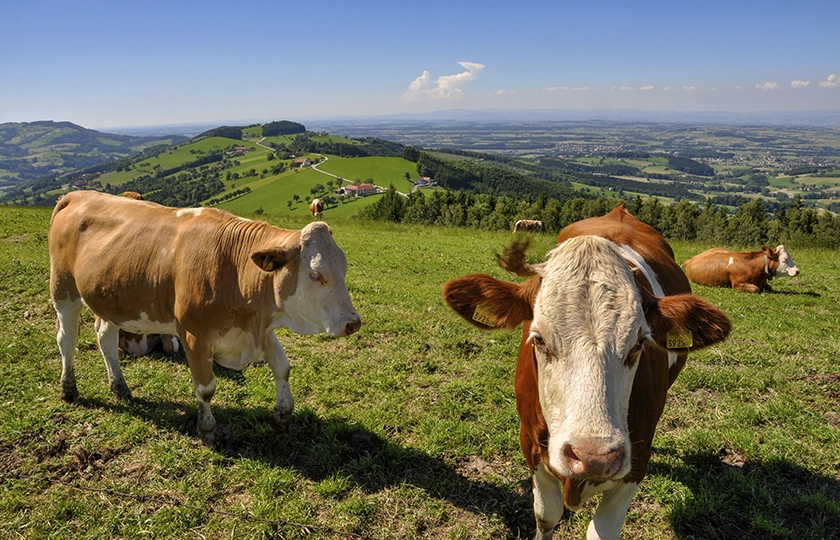
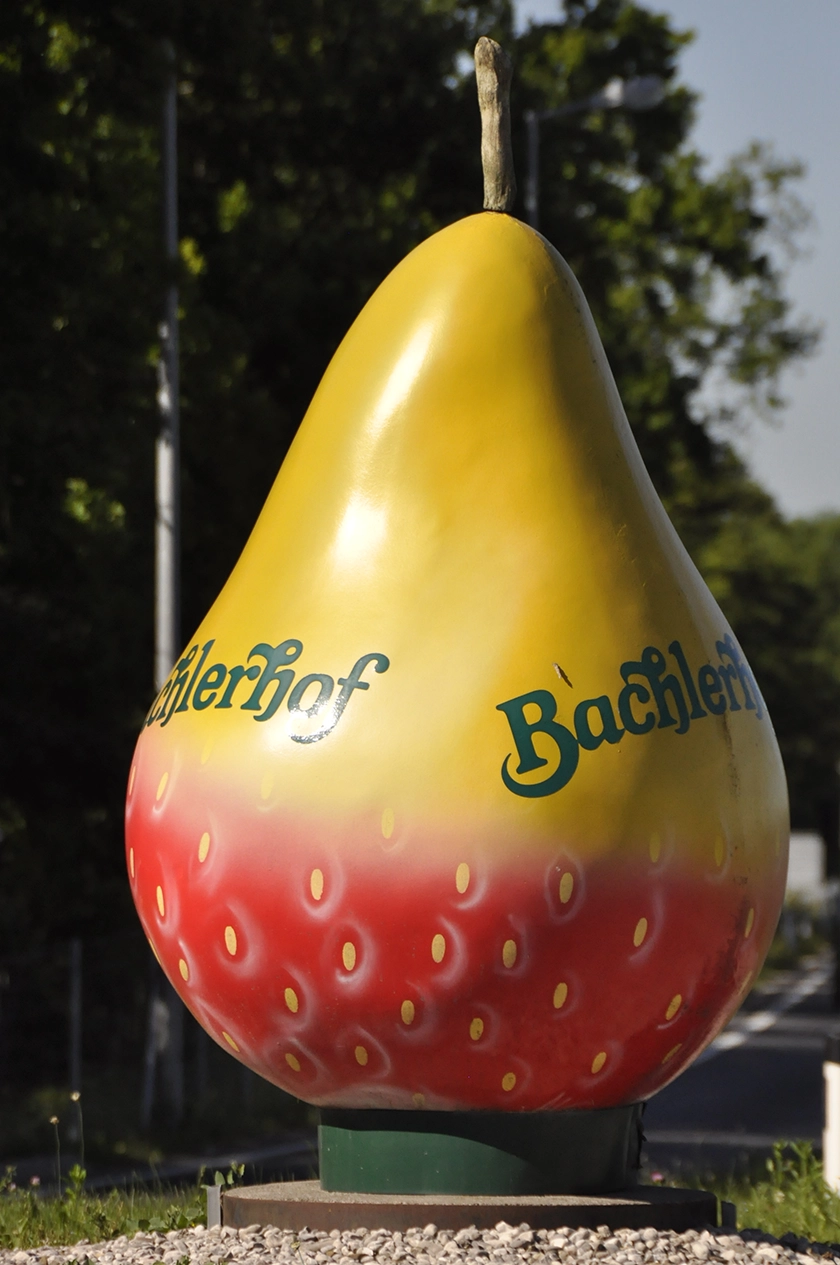
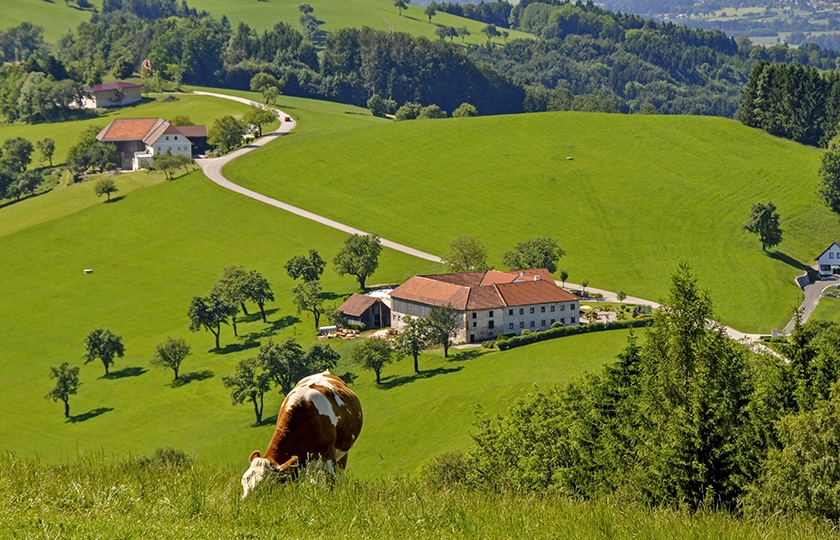
We left Upper Austria to explore the Most-Strasse or Cider Route. We are in the region of Lower Austria, where the landscape is dotted with thousands of pear trees spread across the valleys, which bear their bountiful fruit thanks to the mild climate south of the Danube. Gentle hills and green meadows come together to create a spectacular landscape in which small villages and farms, delicately nestled at the foot of the Alps and amongst winding roads, unfold before our eyes, allowing us to take home an unforgettable, idyllic image of this paradise on earth.
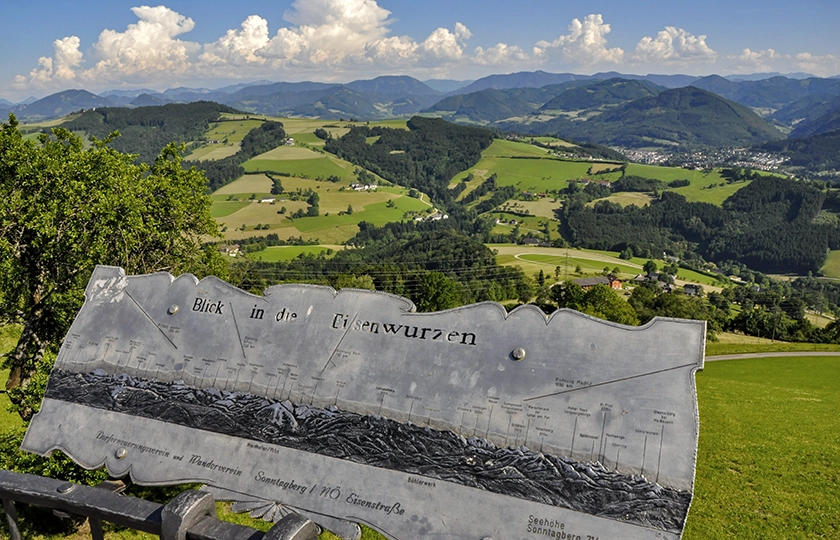
A magnificent spot from which to admire these landscapes, which look as though they have been taken straight from the paintings of Austrian artists such as Waldmüller, Koch or Arnegger, is the Voralpenblick viewpoint. This spectacular wooden platform, built in 1977, is situated in the village of Ertl at an altitude of 730 metres above sea level. On clear days, it offers 360-degree panoramic views stretching from the hills and meadows of the Alpenvorland to the Ennstal Alps. Open all year round, 24 hours a day, it is easy and convenient to get to by car, and there is a car park just a few metres away. What’s more, it’s the ideal starting point for local walking routes such as the Wanderweg Voralpenblick or cycling routes such as the Birnenblick-Radroute.
A trip along the Cider Route wouldn’t be complete without a visit to a farm-winery, such as the Mostbaron Bauernhof distillery, where the tables are filled with both locals and visitors enjoying the region’s delicious produce, always washed down with a good pear cider and musts made from those fruits, which add the perfect finishing touch to the meal.
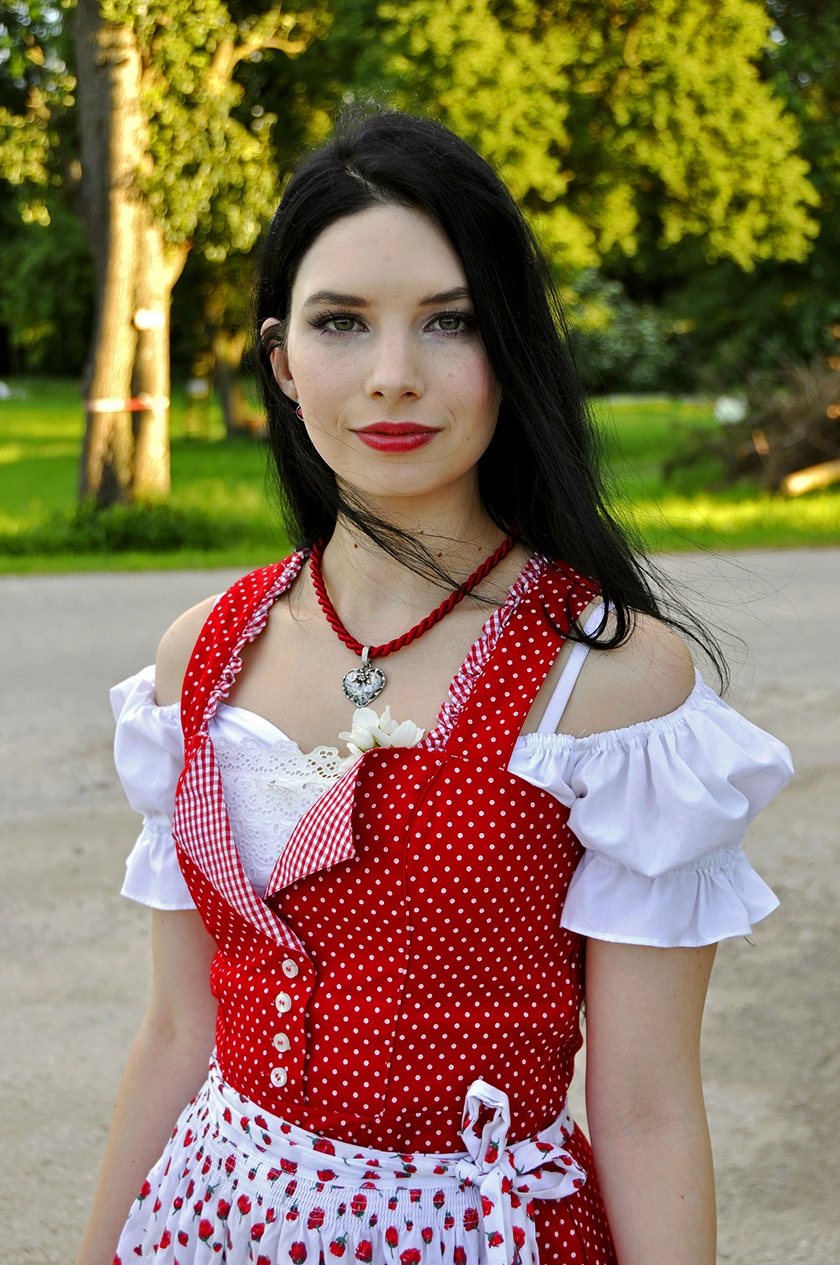
We round off this short break in Upper Austria by visiting two religious sites of undeniable artistic, architectural and historical value, both of which are situated in Lower Austria.
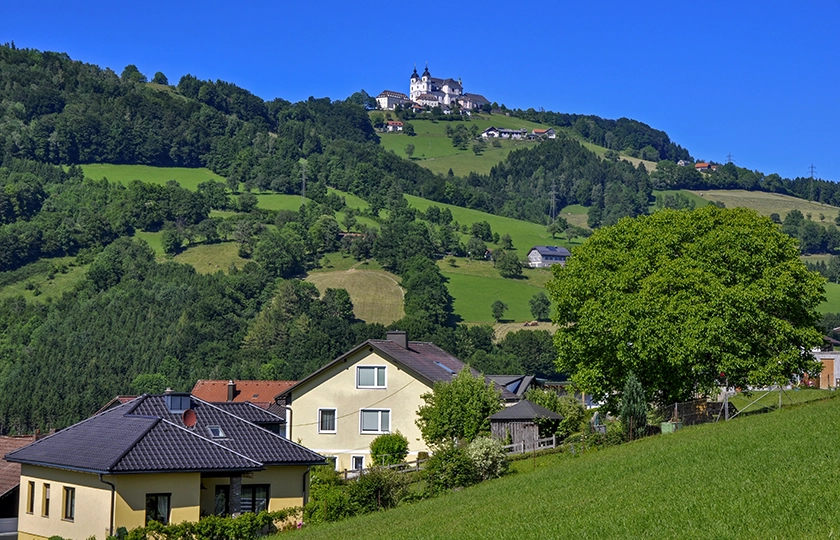
From a distance, we could make out the majestic silhouette of the Sonntagberg Basilica. Situated on a mountain ridge at an altitude of over seven hundred metres, its façade with its twin towers stands out against the green meadows and fruit orchards, offering another beautiful and distinctive view of the land of the cider.
A spectacular Baroque building constructed between 1706 and 1732 and designated a minor basilica in 1964; its origins date back to a small chapel built in 1440, and it is now recognised as one of the most important places of pilgrimage in Europe.
Sonntagberg was designed by the Baroque master builders Jakob Prandtauer and Josef Mungenast, and visitors can enjoy admiring Daniel Gran’s frescoes and the legendary Turkish fountain. Behind the high altar lies another gem that is not to be missed: the Sonntagberg Treasury Museum, which is accessed from outside and houses a colourful collection of votive offerings from pilgrims, valuable priestly vestments and books of miracles. The visit to the basilica is rounded off with information about the pilgrimage, guided tours, a souvenir shop and a café.
The natural surroundings in which it is situated invite you to enjoy the most beautiful landscapes along the Cider Route. The walking trails and the nature trail with its children’s play area – ideal for a family outing – form the Sonntagberg High-Altitude Panoramic Route.
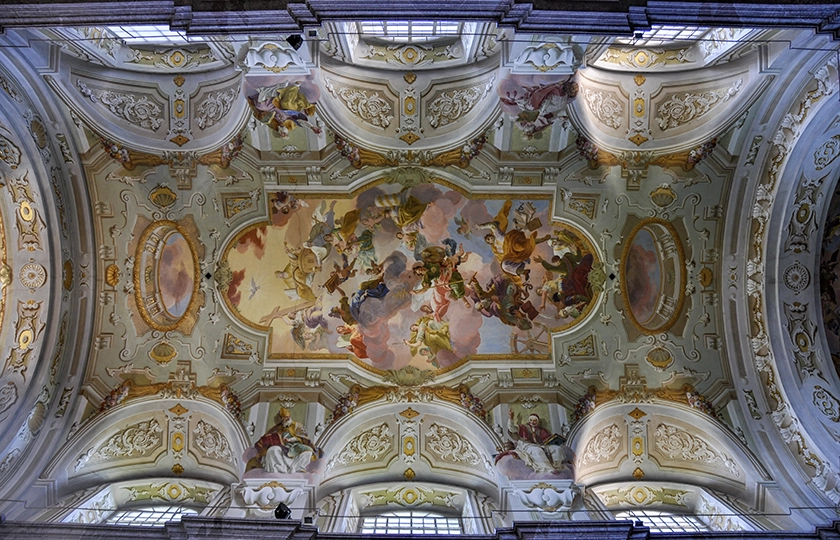
Roughly halfway between Vienna and Linz, perched on a rocky outcrop as if poised to soar above the Danube, the Benedictine Abbey of Melk is world-famous, not only for its treasures but also for having served as the inspiration for Umberto Eco’s bestseller, “The Name of the Rose”.
Melk Abbey, one of the most impressive Baroque buildings to be found north of the Alps and a key part of Austria’s founding history, is situated in the Wachau Valley, a UNESCO World Heritage Site.
This magnificent building has an appearance reminiscent of a fortress; from a distance, its dome and two gold-adorned towers are visible, catching the eye of travellers who cannot resist the temptation to make an unscheduled stop to discover what it is that lies before them.
Since 1089, Benedictine monks have lived and worked here, in a place renowned worldwide for its architecture.
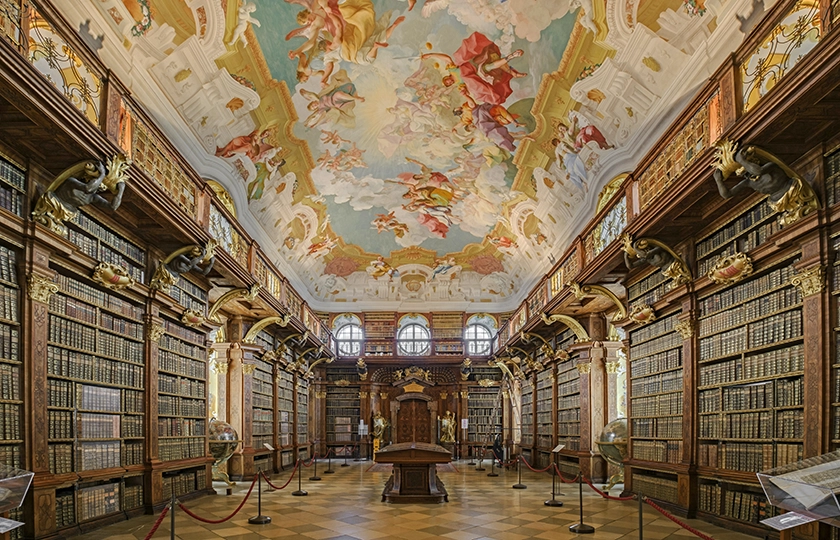
It is believed that the rock on which the abbey stands was already inhabited in Roman times, and the 11th century it became a spiritual and cultural centre under the rule of the Babenbergs. It was in the early 18th century that the monastic complex took on its present appearance, which is the result of the work of the famous Baroque architect Jakob Prandtauer, who was commissioned to carry out this project of extraordinary scale.
The abbey is notable for its artistic design, for which it enlisted the services of the leading masters of the time, notably the painters Paul Troger and Johann Michael Rottmayr. The abbey church, with its magnificent decoration and frescoes; the Library, which houses over one hundred thousand volumes, including mediaeval manuscripts and incunabula; and the Marble Hall, richly decorated with stucco work and ceiling paintings, make this one of the most sumptuous sites in Austria.
You might be interested in: https://revistagotravel.com/en/austrian-romantic-route-en/
https://revistagotravel.com/en/pure-baroque-delicacy-historic-elegance-modern-lifestyle-en/
https://revistagotravel.com/en/summer-residence-emperors-important-cultural-centre-en/